The Sudden Shudder of the Rig
You can feel it in the soles of your work boots before you see it in the mud pit. It starts as a subtle vibration, a rhythmic thrumming that travels through the steel mast of the drill rig and into the compacted earth beneath you. In my thirty years of chasing water and crawling through the muck of failed site services, that vibration is the first warning that you aren’t just drilling through dirt anymore—you’ve tapped into a subterranean vein that wants to breathe. My old journeyman used to say, ‘Water is lazy, but it’s patient.’ It will find the tiniest pinhole and turn it into a geyser given enough time. When you are deep into a 2026-spec borehole, that patience is measured in hydrostatic pressure that can rip a drill bit to shreds or turn your site into a swamp in minutes.
1. The Spontaneous Rise of the Artesian Head
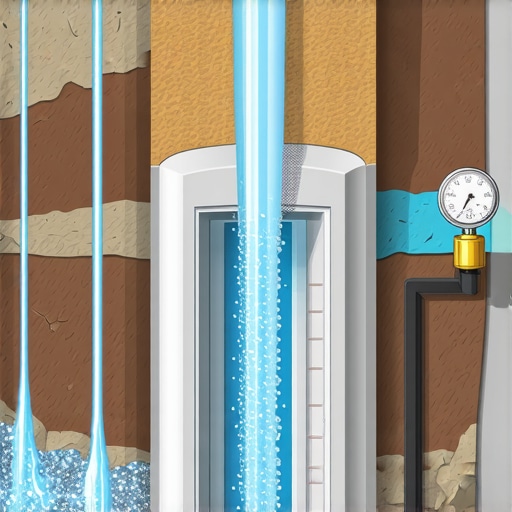
The first unmistakable sign of hitting a high-pressure aquifer is the ‘reverse gulp.’ Normally, as we advance the bit, the drilling fluid (the ‘dope’ of the drilling world, if you will) circulates down and brings the cuttings back up. But when you hit a confined aquifer, the pressure differential flips. You’ll see the water level in the borehole rise independently of your pumps. It’s not just a slow swell; it’s a focused, muscular surge. This is where the physics of the artesian head becomes a visceral reality. If the static water level rises above the ground surface, you are dealing with a flowing artesian well. The water isn’t just sitting there; it is being pushed by the weight of the entire geological stack above the aquifer’s recharge zone miles away.
“Where groundwater is under such pressure that it may become a flowing well, the well shall be capped or provided with a control valve to prevent the waste of water.” – Uniform Plumbing Code (UPC) Section 602.1
This isn’t just about losing control of the site; it’s about the integrity of the borehole itself. If you don’t have your borehole drilling techniques dialed in with the right mud weight, the pressure will cause the borehole walls to slough off, creating a cavernous void that can swallow the surrounding soil. I have seen rough-in pads for commercial buildings tilt three degrees because a borehole hit an aquifer and the resulting ‘piping’ effect washed away the structural fines from the sub-grade.
[IMAGE_PLACEHOLDER]
2. The Temperature and Slurry Clarity Shift
If you are watching the discharge line, you’ll notice a sensory change that no digital gauge can replicate. High-pressure aquifers often carry water that has been insulated by thousands of tons of rock for centuries. It’s cold—not just tap-water cold, but a bone-chilling, metallic-smelling 50 degrees Fahrenheit. As this water mixes with your drilling mud, the viscosity breaks down. You’ll see your thick, chocolate-milk-colored slurry turn into a thin, watery soup. This is a critical moment for vacuum excavation. Without a high-capacity vacuum unit on-site to manage the sudden volume of thinned slurry, the spillover will overwhelm your containment. The smell is another giveaway; deep aquifers often carry a faint, sulfurous tang or a sharp, mineralized scent—the smell of old earth and compressed chemistry. Using vacuum excavation allows you to daylight the area around the borehole to ensure that the pressure isn’t finding a ‘path of least resistance’ through old utility trenches or fractured bedrock.
“Pressure-relief valves shall be installed in the cold water supply pipe to the water heater.” – IPC Section 504.4
While that code usually applies to domestic tanks, the principle is the same: without a way to bleed the energy of that high-pressure aquifer, something is going to burst. I’ve seen water find its way up through a cleanout fifty feet away from the drill site because the aquifer pressure was higher than the soil’s shear strength.
3. The Mechanical Chatter and Torque Stall
The third sign is the feedback from the machine itself. When the bit enters a high-pressure zone, especially one with a sandy or gravelly matrix, the ‘chatter’ changes. The torque on the drill string may suddenly drop as the water lubricates the bit, or it may spike violently as the high-pressure water forces sand into the mechanical tolerances of the bit. It’s a grinding, metallic scream that tells you the hydrostatic pressure is fighting your downforce. This is when the borehole becomes a weapon. If you aren’t careful, the pressure can actually ‘jack’ the drill string up, pushing against the weight of the rig. This is why site services must include a detailed understanding of the local hydro-geology before the first bit ever touches the dirt. You don’t want to find out you’re in a high-pressure zone when your rig starts ‘walking’ across the site. The final sign is the ‘sand blast’—when the water starts carrying up fine grains of aquifer material that act like an abrasive, stripping the paint off your tools and clogging every filter in sight. It’s a mess, it’s loud, and it’s a battle against a force of nature that doesn’t care about your project timeline. But if you recognize these three signs—the artesian rise, the slurry thinning, and the mechanical chatter—you can kill the well with weighted mud before it turns your job site into a forensic plumbing disaster. Water always wins eventually, but with the right tech and a little respect for the physics, we can at least dictate the terms of the surrender.