The Physics of the Invisible: Why the Old Ways of Digging Are Dying
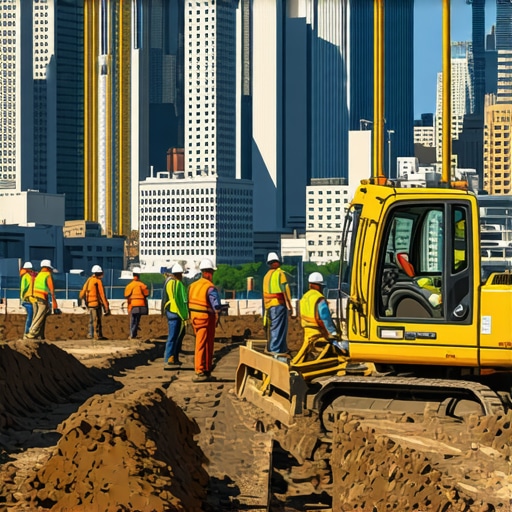
My old journeyman used to say, ‘Water is lazy, but it’s patient.’ It will find the tiniest pinhole and turn it into a geyser given enough time. In thirty years of field service, I’ve seen that patience manifest in the most destructive ways possible, usually behind a wall or under a slab where the owner can’t see the rot until the floorboards start to float. But today, the battleground has shifted from the residential crawlspace to the high-density urban jungle. When we talk about 2026 infrastructure, we aren’t just dealing with a single leaking stack; we are navigating a chaotic subterranean ‘spaghetti’ of fiber optics, high-pressure gas mains, and aging cast-iron sewers that are one wrong move away from a catastrophic failure. The backhoe is a blunt instrument in a world that requires a scalpel. That scalpel is vacuum excavation.
Tactical Daylighting: The Forensic Search for Subsurface Assets
The first tactic for 2026 isn’t about moving dirt; it’s about daylighting. In high-density sites, the utility maps are often little more than polite suggestions. I’ve opened up streets where the ‘documented’ gas line was three feet to the left and six feet deeper than the city records claimed. Using daylighting through vacuum technology allows us to expose these utilities without the risk of a mechanical strike. Imagine the kinetic energy of a steel bucket hitting a 4160-volt line; now compare that to a stream of pressurized air or water that simply washes the soil away. We call this ‘potholing’ in the trade, but in the urban core, it’s forensic surgery. We use the vacuum to create a precise window, allowing our eyes to confirm what the sensors only guess at. This is critical when you are performing subsurface assessments to ensure the structural integrity of the surrounding soil remains intact.
“Excavation shall be performed in a manner that does not endanger the life or health of the employees or the stability of the structure.” – OSHA 1926 Subpart P
The Anatomy of the Borehole: Precision Site Services
Our second tactic involves the integration of borehole strategies. We don’t just suck up mud; we use advanced borehole drilling to create access points for high-density site services. In the freezing winters of the north, where the frost line can reach five feet deep, the ground turns into a concrete-like slurry. Standard excavation would require massive heaters or jackhammers that vibrate and crack nearby clay sewer pipes. Instead, we use hot water vacuum excavation to melt the frost and vacuum the resulting ‘spoil’ into the truck’s debris tank. This prevents the hydraulic shock that often occurs when ice expands by 9% inside a rigid pipe, which I’ve seen snap a 4-inch main like a dry twig three feet away from the actual freeze point. By utilizing innovative borehole techniques, we can insert insulation or heat tracing directly where it’s needed most without tearing up an entire city block.
Slot Trenching: Navigating the Urban Web
The third tactic is slot trenching. In 2026, we don’t have the luxury of wide open pits. We are working in alleys barely wider than a service van. Slot trenching with a vacuum allows for a narrow, deep cut—sometimes only four to six inches wide—perfect for laying new conduits or gas lines. This is where what is vacuum excavation truly proves its worth. It minimizes the ‘spoil’ (the dirt removed), which is a logistical nightmare in a city like New York or London where every cubic yard of dirt has to be hauled away at a premium. The process is sensory: the high-pitched whistle of the air-spade, the smell of damp earth being pulverized, and the sight of clean, exposed pipes sitting in a trench that looks like it was cut with a laser. We ensure the rough-in for these utilities is perfect before a single drop of concrete is poured.
“Joints and connections shall be made gas tight and water tight for the pressure required by test.” – UPC Section 705.0
The Remote Hose Deployment: Overcoming Vertical Constraints
Tactic four is the use of remote hose deployment. High-density urban sites often involve digging in basements or sub-levels where a truck cannot physically go. We extend hundreds of feet of 6-inch reinforced hose, snaking it through doorways and down elevator shafts. This is where the Forensic Plumber knows the value of a good Fernco coupling or a tight seal on the cleanout. Any loss in vacuum pressure means the heavy sludge won’t lift. We are fighting gravity and friction simultaneously. It’s a workout for the forearms and a test of the equipment’s limit. This method is the ultimate in reducing site disruption, as it keeps the heavy machinery on the street while the work happens deep inside the guts of the building. We’ve used this to clear out ‘fatbergs’—those disgusting masses of grease and ‘flushable’ wipes that calcify into a rock-hard obstruction—without having to rip out the historical flooring of a 100-year-old lobby.
Real-Time Utility Verification and the Zero-Strike Goal
The final tactic for 2026 is real-time verification through complex site services. Every time we expose a pipe, we log its GPS coordinates, its material (whether it’s PVC, copper, or the dreaded orangeburg), and its condition. We look for signs of electrolysis in copper lines or the ‘alligator skin’ cracking in old bitumen-coated pipes. By the time we top-out the project, we have a digital twin of the subsurface. This isn’t just about digging; it’s about information. We use the vacuum to clear the ‘dope’ and debris from old fittings, checking for the tell-tale green crust of slow-leaking oxidation. When you choose the right advanced site services, you aren’t just paying for a hole; you’re paying for the certainty that you won’t wake up to a geyser in the middle of the night. Because at the end of the day, water is still lazy, it’s still patient, and it’s still looking for a way out. Our job is to make sure it stays exactly where we put it.