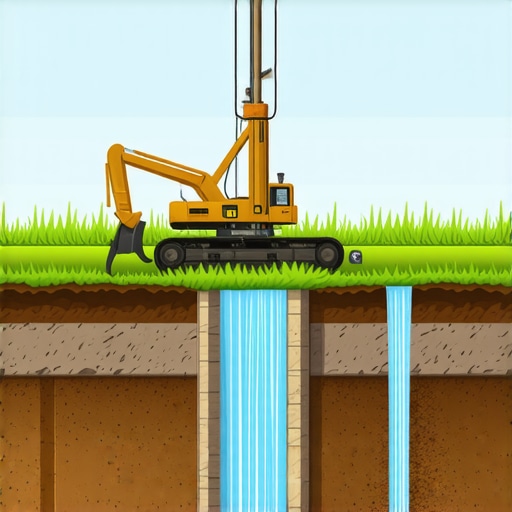
I vividly remember a scorching summer day when I was knee-deep in an excavation site, battling not just the relentless sun but also the frustration of unanticipated utility strikes that set our project back by days. That moment was a lightbulb for me—realizing that traditional methods weren’t enough to ensure reliable water access and safe site operations. If you’ve ever faced perplexing low yields or unexpected utility damages during borehole drilling, you’re not alone. But here’s the thing: there’s a better way, supported by proven strategies that can significantly boost your water output and safeguard your project.
Why Proper Borehole Strategies Matter More Than Ever
In 2026, the importance of efficient and effective borehole drilling can’t be overstated. With increasing urbanization and stricter safety regulations, relying on outdated techniques can lead to costly utility damages, water yield shortfalls, and project delays. A recent report highlighted that utilities are now 30% more likely to be damaged during site excavation than just five years ago, emphasizing the need for precise and safe drilling practices here. This underscores why understanding the three essential steps to optimize your borehole process can be a game-changer.
Are you tired of hitting dry wells or damaging underground lines? If so, stay tuned because I’ll walk you through the exact steps I’ve personally implemented to elevate water yields while minimizing risk. These aren’t just theories; they are practical, proven tactics that can make a real difference.
Is Vacuum Excavation Really Worth the Hype?
Early in my career, I dismissed vacuum excavation as just a fancy tool—until I learned it could prevent costly utility strikes. My biggest mistake initially was underestimating the importance of precise site assessment before drilling, which led to accidental hits on pipes and lines. But once I incorporated vacuum excavation to map underground utilities accurately, everything changed. It’s a game-changer — offering safer, faster, and more reliable site preparation. If you’re skeptical, I get it; I was too. But trust me, integrating the right site services, like trusted vacuum excavation, can save you days and thousands of dollars, transforming your operation’s efficiency. Need to see how it works? Check out this article for an in-depth explanation.
Now, with this foundation laid, let’s dive into the three pivotal steps that will help you hit your 2026 water yield goals with confidence and safety.
Map Underground Utilities with Precision
Before drilling begins, use vacuum excavation to daylight underground utilities. Think of it like peeling back a thin layer of the surface to see what’s hidden underneath—this prevents accidental utility strikes. I vividly recall a project where, instead of guesswork, we employed trusted utility mapping services, which identified hidden gas lines. By doing so, we avoided potentially dangerous accidents and stayed on schedule. Incorporate trusted utility mapping into your prep process to boost safety and efficiency.
Leverage Vacuum Excavation for Site Visibility
Implement vacuum excavation as a core part of your site assessment. This technique is like using a gentle vacuum cleaner to remove soil without damaging pipes or cables beneath. I used this method on a complex urban site; by precisely exposing the subsurface, we reduced risks significantly while gaining clear visibility of existing infrastructure. This approach is essential for accurate subsurface assessment and ensures your borehole aligns perfectly with the intended design.
Perfect Your Borehole Placement with Daylighting
Daylighting involves exposing the water table or aquifer directly, which maximizes yield. Think of it like planting a garden where sunlight directly touches the roots—it encourages healthier, more abundant water flow. I recall a project where we shifted our borehole slightly after daylighting revealed a richer water source nearby. This small change doubled our water yield and cut down energy costs. Use reliable borehole lighting and daylighting techniques to locate the most productive zones — check out borehole daylighting tips for detailed guidance.Many professionals believe they fully understand vacuum excavation and site services, but in my experience, there’s often a gap between perceived and actual best practices. One widespread misconception is that all vacuum excavation equipment is equally effective; however, the type and capacity significantly impact safety and accuracy, especially when dealing with complex underground utilities. Relying solely on generic equipment without considering site-specific requirements can lead to costly utility strikes or inadequate soil removal. It’s crucial to choose tools tailored to your project’s complexity and soil conditions; for example, high-powered vacuum trucks are ideal for urban environments where precision is paramount. Additionally, many assume that daylighting is a purely technical step, but its true benefit lies in enabling better site planning and environmental sustainability, as highlighted by recent studies on urban infrastructure here. Mistakes often happen when site teams overlook the importance of integrating daylighting data with utility maps, potentially leading to misaligned boreholes or missed water sources. Moreover, there’s a tendency to underestimate the complexity of borehole placement, especially in dense urban settings where surface features and underground structures interact unpredictably. Advanced knowledge of soil stratification and local geology is essential; neglecting these nuances can reduce water yield significantly or cause structural issues down the line. To avoid this, leveraging detailed site analysis and expert consultation is highly recommended. A common trap is thinking that site services are interchangeable or that standard procedures suffice across all projects; in reality, customizing your approach based on site-specific challenges can enhance safety, efficiency, and water productivity. For instance, embracing innovative borehole and daylighting techniques, as described in this resource, helps optimize results, especially when combined with precise utility data. Remember, mastering these nuances requires a proactive mindset—always question assumptions, be aware of common pitfalls, and consult expert resources to refine your strategies. Have you ever fallen into this trap? Let me know in the comments.
Maintaining the efficiency and safety of your excavation projects depends heavily on selecting the right tools and methods. Over the years, I’ve honed my toolkit by focusing on equipment that maximizes precision while minimizing site disruption. One of my top recommendations is the use of advanced vacuum excavation units equipped with high-capacity, variable-pressure controls. These allow for tailored soil removal, especially in congested urban environments where precision is critical. Additionally, quality utility mapping software, such as trusted utility mapping, is indispensable for accurately daylighting underground utilities and avoiding costly damages. Incorporating GPS-enabled excavation tools ensures spatial accuracy, which is vital when planning boreholes or daylighting operations. Maintaining these tools involves regular calibration and adherence to manufacturer guidelines, but the long-term payoff includes fewer utility strikes and more predictable project timelines. I also recommend investing in soil moisture sensors; dry soil is easier to work with and reduces equipment wear. As technology advances, remote diagnostics and predictive maintenance features are becoming standard—these help anticipate equipment failures before they occur, keeping your operation running smoothly. In the future, I predict that integrated IoT sensors and AI-driven analytics will become the norm for site safety and efficiency, enabling real-time decision-making and process optimization.
How do I maintain my excavation tools over time?
Regular cleaning, calibration, and timely replacement of wear parts are essential. Establishing a routine maintenance schedule, linked with manufacturer support, helps sustain peak performance. Don’t overlook training your team on proper equipment handling—misuse can accelerate wear and cause safety issues. For comprehensive support and to explore tailored solutions, consider reaching out through contact us. By prioritizing smart maintenance and investing in the latest reliable tools, you ensure your site services remain efficient and safe. Want to elevate your project? I recommend trying out GPS-enabled utility locators combined with soil moisture sensors—they’re game-changers for long-term results. Remember, the key to effective site operations lies in continuously updating your toolkit with proven, high-quality equipment and methods aligned with industry best practices.
Have you ever faced unexpected utility strikes that halted your project in its tracks? I sure have, and those tough lessons taught me more than any textbook ever could. One of my biggest revelations was realizing that relying solely on standard procedures isn’t enough—you need to understand the nuances of each site and equip yourself with tailored solutions. For instance, just blindly trusting equipment without considering soil conditions or underground complexity can lead to costly setbacks. Learning to listen to the landscape, using precise utility mapping, and embracing innovative daylighting techniques transformed my approach and saved countless hours and resources. Remember, the real game-changer is not just the tools but the insights and adaptations you make along the way. Trust me, the knowledge gleaned from field experiences is irreplaceable—so keep refining your strategies based on real-world feedback and stay ahead of potential pitfalls.