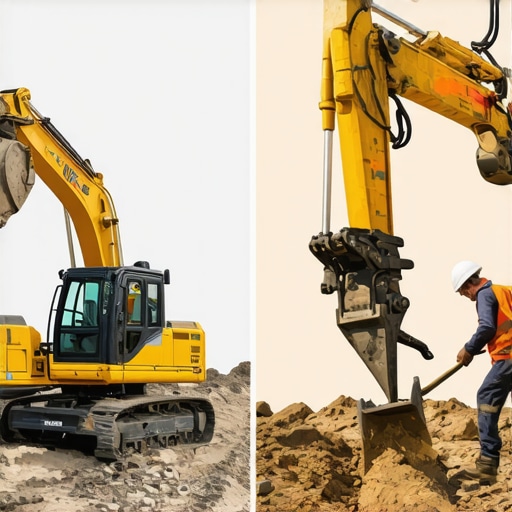
The Sudden Hiss: When a Shovel Meets a High-Pressure Main
The sound isn’t what you expect. It is not a loud bang, but a sharp, wet hiss—the sound of 80 PSI water vaporizing as it escapes a nicked polyethylene pipe. In thirty years of forensic plumbing, I have seen this scene play out more times than I can count. A crew is doing a ‘rough-in’ for site services, thinking they are being careful with spades and pickaxes. Then, thwack. The spade catches the side of a lateral. Suddenly, the trench is a muddy soup, the client’s basement is taking on water, and the profit margin on the job evaporates faster than the spray from the leak.
My old journeyman used to say, ‘Water is lazy, but it’s patient.’ It will find the tiniest pinhole and turn it into a geyser given enough time. This is the fundamental physics lesson every excavator learns the hard way. Whether you are dealing with a sewer stack or a primary water main, the ground is a minefield of buried assets. As we move into 2026, the density of our urban underground—filled with fiber optics, gas lines, and aging cast iron—makes traditional hand digging not just slow, but dangerously obsolete. The physical reality of soil displacement has changed, and so has the math behind how we clear it.
The Material Science of Subsurface Hazards
When you take a steel shovel to the earth, you aren’t just moving dirt; you are applying concentrated kinetic energy to a localized point. If that point happens to be a 40-year-old galvanized line, you aren’t just ‘digging’—you are initiating a corrosion event. Hand digging often results in what I call ‘blind strikes.’ You don’t even know you’ve damaged the pipe until weeks later when the soil saturates and a sinkhole forms. The friction of the metal tool against the pipe wall creates heat and micro-fractures, especially in brittle materials like old clay or ‘Orangeburg’ pipes that have become a soggy, fibrous mess over the decades.
“Excavation shall be made to such a depth that the bedding of the pipe will be on firm, stable material.” – International Plumbing Code (IPC) Section 305.2
Achieving that ‘firm, stable material’ without disturbing the surrounding soil is the primary challenge. In 2026, the labor costs for hand digging have spiked, but the insurance premiums for utility strikes have soared even higher. This is where what is vacuum excavation becomes the central question for any serious contractor. Unlike the blunt force of a spade, vacuum excavation uses high-pressure air or water to atomize the soil, turning it into a slurry that can be sucked away without ever touching the utility itself. It is the difference between performing surgery with a chainsaw versus a laser.
The 2026 Cost Review: Hand Digging vs. Vacuum Technology
Let’s look at the raw numbers. In 2026, a standard ‘borehole’ for utility verification using manual labor requires a two-man crew, roughly 4 to 6 hours of time depending on soil compaction, and carries a significant risk of physical fatigue and injury. When men get tired, they get sloppy. They stop ‘feeling’ for the change in soil density that indicates a pipe is near. The cost of this labor, combined with the mandatory safety spotters, often exceeds $800 per hole when you factor in the liability insurance. Compare this to vacuum excavation. A hydro-vac rig can perform the same ‘daylighting’ in under 45 minutes with a single operator. Even with the higher hourly rate for the specialized truck, the per-unit cost drops significantly because of the sheer volumetric efficiency.
Furthermore, choosing the right site services involves looking at the restoration costs. When you hand-dig a trench, you disturb a wide swath of soil, often requiring extensive backfilling and compaction to prevent future settling. Vacuum excavation creates a surgical, vertical shaft. The surrounding soil structure remains intact, which means you don’t deal with the ‘settling cracks’ in the driveway three months after the ‘cleanout’ was installed. The precision of the vacuum hose allows for accurate subsurface assessments without the collateral damage of traditional methods.
Hydro-Geography: Physics in the Trench
The type of soil—the hydro-geography—dictates the tool. If you are in the clay-heavy soils of the South, hand digging is a nightmare of sticky, heavy sludge that clings to tools and breaks backs. If you are in the North, dealing with frost lines and frozen aggregate, a spade is useless. Vacuum excavation rigs can be equipped with heaters to cut through frozen ground like a hot knife through butter. This ‘thermal digging’ is the only way to reach a burst pipe in mid-January without spending three days with a jackhammer.
“Prior to the start of excavation, the location of underground utilities shall be determined.” – OSHA 29 CFR 1926.651(b)(1)
The ‘location’ isn’t just a mark on a map; it’s a visual confirmation. This is why exploring daylighting benefits is so critical for modern infrastructure. Daylighting is the process of exposing the utility so the operator can see exactly where the pipe enters the ‘stack’ or where the ‘stub-out’ is located. By using air or water to move the dirt, we eliminate the risk of the ‘blind strike.’ I have seen ‘pipe dopes’ and sealants fail because the pipe was stressed during a manual excavation—a problem you never have when the soil is simply vacuumed away.
The Speed Factor: Time is Water
In a forensic plumbing emergency, speed is everything. If a main has split and is undermining a foundation, you don’t have time for a crew to gingerly scrape away dirt with hand tools. You need the 3,000 CFM suction of a vacuum rig. The ability to clear a path to the leak in minutes rather than hours is what saves buildings. We are seeing a massive shift in 2026 toward optimizing borehole strategies where vacuum technology is the first line of defense, not the last resort. It allows for a faster ‘top-out’ of services and ensures that the ‘rough-in’ phase of construction doesn’t get bogged down in utility-strike litigation.
We also need to talk about the environmental grit. Hand digging creates massive piles of loose spoil that runoff into storm drains during rain. Vacuum excavation keeps the spoil contained in a tank. It’s cleaner, it’s faster, and it respects the biology of the site. When you are done, you can often pump the slurry back in or haul it away to a dedicated facility, leaving the site as clean as a whistle. No mud on the sidewalk, no ‘black sludge’ tracking into the client’s home, and no angry calls from the city about silt in the sewers.
Conclusion: The Professional’s Choice
Water always wins eventually, but with the right tools, we can manage where it goes and how it gets there. The 2026 reality is clear: hand digging is a specialized skill for tight spots where a hose cannot reach, but for everything else, vacuum excavation is the standard. It provides the safety, speed, and cost-effectiveness that modern site services demand. Don’t be the contractor who ‘sweats’ a joint perfectly only to have the pipe crushed by a backhoe or nicked by a shovel during the backfill. Invest in the precision of vacuum technology and keep your pipes—and your reputation—intact.