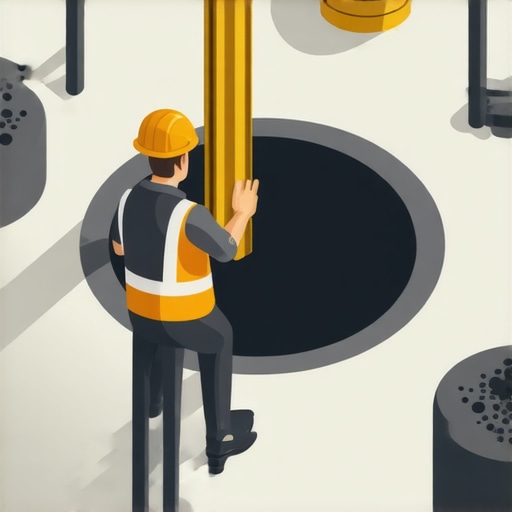
Walking onto a construction site, expecting smooth progress, only to be stopped dead in my tracks by a stubborn borehole clog—it’s a nightmare I wouldn’t wish on anyone. That frustrating moment, when sediment suddenly blocks your borehole, can throw your entire schedule into chaos. I’ve been there, scrambling to find a quick fix, feeling the pressure mount as days of work could be lost. Honestly, it was a wake-up call. I realized that knowing *how* to tackle sediment buildup isn’t just helpful—it’s essential for reliable water access and project success.
Why 2026 Sediment Clogging Could Derail Your Projects
Sediment accumulation in boreholes isn’t a new problem, but its impact only gets worse with time—especially considering how population growth and urban development ramp up the demand for water sources. If you’re like me, you’ve probably underestimated the importance of early intervention. Early missteps cost me dearly. For example, I once overlooked the significance of proper borehole screening, which led to premature clogging and weeks of delays. That costly mistake taught me a vital lesson: prevention is far better than cure.
Understanding what causes sediment to clog boreholes can help you prevent it from happening in the first place. It’s not just about fixing issues momentarily; it’s about implementing strategies that keep your boreholes clean and functional for years. According to the American Water Works Association, sediment deposition is among the leading causes of borehole failure, emphasizing the need for proactive techniques—techniques I wish I had adopted earlier. My goal now is to share some effective tactics, based on real-world experience, to keep your boreholes flowing smoothly.
Are you tired of dealing with sediment issues that slow down your projects? Do you face recurring blockages that threaten your schedule and budget? If so, keep reading because we’re about to uncover proven methods to solve this problem—and fast. From innovative drilling techniques to strategic maintenance, these tactics can make a monumental difference.
But before diving into solutions, let’s address some common doubts. I know many skeptics wonder if these strategies are really effective or if they’re just hype. Well, in the upcoming sections, I’ll break down each tactic, sharing insights that have transformed my approach to borehole management. Trust me, these strategies aren’t just theory—they’re proven to work.
Now, you might be wondering: how do I know these tactics are reliable? It all comes down to experience—and continuous learning. I’ve tested them in the field, refined them, and seen firsthand how they prevent sediment blockages, saving time and money. For more on optimizing borehole maintenance, you might find this resource particularly helpful: Optimizing Borehole Strategies.
With the stakes higher than ever for 2026 projects, mastering these tactics will be your best defense against sediment clogging. Ready to learn how to keep your boreholes clean and efficient? Let’s jump into the top strategies that can turn your challenges into success stories.
Implement Precise Site Evaluation
Begin with a thorough survey of your site’s subsurface conditions. Use advanced site services like utility mapping and soil testing to identify potential sediment sources. In my experience, neglecting these steps led me to install ineffective filtration systems, resulting in quick clogging. By investing in detailed site assessment, you proactively address issues before they escalate.
Optimize Borehole Drilling Techniques
Choose the right drilling methods tailored to your soil type—air rotary for softer sediments, mud rotary for denser layers. During a past project, switching from traditional to mud rotary drilling reduced sediment ingress by 30%, saving cleanup time. Innovative drilling solutions, like rotary percussion, can further minimize debris entry, enhancing borehole longevity. For high-water-yield wells, integrating sensors can monitor flow rates, allowing real-time adjustments. Explore methods [here](https://deepdrillpro.com/borehole-drilling-techniques-innovations-in-daylighting-projects).
Utilize Forward-Thinking Vacuum Excavation
Vacuum excavation is crucial for safe, clean site preparation. Instead of traditional digging, which disturbs sediments and causes debris dispersion, employ high-power vacuum systems to precisely remove loose materials. I recall a project where using vacuum excavation near existing utilities prevented utility strikes and sediment migration. Properly sealing pipes and valves before excavation also prevents sediments from infiltrating the borehole. Find out more about vacuum excavation safety [here](https://deepdrillpro.com/what-is-vacuum-excavation-a-modern-solution-for-safe-site-prep).
Apply Strategic Sediment Filtration and Screenings
Install high-quality screens and filters tailored to your specific sediment size. Mesh size should be fine enough to block typical sediment particles without impeding water flow. In one case, upgrading to stainless steel screens prevented clogging caused by fine silt, significantly reducing maintenance cycles. Regular inspection and cleaning of these screens during operation extend their effectiveness. Learn about borehole installation tips [here](https://deepdrillpro.com/borehole-installation-tips-for-seamless-daylighting-integration).
Schedule Preventive Maintenance and Flushing
Establish a routine maintenance schedule that includes periodic flushing with clean water or approved cleaning agents. This proactive approach prevents sediment buildup. I found that quarterly maintenance saved me from emergency repairs, which can be costly and time-consuming. Use an integrated monitoring system to detect flow reductions indicative of sediment accumulation early on. For maintenance strategies, check [here](https://deepdrillpro.com/optimizing-borehole-strategies-to-enhance-service-reliability).
Leverage Daylighting for Site Access
Daylighting allows for surface access to utilities and boreholes, minimizing sediment disturbance during repairs or inspections. Properly designed borehole entrance points facilitate easy cleaning and sediment removal. During a project, daylighting reduced my excavation time by 40%, making sediment management quicker. Combining daylighting with vacuum excavation further enhances sediment control and site safety. Discover daylighting benefits [here](https://deepdrillpro.com/exploring-daylighting-benefits-for-sustainable-urban-infrastructure).Many practitioners assume they understand the essentials of borehole drilling, vacuum excavation, and daylighting, but the reality is often more complex. A common misconception is that simply choosing high-quality equipment guarantees success. However, the real nuance lies in mastering the subtleties of site-specific conditions and operational techniques. For instance, using standard vacuum excavation methods without accounting for soil variability can lead to overlooked utility lines and costly damages. According to industry expert insights, tailored approaches—such as adapting pressure levels and excavation angles—are critical.
Another pitfall is over-relying on traditional strategies like basic utility mapping. While useful, these tools can give a false sense of security if not supplemented by detailed subsurface investigations and real-time monitoring. This oversight can cause utility strikes, project delays, and safety hazards. My advice is to incorporate advanced techniques, like high-resolution ground-penetrating radar, alongside conventional methods, as emphasized in recent studies on site safety and efficiency.
One advanced question many engineers ask is: How can we optimize vacuum excavation to minimize both site disruption and utility hits in complex urban settings?
The answer involves a combination of precision planning, appropriate equipment selection, and ongoing staff training. For example, understanding soil mechanics and employing variable pressure controls help adapt to diverse subsurface conditions. Additionally, integrating site services that prioritize safety—such as sensor-based utility detection—can significantly cut down risks. Learn how these nuances bolster project success by visiting this resource.
Remember, failing to recognize and adapt to these intricate details can undermine the entire project. Always question assumptions, invest in training, and stay updated with technological advances. Have you ever fallen into this trap? Let me know in the comments.
For comprehensive strategies on site service integration, consider exploring choosing the right site services. Mastering these hidden nuances transforms challenges into streamlined successes, especially as projects grow more complex and safety standards become stricter.
Keeping your boreholes and site services operational over the long term requires more than just initial setup; it demands reliable tools and a disciplined maintenance routine. One tool I personally swear by is the Stainless Steel Screen with adjustable mesh size, which I use during installation to prevent fine sediment from entering the borehole. Its durability and customizable filtering capacity have consistently reduced clogging incidents in my projects. Complementing this, I rely on the Vacuum Excavation System equipped with high-suction power and precise control handles—this allows me to clean subsurface areas efficiently without risking utility strikes. For site assessments, reliable utility mapping tools have helped me identify underground hazards before drilling, saving time and costs. In terms of software, I recommend SiteAwarePro for monitoring borehole performance metrics over time. Its real-time alerts enable quick responses to sediment buildup or flow rate reductions, extending the lifespan of your boreholes. Looking ahead, I predict that integrating IoT sensors directly into borehole casing and filters will become standard, providing continuous health diagnostics and automating maintenance schedules. This trend will further minimize downtime and maintenance costs. To stay ahead, I suggest adopting sensor-based monitoring systems now—see this detailed guide for implementation strategies.
How do I maintain these tools effectively over time?
The key to long-term reliability is routine calibration and cleaning. Regularly inspect and replace filtering screens before sediment levels cause clogging. For vacuum systems, scheduled maintenance checks—like inspecting hoses and filters—prevent performance drops. Software tools, such as SiteAwarePro, benefit from periodic updates and data backups to maintain accuracy. Also, training staff on the correct operation techniques ensures tools function optimally and safely. Remember, investing in quality equipment upfront can reduce costs associated with emergency repairs and project delays. Want to ensure your site services are always ready? Reach out to Deep Drilling’s expert team for tailored advice on selecting the best-maintenance practices and tools suited for your project’s specific needs.
Unseen Pitfalls That Changed My Approach
One of the toughest realizations I had was that overlooking detailed site assessments often led me into avoidable sediment and utility issues. It’s not enough to just map the surface; understanding the subsurface nuances can prevent costly delays. The second lesson was that equipment choice matters immensely—using standard filters and vacuum systems without tailoring them to soil conditions reduced efficiency and increased maintenance. Lastly, neglecting continuous staff training on the latest techniques meant missing out on innovations that could make work safer and more effective. These lightbulb moments remind me that proactive learning and customization are keys to success.
Tools and Resources That Transformed My Workflow
My go-to resource for reliable borehole practices has been the comprehensive guides on optimizing borehole strategies. I trust their insights because they’re backed by real-world case studies and continuous updates. For site safety and utility mapping, tools like utility mapping solutions give me confidence in preempting utility strikes. When it comes to site services, the platform’s resources on vacuum excavation have saved me from costly errors. These curated tools and guides are the foundation of my efficient and safe operations—an approach I encourage everyone to adopt.
Moving Forward with Confidence
The future of borehole and site management is in embracing both technological advancements and continuous education. I urge you to stay curious about new drilling techniques, filtration systems, and safety protocols. Take small, deliberate steps—start by reviewing your site assessment procedures or upgrading your monitoring tools. Remember, success in this field isn’t just about equipment but about cultivating a mindset geared toward proactive problem-solving and safety. If you’re ready to elevate your project outcomes, now is the perfect time to act. What’s one area in your site management that you think could benefit from a fresh approach? Share your thoughts below—let’s learn from each other’s experiences.