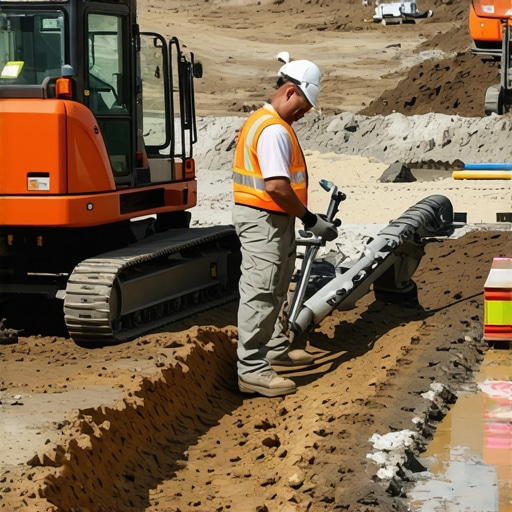
I vividly remember a morning on-site when I almost hit a gas line because I was relying solely on old maps and guesswork. The adrenaline rush of realizing what could have gone wrong hit me hard. That moment was a lightbulb, reminding me that on 2026 sites, you simply can’t afford to dig blindly anymore. The stakes are too high, and the margin for error is shrinking.
What Happens When You Skip the Precise Site Assessment
In my early days, I thought a quick visual inspection and some assumptions about underground utilities were enough. Turns out, I was playing with fire. According to experts, utility strikes cost millions each year, and many of these incidents are due to inadequate site information — a mistake I almost paid for firsthand. Whether it’s fiber optics, gas lines, or water mains, hitting an overlooked underground utility can cause serious delays, hefty fines, and even safety hazards.
Have you ever faced a situation where incomplete site data led to unexpected problems? If so, you’re not alone. The good news is, techniques like vacuum excavation and daylighting can significantly reduce these risks, providing accurate, real-time subsurface information.
This article will guide you through proven strategies to avoid common pitfalls and ensure your 2026 projects are safe, efficient, and successful. Ready to ditch guesswork and embrace the right tools? Let’s dive into why precision isn’t just an option anymore — it’s a necessity.
Deploy Vacuum Excavation for Accurate Utility Mapping
Start by renting or investing in a reliable vacuum excavation unit. I recall a project where using vacuum excavation allowed me to uncover hidden gas lines under asphalt without damaging the surface or causing safety hazards. Just like using a straw to gently draw out soil around underground utilities, vacuum excavation uses high-pressure air and water to loosen soil, which is then safely extracted with a vacuum. This technique offers a precise, non-destructive way to expose utilities, minimizing the risk of accidental strikes.
Plan Borehole Locations Strategically
Next, determine optimal borehole sites to perform daylighting—exposing utilities to verify their positions. Think of boreholes as test points or anchor spots that provide clear views of underground utilities. During a recent daylighting operation, I drilled small boreholes at calculated intervals, revealing discrepancies between old maps and actual utility positions. Use a combination of existing data and on-the-ground verification to pinpoint the most accurate sites. For complex layouts, reference strategies outlined in choosing the right site services.
Implement Real-Time Site Monitoring Technologies
Utilize advanced underground detection tools like electromagnetic locators or ground-penetrating radar during excavation. These devices function like high-tech x-ray vision, helping you visualize underground objects in real-time. I once used a ground-penetrating radar survey before any digging, which helped me identify a fiber optic conduit unexpectedly rerouted beneath a planned trench. Employing such tools prevents costly miscalculations and enhances safety — details on effective solutions are available in vacuum excavation for accurate assessments.
Integrate Technology with Traditional Methods
Combine non-invasive methods with traditional site visits. While gadgets provide data, physical inspection confirms utility positions. I remember visiting a site where trenchless detection suggested a water pipeline, but a manual inspection revealed a different route; this mismatch underscored the value of direct verification. Always cross-reference data, especially from outdated maps, to avoid surprises during deeper excavation phases.
Document and Communicate Findings Clearly
Keep detailed records everywhere, from vacuum excavation expose points to borehole locations and detection readings. Clear documentation prevents miscommunication among team members and contractors. When I provided comprehensive maps incorporating vacuum excavation data and borehole logs, the project avoided costly delays caused by utility strikes. Use digital mapping tools aligned with borehole strategies for best results.
While many assume that vacuum excavation and site services are straightforward tools for utility detection, the reality is far more nuanced. A common misconception is that these methods are infallible or universally applicable without considering site-specific factors. In my experience, the belief that a single technique suffices often leads to overlooked risks, especially in complex urban environments where underground utilities intertwine unpredictably. Relying solely on vacuum excavation without understanding its limitations—such as soil type, utility density, or equipment calibration—can inadvertently cause damage or incomplete data.
Another trap is the overconfidence in existing borehole data. Many assume that historical records are accurate and current, but outdated or incomplete data can fool even seasoned professionals. This is why integrating real-time daylighting and ground-penetrating radar is crucial for verification, especially when planning critical infrastructure projects. To truly optimize safety and efficiency, it’s essential to combine these advanced methods with traditional site inspections, thus avoiding the illusion of certainty that can lead to costly mistakes.
A hidden nuance that often escapes notice is the influence of soil conditions on excavation outcomes. For instance, loose or saturated soils require different vacuum pressure settings and borehole techniques compared to dense, clayey substrates. Failing to adapt can result in utility blowouts or collapses. As highlighted in research from the International Journal of Geotechnical Engineering, site-specific soil analysis significantly enhances the reliability of excavation and daylighting operations. This underscores the importance of a tailored approach over generic protocols.
For advanced practitioners, questions like “How can I leverage combined sensor data to improve underground utility mapping accuracy?” are vital. Using multi-sensor fusion—integrating electromagnetic locators with ground-penetrating radar—can drastically reduce errors and safeguard site personnel. The key is understanding that technology complements, but does not replace, expert judgment.
Ultimately, the critical takeaway is that one-size-fits-all strategies do not suffice in complex site services or utility detection projects. Always question assumptions, verify with multiple methods, and tailor your approach to the unique site conditions. When in doubt, seek guidance from trusted resources like DeepDrillPro’s comprehensive guides on maximizing safety with advanced site services. Remember, the devil is in the details—don’t let overlooked nuances become your project’s Achilles’ heel.
Have you ever fallen into this trap? Let me know in the comments.
Investing in Reliable Equipment for Consistent Performance
One of the most critical aspects of maintaining effective site services, especially vacuum excavation and borehole operations, is selecting the right tools. I personally rely on high-quality vacuum excavation units from trusted manufacturers like Supervac, which offer durability and precise control. Equipment with adjustable pressure settings allows me to adapt to different soil types and utility conditions, reducing the risk of damage or incomplete uncovering. Regularly inspecting hoses, vacuum pumps, and water jets ensures optimal performance and longevity. Keeping your machinery well-maintained prevents unexpected breakdowns that can delay projects and increase costs.
Stay Ahead with Advanced Monitoring Software
Digital tools such as SITECH’s site management software help track equipment usage, maintenance schedules, and performance metrics. These platforms enable proactive servicing, ensuring that your instruments are always operating at peak efficiency. By integrating data from your machinery, you can predict potential failures before they happen, saving time and preventing costly repairs. Embracing software solutions is a logical step toward future-proofing your site operations, aligning with trends highlighted in maximizing safety with advanced site services.
Streamlining Long-Term Results with Routine Checks
Establishing a schedule for regular equipment calibration and soil analysis is essential. Simple tasks like checking pressure gauges before every shift or conducting periodic soil tests help maintain efficiency. For example, soil saturation levels directly impact vacuum effectiveness; saturated soils require different handling techniques. Incorporating routine inspections into your workflow ensures consistent results and mitigates the risk of utility strikes or equipment failure. Remember, small preventative actions today pave the way for success in future projects.
Preparing to Scale your Site Services Effectively
As your operation grows, so does the need for scalable solutions. Modular systems that can be expanded or upgraded allow quick adaptation to project demands. Training your team to operate multiple advanced tools, such as ground-penetrating radar in conjunction with vacuum excavation equipment, builds a versatile workforce capable of handling complex environments. This approach reduces downtime and enhances project safety and reliability. For comprehensive guidance, consult resources like optimizing borehole strategies for better service.
How do I maintain site service tools over time?
Consistent maintenance involves regular cleaning, lubrication, and calibration of equipment following manufacturer guidelines. Keep detailed records of service histories, and schedule routine professional inspections to identify wear and tear early. Investing in quality spare parts and training your team on proper handling techniques also prolongs equipment lifespan. Remember, well-maintained tools not only perform better but also help in achieving long-term, reliable project results. Explore more about effective maintenance practices at vacuum excavation’s role in long-term site efficiency.
What the Toughest Lessons Taught Me About Precision in Site Work
One of my most eye-opening experiences was realizing that even seasoned professionals can underestimate the complexity of underground utilities. Relying solely on outdated maps and assumptions can lead to dangerous situations, costly delays, and compromise safety. The key lesson I learned is that persistent verification through multiple methods—like combining vacuum excavation with ground-penetrating radar—can save you from these pitfalls and establish a new standard of precision in site services.
Tools That Revolutionized How I Approach Site Safety
Over the years, I’ve come to trust advanced equipment and digital tools that offer real-time data. For example, integrating electromagnetic locators with vacuum excavation units ensures that I get comprehensive utility mapping, minimizing surprises underground. It’s a combination of reliable technology and practical experience that transforms risk management into proactive planning. For insights into the best practices, check out vacuum excavation for accurate assessments.
Why Every Site Service Strategy Should Be Personal and Flexible
One recurring theme in my work is the importance of tailoring techniques to the soil conditions and utility complexity of each site. Adapting pressure settings, choosing the right borehole locations, and maintaining clear documentation all contribute to a smoother process. There’s no one-size-fits-all approach, and embracing flexibility has repeatedly helped me avoid costly mistakes. Remember, the best plans are those built with insight and a willingness to adapt as new information surfaces.
Making Smarter Choices with Resources That Truly Help
Given the fast-evolving landscape of site services, I rely heavily on trusted sources for training and tools. My go-to resources include the comprehensive guides available at choosing the right site services and borehole strategies. They provide practical, experience-based knowledge that consistently enhances my projects and keeps safety at the forefront.
Embrace the Challenge—Your Next Site Could Be a Breakthrough
Taking the path of meticulous planning and verification might seem demanding, but it sets the foundation for success. Every correct decision in utility detection and excavation safeguards your team and your project’s future. Remember, the more proactive and informed you are about site services, the less reactive you’ll need to be when surprises strike. Are you ready to refine your site approach for 2026 and beyond? Dive into the tools and techniques that will elevate your work—your next breakthrough awaits!
What’s been your biggest challenge in accurately mapping utilities? Share your experience below and let’s learn together!
,