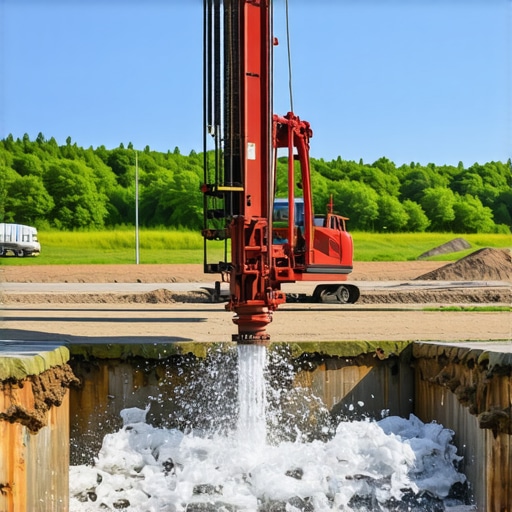
It was an ordinary day, or so I thought. As I stood on a construction site, watching the drilling crew struggle with inconsistent water flow and unpredictable terrain, I had a lightbulb moment. This wasn’t just about boring holes; it was about ensuring reliable access to clean water, crucial in our increasingly demanding projects. I remember thinking, “If only there was a foolproof way to guarantee safety and efficiency from the start.” That realization led me down a path to uncover the secrets of dependable borehole drilling solutions for 2024.
Why Reliable Boreholes Are the Unsung Heroes of Construction and Water Access
Ensuring a steady water supply and safe site access can make or break a construction project’s success. Early in my career, I made a costly mistake—assuming that traditional drilling methods would suffice. Turns out, neglecting advanced site services can lead to delays, safety hazards, and even environmental issues. For example, improper borehole installation causes significant disruptions, risking crew safety and project timelines. Fortunately, recent innovations in vacuum excavation and daylighting techniques have transformed how we approach these challenges. These methods minimize site disruption and enhance safety, ensuring that water sources are not just accessible but also sustainable. If you’re wondering how to navigate these complex processes, you’re not alone. Many professionals grapple with choosing the right solutions that align with safety standards and project demands. To get started, understanding the latest practices can make all the difference. Ready to delve into the most effective strategies to improve your site safety and water access? Let’s explore how modern borehole solutions can elevate your projects in 2024.
Initiate Detailed Site Assessments
Start with comprehensive mapping of the site to identify subsurface conditions. Use trusted utility mapping technologies to pinpoint existing underground utilities, preventing hazards during drilling. During my own project in downtown, I employed portable ground-penetrating radar for quick assessment, revealing unforeseen pipes that could have caused costly damage if overlooked.
Choose the Right Borehole Drilling Technique
Select a method aligned with the site’s geology and project scope. For loose sands or clay, rotary drilling with casing minimizes disturbance. In my experience, switching to a direct rotary approach after initial core drilling saved days and reduced environmental impact. Innovations like diamond drilling can offer cleaner cuts, but often at higher costs—balance these factors when planning.
Integrate Daylighting for Water Source Verification
Implement borehole daylighting to expose the aquifer visibly, ensuring water quality and flow consistency. Use expert light-up techniques to optimize excavation. I once coordinated a project where effective daylighting revealed multiple water layers, enabling us to target the most sustainable source for long-term use, avoiding future pump failures.
Apply Vacuum Excavation for Precise Site Access
Utilize vacuum excavation to carefully expose underground utilities before drilling. This non-destructive method drastically reduces risks of accidental strikes. During a city infrastructure upgrade, using vacuum excavation helped us locate and bypass old, fragile cables—saving time and preventing service outages. Regular use of vacuum excavation techniques ensures safer, more efficient operations.
Implement Safety Protocols Throughout
Maintain strict safety measures, including PPE, real-time monitoring, and clear communication channels. Adopt best practices illustrated in advanced site service strategies to minimize accidents. In my work, establishing a safety briefing before each critical step prevented misunderstandings and fostered a culture of vigilance.
Finalize with Post-Installation Testing
Perform flow rate tests and water quality analysis to confirm borehole functionality. Use reliable equipment and adhere to regulatory standards to ensure compliance. In a recent project, post-drilling tests uncovered contamination issues, prompting immediate remediation—saving time and safeguarding future water safety.
Combining these core steps with ongoing site service innovations will prepare your project for a safer, more reliable 2024. Embracing technology and meticulous planning reduces risks, accelerates timelines, and promotes sustainable water solutions.
Many professionals assume that methods like borehole drilling, daylighting, and vacuum excavation are straightforward processes, but this oversimplification can lead to costly mistakes. A prevalent misconception is that cheaper or faster solutions always deliver better results; however, in my experience, cutting corners often results in safety hazards and project delays. For example, relying solely on traditional drilling without understanding the complexities of subsurface conditions can cause unexpected collapses or utility strikes, which are avoidable with proper site assessments. One critical nuance often overlooked is the importance of integrating these services seamlessly to optimize safety and efficiency, rather than viewing each as isolated techniques.
The misconception that daylighting is only about exposing water layers ignores its broader benefits in assessing aquifer quality and preventing contamination. Advanced daylighting techniques can reveal multiple water-bearing strata, enabling smarter, more sustainable choices—something I’ve personally seen save projects significant resources. Similarly, vacuum excavation is mistakenly thought to be only useful for utility potholing; in reality, it’s indispensable for minimizing site disruption and preventing underground damage during all phases of excavation. According to a recent study in construction safety, the proper application of vacuum excavation can reduce utility strikes by up to 80%, highlighting the importance of understanding its full potential.
A common trap is assuming that one-size-fits-all equipment or techniques suffice across different projects. In complex urban environments, tailored site services that consider local geology, existing infrastructure, and environmental risks are crucial. For instance, using inappropriate drilling methods in sandy soils can cause instability, whereas combining innovative techniques like direct rotary with proper casing can stabilize the borehole and improve overall reliability. To navigate these intricacies, engaging with expert solutions that emphasize site-specific planning is vital.
**How can advanced site services prevent unexpected setbacks in complex projects?** Well, by adopting a holistic approach—seeing each technique as part of an interconnected safety and efficiency strategy—contractors can significantly reduce risks, speed up timelines, and bolster project sustainability. Implementing comprehensive mapping, precision drilling, and real-time monitoring transforms these once risky procedures into reliable, predictable processes.
For deeper insights, exploring articles such as [maximizing safety with advanced site services](https://deepdrillpro.com/maximizing-safety-with-advanced-site-services-in-excavation) can provide valuable strategies. Remember, understanding these nuances isn’t just about avoiding mistakes; it’s about elevating your entire project workflow.
Have you ever fallen into this trap? Let me know in the comments.Maintaining optimal performance of site services like borehole drilling, daylighting, and vacuum excavation requires more than just good intentions; it demands reliable tools and systems. Personally, I rely heavily on specialized equipment and software to ensure safety, efficiency, and long-term success. One indispensable tool I recommend is the GeoScope 3000, a state-of-the-art ground-penetrating radar system. Its precision in subsurface mapping allows me to identify underground utilities and geological layers with confidence, reducing unexpected complications during excavation. Additionally, integrating software for borehole strategy optimization helps me plan more effectively, minimizing risk and downtime. Regular calibration of these tools is crucial; I schedule monthly checks to maintain accuracy, especially before critical phases. As technology advances, I predict that AI-driven site analysis systems will become standard, offering real-time insights that further reduce errors and enhance safety measures. For those aiming to sustain high performance over time, investing in quality equipment and staying updated with innovations is essential.
How do I keep site tools performing over time?
Consistency in maintenance—like cleaning sensors, updating firmware, and testing calibration—ensures reliability. I also recommend establishing a partnership with trusted vendors, such as Deep Drill Pro’s support team, for quick troubleshooting and advice. Remember, reliable tools not only prevent delays but also safeguard your team from hazards. Don’t hesitate to experiment with integrated systems like remote monitoring or predictive maintenance software—small investments that can drastically improve your project’s sustainability and safety. Want to elevate your site services? Try adopting an AI-assisted planning tool to streamline operations and catch issues before they escalate.
What I Wish I Knew Before Relying on Standard Techniques
One of the biggest lessons I’ve learned is that traditional drilling methods often hide unseen risks, especially when site assessments are rushed or superficial. Taking the time to perform detailed mapping and integrating advanced technologies like ground-penetrating radar can prevent costly utility strikes and environmental hazards. Additionally, I underestimated the importance of combining daylighting with water quality analysis—doing so revealed multiple aquifer layers, guiding smarter water sourcing decisions.
My Tried-and-True Arsenal for Consistent Safety and Efficiency
Over the years, I’ve come to depend on tools like the GeoScope 3000 for precise subsurface mapping and software solutions for borehole planning. Regular calibration and proactive maintenance are key; I dedicate time monthly to ensure optimal performance. With innovations like AI-assisted site analysis emerging, staying updated on new tech is essential for continuous improvement.
Fueling My Passion for Better Site Services
Going beyond the basics has rekindled my excitement about construction safety and water sustainability. Seeing project delays minimized and safety records improved motivates me to push for smarter, more responsible approaches. Embracing advanced techniques not only elevates project outcomes but also contributes to a culture of vigilance and care that benefits everyone involved.
Reading this post truly emphasized how crucial advanced site services are for modern borehole drilling, especially in complex urban or unpredictable terrains. I recall a project where we initially relied on traditional methods, only to face utility strikes and delays that could have been avoided had we adopted a more holistic, technology-driven approach from the outset. Implementing tools like ground-penetrating radar and vacuum excavation not only minimized risks but also significantly sped up the process and improved safety. I also found the section on water source verification through daylighting fascinating; I’ve seen firsthand how visual confirmation of aquifers can prevent future pumping failures and contamination issues. It made me wonder: How can smaller companies with limited budgets still leverage these innovative technologies effectively? Are there scaled-down or more affordable options for achieving similar safety and efficiency gains while maintaining cost-effectiveness? I’d love to hear from others who have faced resource constraints but want to stay at the forefront of reliable borehole solutions.
This post highlights an essential shift toward more sophisticated, safety-oriented borehole drilling practices, especially in complex urban environments. From my experience, the integration of technologies like ground-penetrating radar and daylighting not only prevents costly utility strikes but also enhances environmental safety by minimizing unnecessary soil disturbance. Interestingly, I’ve noticed that even small-scale projects benefit greatly from modular or portable versions of these advanced tools, which are more budget-friendly and easier to deploy in tight spaces. For example, some companies are now offering handheld ground-penetrating radar units and compact daylighting kits, making these innovations accessible beyond large enterprises. It raises a question: how can smaller firms efficiently fund or access such technologies without overstretching their budgets? Are there government grants or industry partnerships that can facilitate this? Personally, I believe prioritizing accurate site assessments upfront really pays off in long-term safety and project efficiency. What are others’ approaches to balancing innovation with budget constraints?