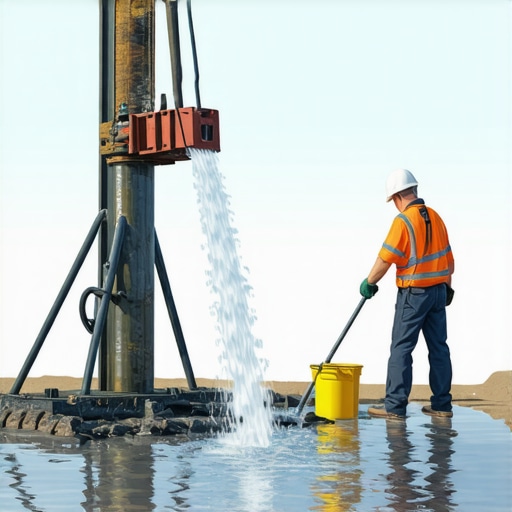
The Physics of the Gurgle: Why Your Water Flow is Dying
My old journeyman used to say, ‘Water is lazy, but it’s patient.’ It will find the tiniest pinhole and turn it into a geyser given enough time, but when it comes to borehole production, water is also remarkably stubborn. If the path of least resistance is blocked by mineral scale or bio-film, that water isn’t coming to your tap. I’ve seen homeowners spend thousands on new pumps when the real problem was the hydro-geology of the borehole skin itself. You hear that whine from the pump? That’s the sound of a machine trying to suck water through a straw filled with wet sand. It’s a battle of physics, and right now, the friction is winning. To fix low water flow in 2026, we don’t just ‘look’ at the pipe; we perform a forensic analysis of the subsurface chemistry.
“Water-supply wells shall be located such that they are not subject to contamination.” – IPC Section 602.2
Fix 1: Mechanical Surging and the ‘Skin Effect’
The most common killer of borehole flow is what we call the ‘skin effect.’ Over years of operation, the fine silts and clays in the aquifer migrate toward your screen. They pack in tight, cemented together by calcium carbonate or iron manganese. To fix this, we don’t just flush it; we surge it. By using a surge block—a heavy plunger that fits the casing—we force water out into the formation and suck it back in. This isn’t a gentle process. It’s violent. It breaks the molecular bonds of the sediment. If your rough-in wasn’t done with a proper filter pack, you’ll be pulling up grey sludge for hours. We zoom in on the perforations: imagine a screen where every hole is half-choked by a gritty, white crust. That’s calcification, and surging is the only way to crack that shell without pulling the whole stack.
Fix 2: Precision Chemical Rehabilitation
When mechanical force fails, we turn to chemistry. In 2026, we’re seeing more aggressive iron bacteria than ever before. This isn’t just ‘dirt’; it’s a living, breathing slime that feeds on the iron in your water. It creates a thick, reddish-brown goo that coats the pump intake and the borehole walls. I’ve pulled pumps that looked like they were dipped in chocolate pudding, only it smelled like a stagnant swamp. We use pH-neutralizing acids and chlorine shocks to dissolve this bio-mass. We target the specific mineralogy. If you’ve got hard water, you’re dealing with calcium scaling. If it’s acidic, you’re looking at corrosion that has turned your brass fittings into a brittle, pitted mess. You need a solution that eats the scale but leaves the pipe intact. This is why optimizing borehole strategies is critical—you have to match the chemical to the contaminant or you’ll end up ‘sweating’ over a collapsed casing.
Fix 3: Daylighting the Wellhead with Vacuum Excavation
Sometimes the flow restriction isn’t at the bottom of the hole; it’s a structural failure of the pitless adapter or the buried lateral line. In the old days, we’d bring in a backhoe and rip up the yard, likely snapping a gas line or a secondary utility in the process. Today, we use vacuum excavation. This is surgical plumbing. We use high-pressure air or water to liquefy the soil and suck it away, ‘daylighting’ the buried components without a single metal tooth touching a pipe. If your borehole flow is low because a root has crushed the poly pipe five feet underground, daylighting is the only way to find it without turning your property into a construction zone. I’ve seen ‘hack’ jobs where a handyman buried a Fernco coupling directly in the dirt; five years later, the soil shift sheared it right off. Vacuum excavation lets us see the ‘stub-out’ and fix the leak that’s robbing your pressure.
“The quality of water supplied shall be maintained at the required pressure and flow.” – UPC Section 601.1
Fix 4: Addressing Aquifer Drawdown and Service Reliability
If the pump is fine and the pipes are clear, but the water flow still drops after ten minutes, you’ve got a drawdown problem. The ‘static level’ of your water is dropping faster than the aquifer can recharge the hole. In 2026, with shifting water tables, we’re seeing this more in urban areas. The fix involves borehole installation tips like deepening the hole or installing a sleeve to seal off ‘thieving’ zones of fractured rock that are sucking away your head pressure. We use a transducer to measure exactly how many feet the water drops during a pump cycle. If it hits the pump intake, you get cavitation—that rattling sound like marbles in a blender. Cavitation will destroy a high-end pump in weeks. We need to throttle the flow to match the recharge rate, ensuring long-term service reliability.
Fix 5: Hydro-Fracturing and Modern Drilling Techniques
When the rock itself is the bottleneck, we use hydro-fracturing. We seal off a section of the borehole and pump in water at pressures high enough to actually crack the bedrock. This opens up new veins of water. It’s the ultimate ‘cleanout’ for a dry well. We combine this with modern borehole drilling techniques to ensure the new fractures don’t just fill back up with silt. This is where you see the difference between a pro and a ‘big box’ installer. We use proper pipe dope on every thread and ensure the well cap is vented. Without a vent, your pump is fighting a vacuum every time it tries to pull water up. It’s a simple fix, but I’ve seen ‘experts’ miss it and blame the aquifer. Buy it once, cry once—get the borehole hydro-fracted by someone who understands the geology, or you’ll be back in the same spot next summer.