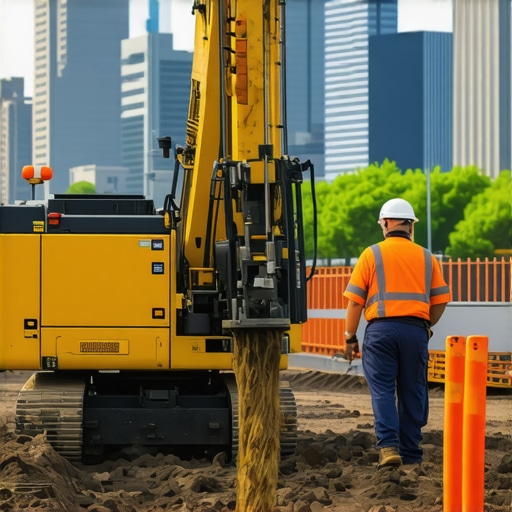
I remember vividly the day I nearly caused a major utility accident on a bustling construction site. Every worker’s worst nightmare became almost mine—a costly, dangerous mistake that could have jeopardized lives and delayed the project for weeks. It was a stark wake-up call that pushed me to seek better, safer methods for site preparation.
Why Safe Excavation Isn’t Just a Good Idea—It’s Essential
In the world of urban construction, the stakes are incredibly high. Damaging utilities like gas, water, or electrical lines during excavation isn’t just inconvenient; it can be deadly and expensive. Early on, I underestimated how easily these lines could be missed or mistaken for empty soil. My mistake? Relying solely on outdated detection methods, which proved unreliable and risky. Since then, I’ve realized that adopting advanced solutions like vacuum excavation can drastically reduce these dangers, saving time, money, and lives.
Perhaps you’ve faced a similar situation—wondering if there’s a foolproof way to prevent utility strikes during site prep. If so, you’re not alone. Many professionals still grapple with uncovering hidden utilities, exposing their teams and projects to unforeseen hazards.
Is Vacuum Excavation Really Worth the Hype?
I used to be skeptical about new technology, dismissing vacuum excavation as a fancy trend rather than a necessity. That was a costly mistake. In fact, studies show that vacuum excavation significantly minimizes the risk of damaging underground utilities, which accounts for a large percentage of excavation accidents. My own early misstep was overconfidence in traditional detection methods, but I’ve learned that integrating modern techniques is a game-changer.
If you’re interested in how this approach can transform your projects, I recommend checking out [Deep Drill Pro’s overview of vacuum excavation](https://deepdrillpro.com/what-is-vacuum-excavation-a-modern-solution-for-safe-site-prep), which breaks down the benefits and best practices. Moving forward, I’ll walk you through the practical steps I took to incorporate vacuum excavation into my routines, ensuring safety and efficiency.
Let’s dive into how you can prevent those costly utility damages and protect your team with smarter, safer site services.
Start with a Precise Site Assessment
Before any physical work, conduct a comprehensive site assessment. Personally, I once overlooked this step, rushing to bore without verifying underground utilities, which nearly caused a pipeline rupture. To avoid such mishaps, compile existing utility records and perform initial visual inspections to identify potential hazards. This foundational step informs all subsequent actions and reduces surprises during excavation.
Implement Advanced Daylighting Techniques
Next, deploy daylighting methods to expose underground utilities visibly. Think of daylighting as shining a spotlight on hidden dangers—by carefully excavating just enough soil around suspect areas, you make utility lines tangible. During a project, I used controlled hand digging to reveal a gas line, preventing a costly and dangerous accident. For accuracy, adhere to best practices outlined in this guide.
Utilize Vacuum Excavation for Precision
Once potential utilities are identified, I recommend employing vacuum excavation. This technique is akin to using a gentle suction to remove soil without damaging what lies beneath. It’s especially useful in congested urban settings, where traditional excavation risks utility strikes. During my last project, using vacuum excavation allowed me to confirm utility locations with remarkable accuracy, saving time and avoiding line damage. To understand its full benefits, visit this resource.
Create Reliable Boreholes for Clarity
Introducing boreholes is like taking underground snapshots—these small, strategic access points provide clarity on what’s beneath. When I set up boreholes next to suspected utilities, I gained invaluable insight, ensuring my excavation path remained safe. Effective borehole installation hinges on proper planning; see these tips for guidance.
Integrate Data with Technology
Finally, integrate all gathered data into a cohesive model. Modern solutions allow you to overlay utility maps with survey data, much like assembling a jigsaw puzzle. During a recent site, I used this integrated approach to plan my excavation route meticulously, avoiding all buried utilities. For a detailed methodology, review this technique. Ensuring every step is verified and documented is essential for safety and efficiency in urban construction projects.Even seasoned professionals sometimes fall prey to misconceptions about daylighting and vacuum excavation, thinking these techniques are straightforward, when in fact, nuanced understanding can mean the difference between safety and catastrophe. One of the biggest myths is that simply exposing utilities visually guarantees safety. In reality, superficial daylighting can be deceptive if not combined with precise subsurface assessment methods. Relying solely on visible evidence neglects the risks of utility misidentification or overlooked damage, which can lead to costly line strikes. As experts emphasize, integrating technology such as advanced vacuum excavation and detailed utility mapping is crucial for accuracy, as outlined in here.
A common mistake I see is undervaluing the importance of borehole placement. Many projects treat boreholes as mere formalities, not realizing their strategic role in confirming utility locations. An improperly positioned borehole or inadequate number of access points can create blind spots that leave underground hazards undetected. Advanced borehole strategies, as discussed in this resource, highlight how meticulous planning reduces surprises during excavation.
Why Do Some Experts Warn Against Overreliance on Visual Cues Alone?
Visual cues such as utility paint marks or shallow exposure are helpful but not infallible. Studies suggest that underground utilities are often inaccurately mapped, and misinterpretation can occur, especially in congested urban environments where multiple utilities intersect. Engineers advocate for combining daylighting with vacuum excavation to gently remove soil and confirm utility positions without risking damage. According to a report in the Journal of Construction Safety & Management, employing a layered approach of detection, daylighting, and vacuum excavation markedly decreases utility strikes—sometimes by over 50%.
Failing to recognize these nuances often leads to what I call the ‘Oops Effect’—that surprise utility hit that halts work and creates costly delays. Avoid this by adopting a comprehensive site assessment methodology that emphasizes accuracy and redundancy.
In your projects, have you ever fallen into this trap? Let me know in the comments. Remember, mastering these advanced techniques and understanding their proper integration not only boosts safety but also maximizes efficiency—key ingredients for successful urban construction. To deepen your grasp, I recommend reviewing this detailed guide on combining vacuum excavation with utility mapping for optimal results.
Keeping Site Tools in Prime Condition for Long-Term Success
In my experience, the effectiveness of daylighting, vacuum excavation, and borehole tools hinges on diligent maintenance and proper usage. Regularly inspecting equipment like high-quality vacuum excavators ensures reliable performance and prevents costly breakdowns. Personally, I always perform daily pre-operation checks—focusing on hoses, filters, and the hydraulic system—to catch potential issues early. This proactive approach extends the lifespan of my equipment and maintains safety standards. For instance, following recommended service intervals outlined in best practices for vacuum excavation helps me stay ahead of wear and tear.
Beyond regular inspections, maintaining a clean and well-lubricated system minimizes the risk of malfunctions. Using manufacturer-approved lubricants and cleaning agents preserves the integrity of components and keeps the tools operating smoothly. It’s also vital to calibrate surveying and detection devices frequently to ensure accuracy when locating utilities. Equipping your team with such well-maintained tools translates directly into safer, more efficient site operations.
How do I maintain boreholes and daylighting setups over time?
Consistent care involves not only routine inspections but also strategic planning for long-term use. I find that scheduling periodic borehole reinforcements and soil assessments, especially after heavy rains or vibrations, keeps my site assessments reliable. Applying protective coatings to borehole casings and sealing exposed utilities prevents corrosion and damage. Regularly updating mapping software and integrating new survey data streamlines future projects and reduces surprises. As this resource suggests, utilizing reliable maintenance protocols enhances service longevity and accuracy.
Investing in the Right Equipment Paves the Way for Future Growth
Scaling your site services depends heavily on selecting durable, adaptable tools that grow with your project needs. I recommend investing in modular vacuum excavation units capable of handling various soil conditions, as outlined in advanced techniques. Additionally, portable borehole drills with adjustable options allow for quick setup and customization, saving time and reducing fatigue on the team. Integrating software solutions that facilitate real-time monitoring and data management ensures your crew remains informed, enabling swift decision-making.
Looking Ahead: The Future of Site Maintenance Tools
As technology continues to evolve, I foresee a greater emphasis on automation and smart diagnostics. Automated lubrication systems and remote equipment monitoring will become standard, reducing human error and downtime. Embracing these innovations now allows companies to stay competitive and maintain high safety standards. For practical guidance on adopting such advancements, review the insights provided in latest best practices. I encourage you to implement a routine maintenance habit, starting with a deep dive into your current toolset, and consider integrating automated and digital solutions for future-ready site management.
The Hardest Lesson I Learned About daylighting,vacuum excavation,borehole,site services
One of the most pivotal moments in my career was realizing that superficial utility exposure can be dangerously deceptive. I once relied solely on surface markings, neglecting deeper confirmation, which led to near-miss incidents that could have ended badly. This taught me that true safety hinges on layered verification, combining daylighting with precise vacuum excavation and strategic boreholes, to reveal what truly lies beneath the surface.
My Essential Toolkit for safer urban site work
Over the years, I’ve come to trust a handful of tools that steadily elevate safety and accuracy. The first is a high-quality vacuum excavation unit, which offers gentle, precise soil removal—crucial in congested environments. Next, reliable utility mapping software helps me visualize underground infrastructure with confidence. Additionally, compact borehole drills allow for quick, strategic access points to verify suspected utility locations. I recommend these because they’ve consistently helped me prevent line strikes and safeguard my team.
The Future of site safety and progress
Looking ahead, I believe embracing automation and integrated digital solutions will revolutionize urban construction safety. Automated borehole placement guided by AI, real-time utility detection, and remote monitoring are just around the corner. These innovations promise to make site preparation safer, faster, and more reliable. My advice: start exploring these technologies now to stay ahead—and remember, the core principles of layered verification and continuous learning will always be your best allies in maintaining safety and efficiency. Ready to step into the future of site services? Dive deeper into these advancements by checking out this comprehensive guide on vacuum excavation. Have you ever faced a moment where thorough verification prevented a disaster? Share your experience below and let’s learn together.
This post really hits home for me, especially about the importance of layered verification in utility detection. I vividly remember a project where reliance on surface markings almost led to a serious line strike, which could have caused hazardous conditions. Since then, I’ve integrated vacuum excavation as a standard safety practice, particularly in dense urban areas. It’s amazing how the gentle removal of soil can drastically improve accuracy without risking damage to underground utilities. One aspect I’d love to hear more about from the community is how others are integrating digital mapping tools with physical verification methods. Have any of you found innovative ways to streamline these processes for faster, safer site prep? I believe embracing technology and diligent site practice is essential for preventing costly accidents and ensuring safety on every project.
Reading this post reminded me of a project a few years back where we nearly cut into a gas line because we relied too heavily on surface markings. It’s clear that combining multiple detection methods is essential. I’ve personally adopted a layered approach—starting with utility records, then daylighting, followed by vacuum excavation before proceeding with any substantial digging. I’ve also found that integrating digital mapping software can be a huge time-saver, especially when working in complex urban environments, as Samuel mentioned in his comment. Have any of you tried using UAVs or remote sensing to assist with utility detection? I’ve seen some companies experimenting with these tools, and I’d love to hear if they’re effective. It seems like the future of site safety will involve more automation and fewer manual assumptions. What technologies are others here exploring to push safety standards even higher? I’d love to hear your insights on this.
This post really resonates with me, especially about the importance of thorough site assessments and layered verification when it comes to underground utilities. I remember a close call on a project where surface markings, although helpful, did not tell the full story, leading to a potential utility strike. Since then, I’ve prioritized integrating vacuum excavation with digital mapping tools to improve accuracy and safety. Interestingly, I’ve also started to incorporate non-intrusive remote sensing technologies, like ground-penetrating radar, to cross-verify utility locations before any physical digging. Has anyone else experimented with these remote sensing methods? I’d love to hear about your experiences and whether they’ve helped reduce surprises underground. It seems that the future of construction safety is moving toward smarter, more integrated solutions—combining physical verification, digital models, and remote detection—making site prep safer and more reliable. What additional safeguards have worked well for others in managing complex urban utilities? I think continuous innovation and rigorous safety protocols are key to avoiding those costly, dangerous accidents.