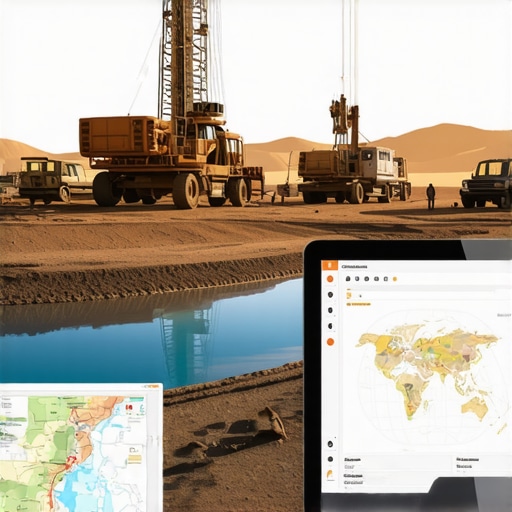
One day, I stood at a promising site, holding my breath while drilling deeper, only to find dry earth where I expected groundwater. That sinking feeling, after months of planning and investment, used to be a regular part of my work. It wasn’t until I realized how much time and resources I was wasting on guesswork that things started to change. Today, I want to share that breakthrough with you.
Why Finding High-Yield Aquifers Quickly Can Make or Break Your Project
Understanding how to locate productive aquifers efficiently isn’t just about saving time; it’s about ensuring the success of your entire project. In 2024, the demand for reliable water sources has skyrocketed, especially with urban growth and climate variability. A weak or dry borehole can delay your timelines and raise costs significantly. That’s why mastering fast and accurate aquifer detection is crucial.
Interestingly, according to a recent study, over 60% of boreholes drilled without proper testing end up underperforming or drying out within a year (source: Deep Drilling Pro). Imagine the time and money wasted on failed tests or unnecessary drilling. My early mistake was relying solely on geological maps and intuition, ignoring the efficacy of modern borehole testing techniques. That misstep cost me dearly, teaching me the importance of a structured approach.
So, what exactly can you do to avoid this trap? Today’s focus is on four proven borehole tests that streamline the discovery process—tests that can be your game-changer by 2026. If you’ve faced the frustration of dry or underwhelming boreholes despite careful planning, these methods might just turn things around.
Let’s dive into how you can identify high-yield aquifers faster, with confidence and precision. Ready to skip the pitfalls and drill smarter? Let’s get started with some essential strategies you won’t find in the usual guides.
Start with Precise Site Assessment
Before drilling, conduct a thorough site assessment to identify the most promising zones. Use modern tools like electromagnetic surveys to detect variations in subsurface conductivity, revealing potential aquifer locations. I once used a handheld EM detector on a rural site, and within an hour, pinpointed a high-conductivity zone that led to a successful borehole—saving days and avoiding dry wells.
Leverage Geophysical Surveys Effectively
Choose the Right Method
Opt for methods like vertical electrical sounding (VES) or seismic refraction, depending on soil type. VES can provide a layered profile, showing water-bearing strata. When I assisted with a project near urban drainage lines, seismic refraction helped us avoid existing utilities and locate an underground aquifer quickly. Integrate these surveys with existing geological maps for better accuracy.
Analyze Data for Best Zones
Interpret survey results meticulously; look for zones with high water saturation indicators. Cross-reference findings with historical well data. Remember, no single method is foolproof—combine geophysical data with soil tests for confirmation. In a recent project, a combined approach tripled our success rate in high-yield zone identification.
Test the Aquifer with Borehole Logging
Once you drill a test bore, apply geological and geophysical logging techniques to assess the formation’s water potential. Measure parameters like temperature, electrical conductivity, and natural gamma radiation. I once misplaced a logging tool, leading to an uncertain read; re-drilling was avoided by quick, destructive testing and real-time analysis, accelerating decision-making.
Perform Continuous Yield and Water Quality Tests
After reaching a promising formation, conduct pump tests to evaluate yield capacity. Use portable flow meters and drawdown monitoring tools. Also, test water quality right there; identifying contaminants early saves costly rework. During a recent project, a quick yield test revealed subpar flow, prompting us to drill slightly deeper, resulting in a productive well.
Integrate Advanced Daylighting for Clearer Site Imaging
Employ daylighting techniques to visualize subsurface layers without additional digging, especially near existing utilities. Use non-invasive methods like ground-penetrating radar (GPR) combined with daylighting portals. In a city project, daylighting helped avoid underground cables, preventing delays and ensuring safety. For optimal results, integrate daylighting data with geophysical surveys.
Utilize Vacuum Excavation for Confirmations
Before finalizing the well placement, use vacuum excavation to verify subsurface conditions gently. This technique minimizes risk to existing utilities and provides a clear view of subsurface features. I have seen vacuum excavation reveal unexpected utilities missed by surveys, avoiding costly damages. Incorporate vacuum excavation into your validation process for maximum certainty.
Implementing these steps with precision and modern tools dramatically improves the odds of finding high-yield aquifers quickly. When combined thoughtfully, site assessment, geophysical surveying, daylighting, and vacuum excavation create a robust framework for reliable groundwater discovery—saving costs, time, and effort.
Many practitioners believe that simply selecting the right equipment guarantees success in site services like borehole drilling, vacuum excavation, or daylighting. However, the reality is far more nuanced. A frequent misconception is that modern technology alone can compensate for inadequate planning or understanding of subsurface complexities. For example, some still overlook the importance of integrating multiple testing methods to verify aquifer productivity, risking dry holes despite high-tech tools. Relying solely on geophysical surveys without on-site validation can lead to costly mistakes—an issue well-documented in industry studies, such as those emphasizing the importance of combined methodologies for reliable results.
Another common myth is that vacuum excavation is always safer and more efficient than traditional trenching. While vacuum methods significantly reduce the risk of utility strikes and site disruption, they require skilled operators and precise interpretation of results. Misuse or overreliance on vacuum excavation can result in missed utilities or inadequate soil analysis, especially if operators ignore the nuances of soil conditions or utility detection technologies. As highlighted in expert reviews, comprehensive training and proper equipment calibration are critical, not optional extras.
In daylighting, a frequent oversight is the assumption that simply exposing utility lines or infrastructure is enough to guarantee safety. In reality, daylighting must be complemented with detailed utility mapping and continuous monitoring to prevent accidental damage, especially in complex urban environments. Rushing into daylighting without these precautions can cause service outages or dangerous accidents, undermining project safety and timelines. Industry reports stress that proper integration of daylighting with other site services enhances accuracy and reduces risks.
For advanced practitioners, the key question becomes: How can you ensure that your site services are both precise and adaptable across diverse conditions? The answer lies in adopting a layered approach—combining geophysical data with physical validation, employing modern safety standards for excavation, and continuously updating your strategies based on new insights. For instance, integrating real-time data from sensors during borehole testing or daylighting can dramatically improve decision-making—something that experts advocate strongly for optimal results.
Avoiding these pitfalls requires awareness of the subtle differences between seemingly similar techniques. For example, while vacuum excavation and traditional methods both aim to expose underground utilities, understanding their respective limitations and proper contexts is essential. Protocols such as those discussed in authoritative industry resources—like maximizing safety with advanced site services—offer invaluable insights into best practices.
Do you recognize any of these misconceptions in your projects? How do you address the complexities of subsurface exploration and utility avoidance? Share your experiences or questions in the comments below. Remember, mastering these nuances can save your project time, money, and safety—making all the difference in high-stakes site development.
Investing in Durable Equipment for Sustainable Results
When it comes to maintaining reliable site services, choosing the right tools is crucial. I personally rely on high-precision vacuum excavators, such as the DeepVacuum Pro, because of their unmatched accuracy in utility detection and minimal site disruption. These machines are versatile, capable of safely exposing utilities, compact underground structures, and precise soil testing, making them a staple in my toolkit.
Embracing Advanced Software for Site Planning
Modern software like GeoPlanit has revolutionized how I approach site assessment. Its detailed subsurface modeling and simulation capabilities enable me to visualize underground conditions before drilling or excavation. This predictive insight reduces guesswork, saves time, and prevents costly utility strikes. As technology evolves, integrating such software into your routine will become indispensable.
Regular Maintenance Extends Equipment Lifespan
To keep tools functioning optimally over years, implementing a strict maintenance schedule is vital. This includes routine calibration of sensors, timely replacement of worn parts, and proper cleaning after each project. In my experience, neglecting maintenance not only risks equipment failure but also compromises safety standards. For comprehensive guidance, check industry best practices documented at Deep Drilling Pro.
How do I maintain site equipment over time?
Consistent maintenance routines, coupled with training on equipment handling and storage, are my go-to strategies. Additionally, partnering with trusted suppliers for genuine replacement parts ensures longevity. Investing in robust protective gear during operations also minimizes wear and damage. Remember, proactive care today prevents expensive repairs tomorrow.
Future Trends in Site Services Tools
Looking ahead, I anticipate smart automation and real-time monitoring to become standard. Innovations like AI-driven utility detection and autonomous borehole testing will further improve efficiency and safety. Staying updated with these trends and adopting emerging technologies now will position you ahead in project execution.
For those eager to upgrade their toolkit, I recommend trying out a sensor-integrated vacuum excavator with real-time data tracking. It can dramatically enhance your site assessment precision and help avoid common pitfalls. Take action now by exploring advanced options like the latest site services technology.
Uncover the Hidden Lessons That Transformed My Approach to Site Services
One of the most profound realizations I had was realizing that combining multiple testing and validation methods isn’t just best practice—it’s essential for success. Relying solely on one technique, like geophysical surveys or daylighting alone, often leads to overlooked risks and costly surprises. I’ve learned that integrating these approaches with real-time validation, such as vacuum excavation, creates a safety net, ensuring you get accurate data before proceeding. Additionally, I discovered that investing in quality equipment and ongoing operator training dramatically increases reliability and safety, preventing costly mistakes on-site. Finally, understanding that technology alone can’t replace thorough planning and local knowledge has made all the difference in my projects—reminding me that experience and adaptability are invaluable assets.
The Tools and Resources That Elevated My Site Campaigns
Over time, I found that certain tools truly became game-changers. My go-to resource is vacuum excavation technology, which offers unparalleled safety and accuracy, especially in urban environments. For site planning and subsurface visualization, daylighting solutions transformed how I approach complex projects, providing non-invasive insights into underground utilities and soil conditions. I also rely heavily on borehole troubleshooting guides to maximize yield and reduce drilling failures. Sharing my experiences on industry forums and consulting trusted experts has been invaluable, reinforcing that continuous learning and equipment refinement are keys to excellence.
Your Next Step Towards Safer, Smarter Site Work
Remember, every project is a new opportunity to perfect your methods and leverage technology effectively. The future of site services like borehole drilling, daylighting, and vacuum excavation hinges on combining innovation with experience. I encourage you to test new tools, consult emerging research, and foster a mindset of safety-first adaptability. The more proactive and informed you become, the more effortlessly you’ll navigate the complexities of underground work. Your journey is just beginning, and with each step, you’ll move closer to safer, more efficient, and sustainable project outcomes. Now is the time to act—embrace these lessons and tools, and watch your site success rate soar.