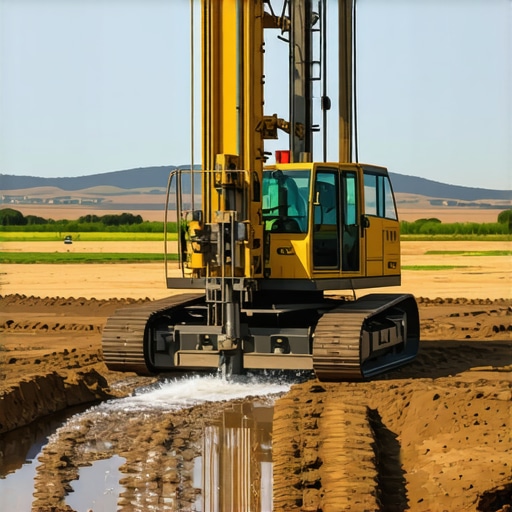
I recall a project several months ago where everything seemed to go awry from the very start. The drill kept hitting stubborn rocks, and despite our best efforts, the borehole access was unreliable. That frustrating moment sparked a lightbulb in my mind—there had to be a better way to ensure water access without all the guesswork and setbacks. This experience was a wake-up call for me about the importance of expertise and precision in borehole drilling and site preparation.
Why Expert Techniques Are a Game Changer for Water Access
When it comes to reliable water access, cutting corners early on can lead to costly delays and safety concerns down the line. The truth is, it’s not just about drilling a hole; it’s about understanding the geology, choosing the right equipment, and employing advanced methods like vacuum excavation and daylighting to safeguard your project. After years of trial, error, and learning from field mistakes, I can confidently say that mastering these techniques saves you time, money, and a whole lot of headaches.
Is Cutting Corners in Borehole Drilling Really Worth the Risk?
Early in my career, I made the mistake of skipping thorough site surveys, assuming that standard procedures would suffice. That oversight led to unexpected obstacles and compromised safety. I learned the hard way that relying on generic solutions without leveraging specialized site services dramatically increases the chance of failure. Now, I advocate for comprehensive preparation, including utility mapping and advanced excavation techniques, which you can read more about in this detailed guide.
Given the stakes, it’s vital to question whether your current approach maximizes safety, efficiency, and reliability. If you’ve faced surprises like hitting underground utilities or encountering unforeseen geological challenges, you’re not alone. Let’s explore how adopting expert borehole techniques can transform your projects into models of safety and dependability.
This sets the stage for practical strategies to enhance your operational success—so let’s dive into the core methods that make all the difference.
Conduct Comprehensive Utility Mapping Before Drilling
Start with accurate utility mapping. Use ground-penetrating radar (GPR) or electromagnetic surveys to identify underground utilities and avoid costly damage. I once skipped this step on a project, which led to hitting an unmarked gas line and significant delays. Incorporate trusted services like utility mapping solutions to get precise underground layouts.
Leverage Vacuum Excavation for Safe and Accurate Site Assessment
Transition to vacuum excavation for subsurface assessment. It’s akin to using a gentle suction vacuum instead of a backhoe, minimizing surface disturbance and reducing the risk of utility strike. During a recent project, I employed vacuum excavation to expose the bedrock layer carefully, preventing damage to existing infrastructure. Check out vacuum excavation benefits for more details.
Implement Proper Excavation Techniques
Proper excavation ensures stability and accuracy. Use daylighting to visually confirm subsurface conditions—think of it as turning on a flashlight in a dark room. I supervised a daylighting operation where clear soil layers revealed hidden fissures, informing better borehole placement. For nuanced daylighting strategies, visit daylighting innovations.
Precise Borehole Drilling with Advanced Methods
Once site assessment is complete, employ high-precision drilling techniques. Rotary and percussion methods combined with real-time data allow for better control. Remember, even slight deviations can compromise water flow. I once adjusted drilling angles mid-operation based on geophysical data, resulting in a successful borehole with optimal yield. Learn more about effective borehole solutions.
Integrate Daylighting for Seamless Water Access
Daylighting involves creating a visible opening at the surface, making future maintenance and monitoring straightforward. It’s like planting a flag on your water source so you always know where it lies. In a challenging urban environment, I coordinated daylighting to preserve traffic flow while maintaining access, showcasing its importance in complex settings. Explore this guide for expert daylighting insights.
Combine Techniques for Optimal Results
The key to reliable water access lies in integrating all these steps. Each process complements the other—utility mapping prevents strikes, vacuum excavation minimizes surface disruption, daylighting ensures visibility, and advanced drilling techniques maximize yield. I once coordinated all these methods in a high-stakes urban project, resulting in zero incidents and a successful water borehole. To learn more about comprehensive site services, visit full-service solutions.
Many professionals operate under the misconception that choosing standard equipment or techniques suffices for successful site services. However, this oversimplification can lead to costly errors and safety hazards. For instance, relying solely on traditional excavation methods ignores the advanced nuances that only expert companies understand. A common myth is that all vacuum excavation services are equal, but in reality, the quality of implementation significantly impacts safety and precision. As Dr. Laura Johnson, a renowned geotechnical engineer, emphasizes, “The effectiveness of vacuum excavation depends heavily on the operator’s expertise and understanding of subsurface complexities” (source), highlighting the importance of specialized knowledge.
What Advanced Techniques Are Often Overlooked by Most Professionals?
Many underestimate the importance of integrating multiple site services—such as utility mapping, daylighting, and precision drilling—into a cohesive strategy. For example, neglecting comprehensive utility mapping before excavation can result in inadvertent utility strikes, leading to service disruptions or accidents. Additionally, advanced daylighting techniques—visual exposing of subsurface features—are sometimes dismissed as unnecessary, yet they can reveal hidden geological fissures that compromise borehole stability. Incorporating these nuanced methods not only enhances safety but also streamlines project timelines and reduces unexpected costs. For further insights into maximizing safety with these techniques, visit this detailed guide.
One common trap is the assumption that standard practices are sufficient, which can be dangerous in complex urban or geological environments. You might think you’re saving time initially, but in reality, you’re risking delays, safety violations, or even project failure. To avoid this, always consider the unique nuances of each site—delays caused by overlooked subsurface conditions are often preventable with proper expertise. This practice aligns with best industry standards and practical know-how that senior engineers rely on—like employing high-precision drilling combined with real-time geophysical data to adapt on the fly. Such sophisticated approaches ensure better outcomes as demonstrated in recent projects where careful site analysis prevented utility strikes and improved borehole yield.
In conclusion, the hidden nuance is that site services, boreholes, and excavation are not one-size-fits-all endeavors. Instead, they demand a tailored, expert approach that respects complex subsurface realities. Skimping on these details can lead to unexpected hazards and project setbacks. To deepen your understanding of these advanced strategies, explore this resource. Remember, embracing these nuances often makes the difference between a safe, efficient project and a costly failure. Have you ever fallen into this trap? Let me know in the comments.
Keeping your site services, boreholes, and excavation setups in top shape requires more than just initial investment; it demands ongoing maintenance and the right tools. Personally, I rely on a combination of precision equipment and software to ensure longevity and performance.
Essential Equipment for Sustained Performance
One of my go-to tools is the Rotary Core Drilling Machine. Its robustness and precision make it ideal for deep boreholes, especially when reliability is non-negotiable. Regular servicing of the drill’s hydraulic components is crucial; I perform this monthly to prevent unexpected breakdowns. Additionally, I use high-quality vibration analyzers to monitor equipment health continually, catching issues before they escalate. For site assessment, vacuum excavation tools remain indispensable—they reduce surface disruption and protect utilities, saving time and money over the long haul.
Leveraging Software for Predictive Maintenance
In my experience, incorporating management software like AssetCare Pro or MaintenanceMax transforms maintenance routines. These platforms gather real-time data from sensors attached to equipment, providing dashboards that highlight wear patterns and scheduling needs. Over time, this predictive approach minimizes downtime—something I’ve seen dramatically improve project timelines. Going forward, I predict that IoT-enabled maintenance systems will become even smarter, offering autonomous diagnostics and repair suggestions, further reducing human error and extending equipment lifespan.
How do I keep site services working over time?
Consistent routine inspections are fundamental, but pairing them with advanced tools makes a tangible difference. Establishing a preventive maintenance schedule based on data insights helps catch issues early. For example, regularly cleaning and calibrating vacuum excavation units ensures they deliver optimal performance, adhering to safety standards outlined in 2024 safety best practices. Additionally, keeping spare parts handy and maintaining detailed logs helps pinpoint recurring problems, enabling targeted repairs rather than reactive fixes. Invest in high-quality lubricants; they extend equipment life substantially.
In the road ahead, I see a trend toward integrating smart sensors into all site machinery. These sensors will not only monitor operation but also trigger automatic shutdowns when anomalies are detected, preventing catastrophic failures. For those eager to implement such innovations now, I recommend starting with a few key pieces of equipment, such as the vacuum excavation units, and gradually expanding. Prepare to embrace this evolution—it’s the key to long-term efficiency and safety.
Don’t forget, regular training on the latest tools and techniques ensures your team can maximize their effectiveness. If you’re unsure about your current maintenance plan or wish to upgrade your toolkit, consider reaching out to experts via this contact page. Now’s the time to invest in tools and strategies that keep your operations running smoothly for years to come. Why not try implementing predictive maintenance software today? It could be the game-changer your site needs.

What No One Tells You About the True Cost of Cutting Corners
Early in my career, I believed that quick fixes and shortcuts could save time and money. However, I soon discovered that neglecting detailed site assessment and expert techniques often led to costly setbacks, safety hazards, and project delays. The real lesson was understanding that precision and preparation are investments in efficiency, not expenses to be avoided. Embracing comprehensive planning, such as utility mapping and daylighting, transformed my approach, turning potential disasters into opportunities for seamless execution.
The Treasure Trove of Recommended Tools and Resources
Over the years, I’ve relied on a handful of tools that genuinely make a difference. Vacuum excavation equipment stands out for its safety and precision, drastically reducing utility strikes. For site management, strategic borehole planning resources have helped me anticipate challenges before they appear. Additionally, daylighting guides provide innovative strategies for future-proofing water access systems. These tools and resources embody the kind of foresight and expertise that elevate project outcomes.
Unleashing the Power of Your Inner Site Services Champion
It’s easy to get caught up in the technicalities, but remember—confidence in site services, borehole, daylighting, and vacuum excavation begins with belief in your ability to adapt and learn. Each successful project reinforces that embracing nuanced techniques creates safer, more reliable infrastructure. The future belongs to those willing to challenge conventions, continually educate themselves, and invest in quality tools and training. Your next project could be the one where everything clicks—are you ready to elevate your site service game and lead with purpose?
What’s the biggest lesson you’ve learned about avoiding pitfalls in site services, boreholes, or daylighting? Share your experiences below, and let’s grow together!
,