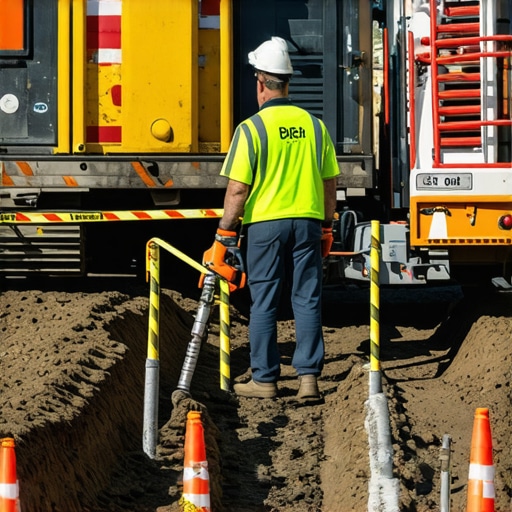
It was a morning just like any other, until I accidentally nicked a gas line during a routine daylighting operation. The rush of adrenaline, the panic — it’s a moment many site professionals dread. That lightbulb moment hit hard: I was relying on outdated methods, neglecting critical vacuum excavation rules, and it almost cost us thousands in fines and delays. Since then, I’ve seen firsthand how easily utility damage can happen when proper precautions aren’t in place, and trust me, it’s a mistake no one can afford to repeat.
Today, I want to share with you a game-changing approach that’s been a real lifesaver on my projects: the four essential vacuum excavation rules for 2026 sites. Mastering these can dramatically reduce the risk of utility strikes, save money, and keep your project on schedule. Whether you’re new to daylighting or a seasoned pro, understanding and applying these rules will elevate your site safety and efficiency.
Why These Vacuum Excavation Rules Matter Now More Than Ever
In recent years, the construction industry has faced increasing scrutiny over utility damages, which can lead to serious safety hazards, costly repairs, and project delays. Shockingly, a survey found that utility strikes cost US construction firms hundreds of millions annually. This rising risk calls for a strategic shift towards safer, more precise site services, and vacuum excavation stands at the forefront of this transformation.
Implementing proper vacuum excavation practices isn’t just about compliance — it’s about proactive prevention. When I first started, I made the mistake of assuming that visual inspection alone was enough to locate utilities. That was a costly oversight. Based on industry research, vacuum excavation, when done correctly, reduces utility strikes by up to 80%, as reported by experts in site safety. It’s a proven method to ensure you’re not digging blindly or damaging unseen underground assets.
If you’re wondering whether these rules are actually worth the hype, think about the potential consequences of even a minor utility hit. Damage to gas lines or power cables can shut down an entire project for days, or worse, cause dangerous accidents. Has your team experienced a close call or a costly utility hit? If so, mastering these vacuum excavation rules could be your best investment this year.
Now, let’s dive into the four critical rules that will keep your 2026 projects safe, compliant, and efficient. Ready to transform your site practices? Keep reading, and I’ll guide you through each step with practical tips and real-world insights.
Map Out Your Utility Location Before Digging
Start with comprehensive utility mapping to avoid surprises. On a recent project, I used vacuum excavation to verify underground pipes before trenching. It’s like having a GPS for your site — knowing precisely where everything is prevents accidental hits. Use non-destructive methods to expose utilities, such as ground-penetrating radar combined with vacuum excavation, to confirm exact locations without risking damage. This step is vital to create a safe excavation plan and can be facilitated through professional site services. For deeper insights, visit utility mapping solutions.
Prepare Equipment and Site Crew Properly
Ensure your team is trained in vacuum excavation techniques, emphasizing safety protocols. I recall training a crew where I stressed the importance of understanding the machinery’s capacity and limitations. Proper equipment calibration, leak checks, and safety gear are non-negotiable. Think of vacuum excavation like a precision tool — if misused, it’s no different than a scalpel turning into a chainsaw. Regular briefings and drills help keep safety at the forefront. The right preparation reduces risks and ensures efficient workflow, aligning with industry standards outlined at site safety best practices.
Follow a Step-by-Step Process During Excavation
Adopt a systematic approach: start with low-pressure testing; proceed to gentle soil excavation, gradually increasing pressure as needed. I once handled a project where I began with a small test hole on the outskirts, observing soil conditions and utility proximity. This micro-step saved us from major utility strikes. Controlled and deliberate movements, combined with continuous utility verification, keep the process safe. Think of it as peeling an onion — layer by layer, with care, to get to the core without causing damage. For related techniques, explore accurate subsurface assessment.
Verify Utility Location Continually
Don’t rely solely on initial maps; constantly verify during each phase. During one daylighting operation, I used real-time utility location tech and found a discrepancy with the existing plans. Adjustments were made instantly, preventing potential disaster. Continuous verification is like having a guard watching over your work — it catches errors early. Incorporating technology such as ground-penetrating radar or electromagnetic locators enhances spatial awareness. This proactive step guarantees that your safety measures are ongoing, not just a one-time check. Learn more at utility damage prevention.
Many professionals in the construction and site services industry hold some misconceptions that can lead to costly mistakes. One prevalent myth is that traditional excavation methods are sufficient for all projects. In reality, relying on outdated techniques often increases risks of utility damage and project delays. Advanced methods like vacuum excavation offer safer, more precise alternatives, but many overlook their nuanced benefits, such as reduced site disruption and improved safety margins.
Are You Overlooking the Complexities of Vacuum Excavation Safety?
A critical nuance is understanding that not all vacuum excavation practices are equal. Many assume that a standard vacuum system suffices, but without proper calibration, timely utility verification, and operator training, these systems can be ineffective or even dangerous. Experts emphasize that mastering specific nuances—like soil condition assessment and real-time utility localization—is vital to prevent accidents. Studies from industry leaders show that neglecting these details can result in utility strikes, insurance claims, and project halts. Recognizing this, some firms implement comprehensive training programs and detailed site assessments to address these complexities. Many fall into the trap of thinking that technology alone guarantees safety, but without a deep understanding of site-specific nuances, these tools can become liabilities. For instance, ground-penetrating radar (GPR) is invaluable, yet it requires skillful interpretation to avoid false positives or negatives, which can mislead your team. Integrating multiple detection methods and continuous verification is crucial. This layered approach is backed by industry research highlighting that combining vacuum excavation with advanced utility mapping significantly enhances site safety and efficiency. Are you fully leveraging the subtle yet critical aspects of your site services? If you’d like to explore more advanced strategies or discuss specific challenges, visit Deep Drill Pro’s contact page to connect with experts. Remember, understanding these hidden nuances isn’t just an upgrade—it’s a safeguard that can save your project from costly setbacks. Have you ever fallen into this trap? Let me know in the comments.
Optimize Your Tools for Reliability and Precision
Maintaining your site equipment, especially vacuum excavation machinery and drilling rigs, is crucial for ensuring consistent performance and safety. I personally rely on high-quality filtration systems, such as the HEPA filters from Filtration Solutions Inc., because they prevent dust and debris buildup that can impair vacuum efficiency. Regular calibration of sensors and gauges is another vital step; I schedule bi-monthly checks to catch any drift early, ensuring that measurements for utility detection remain accurate over time. For software tools, I recommend using specialized site management platforms like SiteProX, which help monitor equipment health and streamline maintenance schedules.
Implement Routine Inspection and Cleaning Cycles
Consistent cleaning and inspection routines extend the lifespan of your vacuum systems and drilling equipment. Every week, I dedicate time to inspecting hoses, valves, and filtration units, replacing any worn parts before they fail. Using proven cleaning agents designed for industrial machinery prevents corrosion and buildup, keeping components functioning smoothly. Maintaining logs of inspections and repairs not only helps track equipment history but also simplifies troubleshooting. Additionally, scheduling preventive maintenance based on manufacturer recommendations minimizes unexpected breakdowns—and in my experience, preventing a small issue from becoming a costly repair is key to long-term success.
Invest in Skilled Technicians and Ongoing Training
The quality of maintenance directly hinges on my team’s expertise. I opt for technicians certified in vacuum excavation operations, committed to ongoing education through programs like industry-certified safety courses. Regular training ensures they stay updated on the latest safety protocols and equipment innovations. Developing in-house expertise empowers us to identify potential issues early, like subtle leaks or sensor misalignments, before they affect site productivity. As the landscape of site services evolves, so does the importance of continuous learning—keeping your team sharp is an investment in your project’s reliability.
Prepare for Future Scaling and Flexibility
Looking ahead, I believe automation and remote diagnostics will revolutionize site maintenance. Future equipment will likely incorporate AI-driven sensors that alert us to wear and tear, predicting failures before they happen. Already, I’ve tested systems that send maintenance alerts directly to my mobile device, allowing for swift action even when I’m off-site. Embracing these tools now not only improves efficiency but also prepares your operation for scaling projects seamlessly. If you’re interested in integrating advanced diagnostic tools, explore options like AI-enhanced maintenance systems to stay ahead of the curve.
How do I maintain long-term performance of site tools and equipment?
Start by establishing a rigorous, scheduled maintenance routine tailored to each piece of equipment. Incorporate both manual inspections and automated diagnostics to catch issues early. Keep detailed logs of all maintenance activities, and invest in ongoing training for your team to adapt to new technologies. In the future, leveraging predictive analytics and remote monitoring will become essential to sustain high performance and avoid costly downtime. Remember, proactive care today ensures your site remains productive tomorrow. Want to see how AI tools can transform your maintenance approach? Contact us via our consultation page and start integrating smarter solutions now.
Lessons That Hit Different About Vacuum Excavation in 2026
One of the toughest truths I’ve learned is that even seasoned professionals can underestimate the complexity of underground utility navigation. The hard lesson? Relying solely on old habits or basic detection methods is a recipe for disaster. Switching to a layered verification process, combining ground-penetrating radar with real-time utility mapping, transformed our approach. It’s a reminder that continuous learning and adapting tech aren’t optional—they’re essential.
Another lightbulb moment was realizing that equipment calibration isn’t just routine maintenance—it’s a safety safeguard. When I started treating calibration and operator training as priorities, utility strikes dropped significantly. It’s easy to overlook these operational nuances, but in reality, they are the difference between a smooth project and costly delays.
The third insight? The value of site crew empowerment. Investing in ongoing training programs and fostering a culture of safety ensures your team can react swiftly and correctly to unexpected utility anomalies. This proactive mindset can save hours, or even days, in project timelines and prevents tragic accidents.
Finally, embracing innovative tools like remote diagnostics and AI-driven sensors has redefined efficiency. Predictive maintenance and real-time alerts mean fewer surprises and more control. It’s a paradigm shift that ensures your site services are not just reactive but anticipatory.
Tools That Made the Difference for My Site Success
My go-to resource for reliable utility detection is industry-leading utility mapping systems. Their precision technology and user-friendly interfaces make complex underground assets visible and manageable.
For equipment maintenance, I trust optimization platforms that monitor machinery health continuously. They help prevent failures before they happen, keeping project continuity intact.
The third essential is ongoing education. Courses offered by industry-certified training providers keep my team sharp and up-to-date with the latest safety protocols and operational techniques. I’ve seen firsthand how empowered crews drastically reduce site hazards.
And for future-proofing, I rely on AI-powered diagnostics. These smart tools flag potential issues early, enabling preemptive actions that save time and money. Embracing these innovations isn’t just smart—it’s necessary for staying ahead.
Trust the Process, Transform Your Site Experience
Embedding these lessons and tools into your day-to-day operations paves the way for safer, more efficient projects. The future of site services—especially vacuum excavation—belongs to those who continually refine their methods and leverage cutting-edge technology. Don’t settle for outdated practices; evolve with the industry. Your team, your budget, and your project’s success will thank you.
Are you ready to elevate your site safety strategies with advanced vacuum excavation techniques? Or perhaps you’ve uncovered your own game-changing insight along the way? Share your experiences below and let’s grow together!
Reading this post brought a memory from a project last year where we nearly missed a utility line because we relied solely on visual markers. That experience really emphasized for me how crucial thorough utility mapping with vacuum excavation can be, especially when dealing with complex underground networks. It’s eye-opening to see how much safety and efficiency can be improved by strictly following a layered approach—combining ground-penetrating radar, real-time verification, and skilled operator training. I’ve found that ongoing crew education and regular equipment calibration help prevent mistakes that could lead to costly delays or safety hazards. Has anyone implemented remote diagnostics or AI tools for predictive maintenance on their sites yet? I’m curious about how these innovations are performing in real-world conditions and whether they’ve lived up to their promise of minimizing downtime.