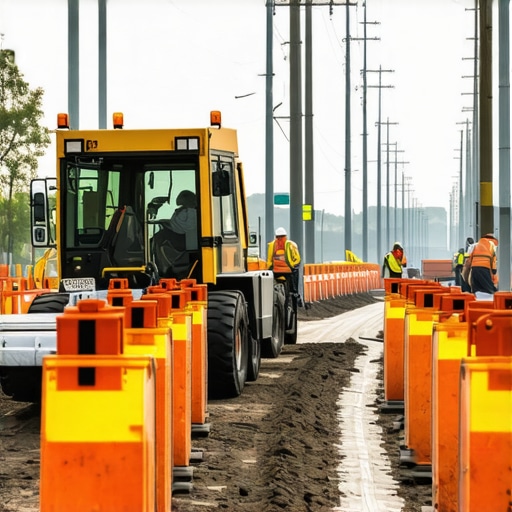
The Anatomy of a High-Pressure Strike
The air didn’t smell like dirt. It smelled like the inside of a damp penny and wet sulfur. I was standing in a trench in Chicago, the wind whipping off the lake, looking at a shattered 4-inch gas main that a backhoe had just ‘found.’ The operator looked pale. My old journeyman used to say, ‘Water is lazy, but it’s patient.’ It will find the tiniest pinhole and turn it into a geyser given enough time. But when it comes to utilities, mechanical force isn’t patient; it’s a blunt instrument of destruction. A single bucket tooth can shear through a schedule 40 PVC conduit or a pressurized water line, turning a routine morning into a $50,000 EPA fine and a localized blackout. This is why we don’t just ‘dig’ anymore. We perform forensic site services. In 2026, the margin for error has evaporated. As cities densify, the underground ‘rough-in’ of our infrastructure is a tangled web of fiber optics, old cast iron, and high-voltage transmission lines. If you aren’t using vacuum excavation, you aren’t digging; you’re gambling.
Tactic 1: The Sonic Air-Blade Precision (Daylighting)
Traditional excavation is like trying to do surgery with a chainsaw. Vacuum excavation, specifically air-knife technology, is the scalpel. When we talk about daylighting, we are exposing the ‘stub-out’ or the main stack without mechanical impact. The physics are simple: high-velocity compressed air is blasted into the soil. Because soil is porous and the utility pipe is non-porous, the air enters the soil voids, expands, and pulverizes the earth while the pipe remains untouched. This is the only way to satisfy the growing demands for daylighting benefits for sustainable urban infrastructure. In the North, where frost depth can reach four feet, the soil isn’t just dirt; it’s a frozen brick. Traditional digging here causes ‘fracture propagation’—the backhoe hits a frozen chunk of earth, which then acts as a wedge, cracking the pipe two feet away from the actual impact site. Air-based vacuuming eliminates this kinetic transfer.
“All piping in trench shall be laid on a firm bed for its entire length.” – IPC Section 306.2
When you use vacuum excavation, you aren’t just protecting the pipe; you’re protecting the bed. By surgically removing the soil, you maintain the structural integrity of the surrounding earth, preventing future settling that leads to ‘bellies’ in the line—those low spots where grease and black sludge collect until the whole system backs up.
Tactic 2: Hydro-Vacuum Thermal Management
In 2026, we’re seeing a shift toward heated hydro-vacuum systems. When the ground is locked in a deep freeze, cold water excavation is useless. We use onboard heaters to bring the water to approximately 150 degrees Fahrenheit. This isn’t just to melt the ice; it’s to reduce the viscosity of the soil. As the heated water hits the clay, it breaks the molecular bonds of the ‘gummo’—that sticky, gray clay that clings to pipes like epoxy. By turning that clay into a manageable slurry, we can suck it out through the 8-inch boom without clogging. This is a modern solution for safe site prep that prevents the need for hand-digging with metal spades—which, believe me, have punctured more gas lines than most people care to admit. Using a spade around a gas line is like playing Operation with a live wire.
Tactic 3: Micro-Borehole Integration
We are no longer digging wide-open scars into the earth. The 2026 tactic involves borehole technology combined with vacuum suction. We create a vertical shaft, sometimes only 12 inches in diameter, to verify the depth and direction of a utility. This is critical when you’re dealing with ‘expansive soil’—the kind of clay that shifts and shears copper pipes inside concrete slabs. By using borehole drilling techniques, we can drop a camera or a sensor down to the ‘rough-in’ level without disturbing the surface tension of the road. This prevents the ‘sinkhole’ effect common in southern states where the hydrostatic pressure of the water table is high. If you disturb the soil too much, the water table pushes up, and suddenly your trench is a swimming pool filled with raw sewage and mud.
Tactic 4: Slurry Forensics and Cleanout Mapping
One of the most overlooked site services is the forensic analysis of the soil we extract. When we suck that ‘black soup’ into the truck, we’re looking for signs of past failures. I’ve seen vacuum tubes pull up bits of decayed ‘Fernco’ couplings and old, rotted orangeburg pipe that was never recorded on the city maps. This is why vacuum excavation is the key to accurate subsurface assessments. If you find traces of ‘dope’ or sealant in the slurry, you know you’re near a joint or a ‘cleanout’ that might be leaking. In the world of forensic plumbing, the vacuum truck is our best diagnostic tool. It’s not just about making a hole; it’s about reading the history of the ground. When the vacuum hits a pocket of ‘pea gravel’ or sand that shouldn’t be there, we know we’ve found a previous repair—likely a ‘hack job’ where someone buried a leak instead of fixing it properly.
“Excavations shall be kept free from water.” – UPC Section 314.1
Tactic 5: High-Viscosity Mud Recycling
The cost of disposing of wet spoils has skyrocketed. The 2026 tactic for avoiding fines and cost overruns is on-site recycling. Modern vacuum units now come with centrifugal separators. We suck up the slurry, spin out the solids, and reuse the water for the hydro-excavation nozzle. This reduces the weight of the truck and the number of trips to the dump site. It also keeps the site cleaner. Nothing triggers a municipal fine faster than ‘tracking mud’ onto a public road. I’ve seen jobsites shut down because a backhoe dripped enough clay to turn a four-lane highway into a slip-and-slide. By containing everything in a closed-loop vacuum system, you keep the site ‘dry’—even when you’re using water to dig. This is the hallmark of advanced site services.
Tactic 6: The Site Services Shield (Digital Integration)
The final tactic is the integration of vacuum data with GIS mapping. As the vacuum head descends, we record the exact GPS coordinates of every ‘rough-in’ and ‘stack’ we encounter. This creates a digital ‘as-built’ map that is actually accurate. Most city maps are lies. They tell you the water main is at six feet when it’s actually at three because of twenty years of road resurfacing. Vacuum excavation allows us to ‘verify and validate’ without destruction. If you aren’t documenting the ‘daylighted’ utility with a digital twin, you’re missing the point of 2026 technology. You are building a shield against future liability. When the next guy comes through with a shovel, you have the proof of where that line is buried. Buy it once, cry once—invest in the vacuum now, or pay the fines later. Water is lazy, but the city inspector looking for a reason to fine you is very, very industrious.