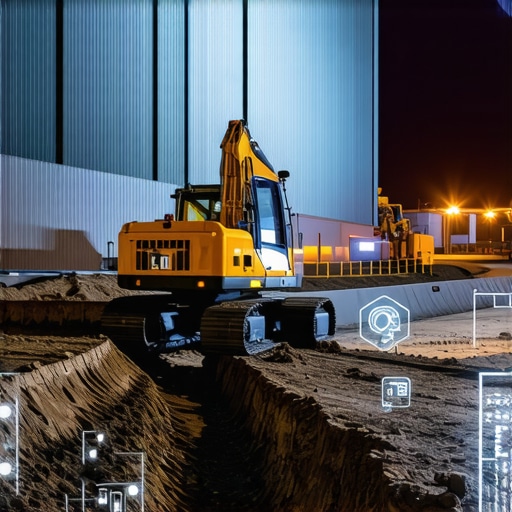
The Silent Hum and the Sudden Silence
Listen to the hum of a modern data center. It is a vibrating, low-frequency thrum that signals the movement of a trillion bits of data through glass-core fibers and copper conductors. But when that hum is replaced by the screech of a backhoe bucket dragging across a buried conduit, you aren’t just looking at a plumbing repair; you are looking at a forensic catastrophe. I have spent thirty years in the trenches, and my old journeyman used to say, ‘Water is lazy, but it’s patient. It will find the tiniest pinhole and turn it into a geyser given enough time.’ In the context of 2026 data centers, the same logic applies to soil and utilities. If you treat the earth like a sandbox, it will eventually swallow your project whole. The stakes for 2026 infrastructure are higher than ever, and mechanical digging is becoming an obsolete risk in high-density utility corridors.
The Anatomy of a Utility Strike
When a mechanical excavator teeth meet a buried water main or a high-voltage line, the result is instantaneous and violent. I’ve seen 4-inch ductile iron pipes sheared like they were made of dry pasta. The physics are simple: the torque of a hydraulic arm far exceeds the tensile strength of any buried material. This is where what is vacuum excavation becomes the only logical defense. Unlike the blunt force of a bucket, vacuum excavation uses kinetic energy in the form of high-pressure air or water to atomize the soil. This process, known as daylighting, allows us to physically see the stub-out of every utility before a single heavy machine enters the area. If you aren’t daylighting, you’re just gambling with the client’s uptime.
“The depth of burial for service lateral piping shall be not less than 12 inches below the frost line.” – IPC Section 305.4
Hydro-Geographic Reality: The North/Freeze Constraint
In regions like Chicago or the Northern Virginia data center corridor, we aren’t just fighting dirt; we are fighting the frost line. Water trapped in the soil expands by roughly 9% when it freezes. This expansion exerts massive lateral pressure on buried pipes, a phenomenon known as frost heave. If a rough-in was done poorly, that ice will find a weak cleanout or a poorly applied bit of pipe dope and crack it wide open. When we perform vacuum excavation in these frozen environments, we have to account for the brittle nature of PVC and HDPE conduits. At sub-zero temperatures, these materials lose their flexibility. A mechanical strike that might only dent a pipe in July will shatter it in January. Vacuum excavation allows for the precise removal of frozen overburden without the shockwaves that traditional digging sends through the ground.
The Material Science of Failure
Why do these systems fail? It’s often chemistry. When you have high-density data centers, you have stray electrical currents. These currents can cause electrolysis in metallic piping, eating away at the material until it’s as thin as a soda can. I’ve pulled out copper stack sections that looked like Swiss cheese because of ground-loop issues. This is why maximizing safety with advanced site services is critical. By using a borehole strategy to assess soil conductivity and utility health before construction begins, we can identify these ‘ghost’ leaks. We aren’t just digging; we are performing a subsurface autopsy to prevent future downtime.
“Standard Practice for Locating Abandoned and Unknown Underground Utilities.” – ASTM D6429
The Mechanics of Vacuum Excavation and Daylighting
The process of daylighting is surgical. A high-cfm vacuum truck pulls the soil up into a debris tank, while a technician uses a wand to break the soil’s cohesion. We look for the Fernco couplings, the wax ring remnants of old structures, and the stack vents of forgotten sewers. In 2026, data centers will be built on ‘brownfield’ sites where 100 years of utility history is layered like a lasagna. If you don’t use vacuum excavation to map these layers, you will eventually hit something that isn’t on the blueprints. I’ve seen fiber optic lines nested inside old clay sewer pipes—a classic ‘hack job’ from twenty years ago that would be a nightmare to fix if a backhoe ripped through it. We use vacuum excavation for subsurface assessments to ensure that every stub-out is exactly where the CAD drawing says it is.
The Fix: Why Proper Site Services Matter
Fixing a utility strike is ten times more expensive than preventing one. When a main line goes down, you aren’t just paying for a plumber; you’re paying for the downtime of a facility that handles millions of transactions per second. Using complex site services is the insurance policy. We use borehole drilling to install geothermal cooling loops for these centers, and each hole must be perfectly vertical and perfectly clear of obstructions. The ‘buy it once, cry once’ mentality applies here. Investing in vacuum excavation for 2026 data center prep isn’t just a safety protocol; it’s a fundamental requirement for modern engineering. The earth is patient, and if you don’t respect the physics of what’s buried beneath it, the earth will eventually take its toll in the form of broken pipes and blacked-out servers.