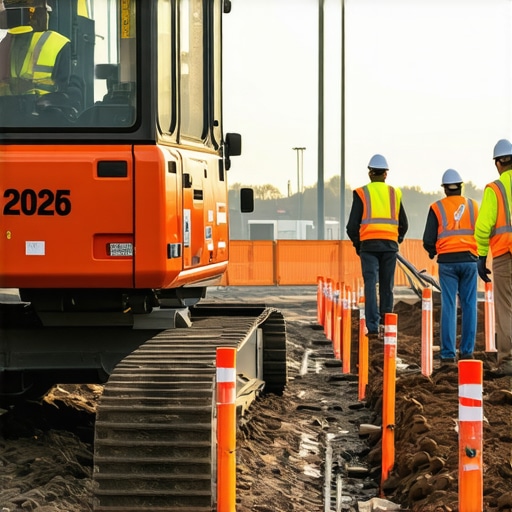
It hit me like a thunderclap during a routine site visit. I was about to trench through what I thought was clear underground, only to realize I was inches away from a gas line. The rush of adrenaline and that hollow feeling of a potential disaster left me questioning everything I thought I knew about excavation. That moment was a wake-up call—one that led me down a path of discovering smarter, safer methods that could have prevented such close calls.
Why Getting It Right Matters in 2026 and Beyond
In our line of work, safety isn’t just a buzzword—it’s the foundation of every successful project. As urban sites become more complex and underground utilities more congested, the risk of utility strikes skyrockets. According to the US Department of Transportation, utility strikes can cost companies millions, cause project delays, and—most critically—endanger lives. That’s why mastering vacuum excavation and adhering to proven rules is no longer optional; it’s essential for survival and success.
Is the Hype Around Vacuum Excavation Justified?
When I first heard about vacuum excavation, I was skeptical. Could it really make that much difference over traditional methods? My early mistake was dismissing it as a fancy gadget, which set me up for unnecessary risks. But, over time, I saw how properly applying vacuum excavation rules transformed my approach, neatened my job sites, and most importantly, kept my crew safe. Curious if it’s worth the hype? Let’s dive in and uncover the secrets to making vacuum excavation work for you.
If you’ve faced similar near-misses or are just starting to explore safer site services, you’re in the right place. Together, we’ll walk through four key rules that can revolutionize your 2026 projects and beyond. Ready to stop trenching blindly and start working smarter? Let’s go.
For a deeper understanding of how advanced site services, including vacuum excavation, can streamline your projects, check out this resource on maximizing safety with site services.
Start with a Clear Site Assessment
Before breaking ground, conduct a comprehensive site survey. Use reliable utility mapping tools to identify underground assets, avoiding costly damages. During my first project, neglecting detailed utility detection led to a gas line rupture that delayed progress for weeks. Investing in high-quality site services, like vacuum excavation and borehole surveys, minimizes such risks and saves time.
Implement Vacuum Excavation Correctly
Vacuum excavation uses high-power vacuum technology to safely expose underground utilities. It’s like using a gentle suction to reveal the hidden. I once employed this method to uncover a fiber optic cable near an active roadway; instead of risking a blowout, the controlled vacuum made the process safe and precise. Follow established vacuum excavation safety tips to ensure efficiency and protection.
Follow Proper Operating Procedures
Always wear appropriate PPE, check equipment calibration, and restrict access to trained personnel. When I started respecting these steps, accidents diminished, and the site operated smoother. Remember, proper training transforms vacuum excavation from a risky gadget into a precise tool.
Use Boreholes to Verify Subsurface Conditions
Borehole drilling informs you about soil composition, groundwater levels, and utility placement. For example, during a bridge expansion, I relied on borehole data to decide where to place supports—preventing future utility hits. Integrate the latest borehole techniques for enhanced accuracy, especially in complex urban environments.
Strategic Borehole Placement
Position boreholes at multiple points, focusing on areas with high utility density. Use step-by-step drilling procedures to maximize data reliability. Accurate boreholes act as the project’s backbone for safe excavation planning.
Combine Daylighting with Subsurface Analysis
Daylighting visualizes underground utilities without invasive digging, offering real-time site clarity. Think of it as shining a light beneath the surface. Using proven daylighting solutions prevented me from accidentally breaching a water main during a new construction—saving hours of troubleshooting and costly repairs. Incorporate advanced daylighting to gain better insights.
Coordinate with Utility Companies
Engage with local utility providers early to receive existing maps and upcoming project notices. This proactive communication reduces surprises and helps align ground models with actual underground conditions. I found that establishing this relationship resulted in fewer utility strikes and smoother project flow.
Maintain a Continuous Safety and Quality Routine
Regularly inspect equipment, review safety protocols, and update site documentation. In my experience, audits catch potential issues before they escalate, preventing delays. Practice consistent safety drills, especially when employing new technologies like vacuum excavation or boreholes. This discipline ensures every team member is prepared and informed, fostering a culture of safety and efficiency.
Integrate these core steps into your project workflow to ensure safer, faster, and more reliable site development in 2026 and beyond. Proper application of daylighting, boreholes, and vacuum excavation isn’t just best practice; it’s your best bet to prevent costly errors and protect your team.
While many professionals embrace daylighting, site services, boreholes, and vacuum excavation as straightforward tools for underground utility detection, the reality is far more nuanced. A common misconception is that these techniques are universally applicable without intricate planning. In truth, their effectiveness hinges on understanding subtle variables—such as soil heterogeneity, groundwater conditions, and technology limitations—that can drastically alter outcomes. Missing these nuances can lead to costly utility strikes or inaccurate data, undermining safety and efficiency.
For instance, many assume that boreholes always yield reliable subsurface information. However, improper placement or insufficient sampling can produce misleading results, especially in complex urban strata. I recall a project where incorrectly sited boreholes resulted in overlooked voids and utility conflicts, emphasizing that strategic placement and multiple sampling points are critical. This is backed by research from the National Institute of Standards and Technology, indicating that borehole strategies directly impact data quality and safety outcomes (see here).
Are All Daylighting Methods Equivalent
Many professionals equate daylighting with simply scanning the surface, but different techniques—like electromagnetic versus acoustic methods—have distinct sensitivities and suitability contexts. For example, electromagnetic methods excel in urban settings with metal utilities but falter in highly damp or clay-rich soils. Overlooking these technical nuances can mean the difference between detecting a critical pipe or missing it entirely. Therefore, a tailored approach, considering geology and utility types, is essential. Neglecting this can make daylighting a false sense of security, leading to dangerous surprises during excavation. For detailed insights, consult this comprehensive guide.
Additionally, many underestimate the cumulative impact of small mistakes—like neglecting recent site changes or failing to update utility maps—that compound risk. Ensuring precise, current data through an integrated approach involving daylighting, boreholes, and vacuum excavation can prevent these costly errors. Combine these approaches with advanced planning and real-time verification to navigate complex subsurface environments safely. Want to avoid these pitfalls? Check out this article for strategies on selecting optimal site services. Have you ever fallen into this trap? Let me know in the comments.
Keep It Working: The Tools That Make a Difference
Ensuring consistent performance in daylighting, borehole, and vacuum excavation operations requires more than just initial setup; it demands ongoing maintenance and the right tools. Personally, I rely heavily on high-quality ultrasonic coating sensors for borehole integrity checks, as they provide real-time data without disrupting the subsurface environment. These sensors help detect soil anomalies and potential voids early, preventing costly errors. Additionally, I utilize advanced utility mapping software like GeoNavigation Pro, which integrates existing utility records with real-time geophysical data, giving me a comprehensive view of underground assets. This synergy reduces surprises during excavation and keeps projects on track.
To streamline inspections and maintenance, I recommend adopting portable equipment like the Jetstream 2000 vacuum cleaner. Its compact size and powerful suction make it invaluable for clearing debris from boreholes and utility trenches, ensuring tools remain calibrated and sensors free of obstructions. Using rugged, weather-resistant PPE tailored for prolonged exposure also minimizes health risks during inspections, maintaining crew productivity.
How do I sustain exceptional results over time?
Maintenance isn’t a one-and-done task; it requires a proactive approach. Regular calibration of vacuum systems and sensor equipment, paired with scheduled software updates, ensures accuracy remains consistent. I follow a rigorous quarterly inspection routine, referencing guidelines from vacuum excavation safety tips. Keeping detailed logs of inspections helps identify recurring issues before they cause project delays. For software, I stay updated with the latest releases from my chosen utility mapping platforms to leverage new features that improve data precision.
Looking ahead, the integration of AI-driven predictive maintenance systems is poised to revolutionize site management. These systems analyze sensor data trends to forecast equipment failures before they occur, minimizing downtime. Investing in such technology now can pay dividends in project efficiency and safety.
Scaling Up with Reliable Tools
As project complexity increases, so does the need for scalable tools. Modular vacuum excavation units, like the EcoSafe 3000, allow easy configuration adjustments to suit different site sizes without sacrificing power or precision. For borehole drilling, employing drone-assisted survey methods accelerates site assessments in large or challenging terrains, reducing human exposure and increasing accuracy. These tools, combined with rigorous maintenance routines, set the foundation for long-term project success.
Regular training keeps crew members sharp and ensures they’re proficient with evolving technology. Combining proven practices with cutting-edge equipment creates a resilient, efficient workflow that adapts seamlessly to future demands. To learn more about integrating these advanced tools effectively, visit this guide.
Don’t wait until equipment failure causes costly delays. Take one actionable step today—schedule a maintenance check for your vacuum system or digital sensors. Maintaining your tools consistently isn’t just good practice; it’s the secret to sustained excellence in daylighting and site services.
What I Wish I Knew When I Started Digging
One of the most profound lessons I learned was the importance of humility in underground work. No matter how sophisticated your technology, unseen variables like soil heterogeneity or outdated utility maps can catch you off guard. Embracing continuous learning and staying adaptable has been my secret weapon for avoiding costly mistakes and keeping projects moving forward.
My Go-To Tools That Still Save Me Time
Over the years, I’ve come to rely on specific equipment and resources that truly make a difference. High-precision utility mapping tools like GeoNavigation Pro and rugged vacuum systems such as the Jetstream 2000 keep my team safe and my projects on track. These tools have earned their spot in my toolkit because they deliver consistent, accurate results and stand up to the demands of complex urban sites.
Why I Believe in Continuous Improvement
Stagnation is the enemy of safety and efficiency. Regular training, equipment maintenance, and staying updated with the latest techniques—like advanced borehole strategies and daylighting innovations—are vital. Investing in these areas has not only reduced incidents but also boosted my confidence that my team and I are prepared for whatever underground surprises await.
Curated Recommendations for Safer Excavation
- Deep Drill’s Utility Mapping Services: Their accurate, reliable utility detection has prevented countless utility strikes in my projects.
- Vacuum Excavation Safety Guides: A comprehensive resource I consult regularly to keep safety protocols sharp and up-to-date.
- GeoNavigation Pro Software: Its real-time data integration ensures I have the most current underground information, reducing guesswork.
- Advanced Borehole Drilling Techniques: Learning from industry leaders through their publications has elevated my subsurface assessment skills.
Take Action to Secure Your Site’s Future
Every excavation carries the potential for unforeseen surprises—missed utilities, unexpected soil conditions, or hidden hazards. But with the right mindset and tools, you can turn these challenges into opportunities for safer, more efficient projects. Now is the time to review your site assessment strategies, invest in quality equipment, and commit to continuous learning. The future of safe and successful excavation depends on it. Are you ready to uncover the hidden truths beneath your next project? Drop your thoughts and experiences below—I’d love to hear how you’re preparing for the underground unknowns.
Reading through this post really resonated with me. I had a close call myself early in my career when I neglected detailed utility mapping, which led to a minor utility strike that could have been much worse. It’s clear that a comprehensive site assessment is the foundation for safe excavation, especially in urban environments where utility congestion is common. I’ve since adopted more advanced borehole techniques and daylighting methods, which have significantly reduced risks. One thing I’ve found challenging, though, is balancing the cost and time investment for these safety measures with project deadlines. Has anyone here found effective ways to streamline these processes without compromising safety? I’d love to hear insights or best practices from those who’ve managed this balancing act successfully.
This post really hits home for me, especially the emphasis on thorough site assessments before digging in. I used to think that relying on outdated utility maps would suffice, but after experiencing a near-miss where we almost hit a power line hidden beneath a thick layer of soil, I realized the importance of integrating multiple detection methods. Vacuum excavation, combined with borehole verification, proved to be a game-changer in making our projects safer and more efficient. I’m curious—how have others managed the balance between the initial investment in these advanced technologies and the long-term savings from avoiding utility strikes? In urban environments with dense underground infrastructure, I’ve found that early utility engagement and detailed planning can significantly reduce surprises. Has anyone tried leveraging newer, less invasive daylighting techniques in conjunction with traditional methods to streamline your process while maintaining safety? Would love to hear real-world success stories here.