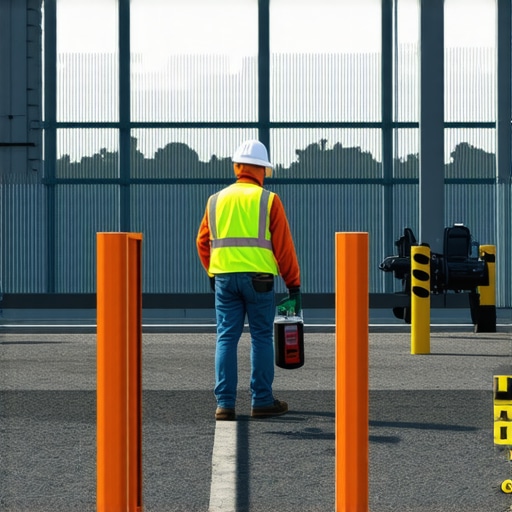
It was a cold morning when I first watched a utility line shudder just inches below the surface during a routine daylighting procedure. No one wants to be the person who hits a gas line or damages critical underground utilities, especially when deadlines are tight and safety is on the line. That moment was my wake-up call. I realized I’d been relying too much on guesswork and outdated methods, risking costly delays and dangerous incidents.
Over the years, I’ve learned that proper daylighting isn’t just a ‘nice-to-have’—it’s a must-have, especially with regulations tightening in 2026. When utility strikes happen, they don’t just cause delays; they can cost millions, harm lives, and halt progress entirely. Today, I want to share proven solutions that can dramatically improve safety and efficiency on your site.
Why Accurate Daylighting Can Make or Break Your Project
Imagine digging near existing underground infrastructure without precise knowledge of what lies beneath. It’s a gamble. An error or oversight can lead to serious accidents, regulatory fines, or project shutdowns. Recent statistics reveal that utility strikes account for billions in damages annually and remain one of the leading causes of workplace accidents in construction and excavation projects. The key to avoiding these costly mishaps is adopting advanced daylighting strategies that prioritize safety and accuracy.
Now, you might be thinking, “Is all this really necessary for my project?” or worried whether investing in such measures will be worth the trouble. Believe me, I’ve been there. Early on, I made the mistake of cheaping out on site prep—that one risky decision led to a utility hit that could have been prevented. That experience taught me a valuable lesson: cutting corners isn’t just risky; it’s a false economy.
Drawing from trusted sources like DeepDrill Pro, I’ve seen firsthand how modern site services, especially vacuum excavation, can transform the way we approach underground utility detection. For example, using vacuum excavation [reduces site disruption](https://deepdrillpro.com/the-role-of-vacuum-excavation-in-reducing-site-disruption) while providing precise utility mapping, which are critical in dense urban environments.
In this post, I’ll walk you through five essential daylighting safety fixes tailored for 2026’s evolving standards. Whether you’re working on a new build or maintenance project, these steps will help you avoid surprises and keep your team safe. Ready to transform your daylighting approach? Let’s dive into the practical tactics that can make all the difference.
Set Up Your Site Survey Before Digging
Start by conducting a comprehensive survey using modern site services like vacuum excavation, which quickly and safely reveal underground utilities without destructive trenching. I once applied this method on a densely urban project; by employing vacuum excavation to expose cables, we avoided a costly utility hit early on, saving time and money. The key is to map the subsurface accurately, ensuring your team knows exactly what lies beneath.
Use Vacuum Excavation for Precise Utility Detection
Vacuum excavation acts like a gentle, controlled ‘suction’ that removes soil layer by layer, exposing utilities precisely. Imagine peeling an onion carefully—this technique allows you to see underground infrastructure clearly without risking damage. For example, incorporating [vacuum excavation](https://deepdrillpro.com/vacuum-excavation-the-key-to-accurate-subsurface-assessments) into your process minimizes disruption and ensures safety.
Implement Portable Borehole Testing
Boreholes are your window into groundwater and aquifer conditions. Drill small, strategically placed boreholes to gather data on soil composition and utility locations. I once used a 3-step borehole testing method to verify aquifer yield, which led to reliable water access for a remote site. Proper borehole testing prevents dry wells and underperforming water supplies, critical for ongoing project sustainability.
Optimize Borehole Placement Strategically
Align borehole locations with utility mapping to avoid interference. Use [borehole installation tips](https://deepdrillpro.com/borehole-installation-tips-for-seamless-daylighting-integration) to ensure your boreholes serve as effective probes, not obstacles. Consider layering soil analysis with geophysical surveys for better accuracy—this approach saves the frustration of drilling dry or low-yield boreholes.
Leverage Advanced Site Services for Safety
Beyond vacuum excavation and boreholes, employing site services such as ground-penetrating radar (GPR) or electromagnetic surveys further confirms utility locations. I’ve personally seen projects improve safety metrics dramatically after integrating multiple detection tools. These methods act as a second line of defense, catching unseen conduits or pipes before they cause damage.
Align Service Selection with Project Complexity
Choose services tailored to your site’s density and infrastructure — complex environments benefit from combined detection techniques. Read [choosing the right site services](https://deepdrillpro.com/choosing-the-right-site-services-for-complex-excavation-projects) to match your project scope and avoid surprises. Remember, the goal is to create a layered verification process, reducing uncertainty and risk.
Document and Communicate Findings Clearly
Compile accurate utility maps from your site services and borehole data. Share these with all stakeholders, including contractors and safety officers. I once found a misinterpreted map that nearly led to an accidental utility strike; clear documentation could have prevented it. Use detailed blueprints and digital models whenever possible to keep everyone aligned and informed.
Integrate Data into Your Safety Protocols
Use core data to update safety checklists and operational procedures. Continuous review and verification of utility locations ensure everyone’s safety and project integrity. Familiarize your team with the latest [site services](https://deepdrillpro.com/how-site-services-drive-efficiency-in-urban-construction) methods; staying updated is key to compliance and risk mitigation.
Many professionals in construction and excavation operate under assumptions about daylighting and site services that can jeopardize safety and efficiency. Let’s clear up some misconceptions and unveil nuanced truths that often go unnoticed. One prevalent myth is that traditional methods like manual digging or relying solely on historical utility maps are sufficient. However, these approaches almost always lead to oversights, especially given the complexity of urban underground infrastructure. Modern techniques like vacuum excavation, which you can learn more about [here](https://deepdrillpro.com/the-role-of-vacuum-excavation-in-reducing-site-disruption), are essential for accuracy. Never assume that old data is always reliable; ground conditions change, and underground utilities may shift over time. Overconfidence in outdated information is a trap that can cause costly utility strikes, delays, or safety incidents.
Another misconception involves borehole testing. Many believe that a single test is enough to determine aquifer yield, but in reality, subsurface conditions can vary dramatically across a site. Repeated, strategic borehole testing enhances reliability, as detailed [here](https://deepdrillpro.com/optimizing-borehole-strategies-to-enhance-service-reliability). Also, some think that once utilities are mapped, further verification isn’t necessary. Yet, complex environments benefit from layered verification methods—combining ground-penetrating radar, electromagnetic surveys, and vacuum excavation—to mitigate risks.
For advanced practitioners, the question arises: How do I ensure accuracy in dynamic, densely built environments where utilities are not only buried deep but also densely packed? The key lies in integrating multiple site services—geophysical surveys, borehole testing, and real-time mapping. As expert sources suggest, leveraging varied detection methods reduces the chance of surprises. Read more on combining these techniques effectively [here](https://deepdrillpro.com/how-site-services-drive-efficiency-in-urban-construction).
Beware of the ‘Oops’ factor: trusting a single method or outdated data without cross-verification can lead to disastrous utility hits. The goal is to create a safety net of multiple, corroborating data sources—think of it as building a robust safety protocol rather than a fragile, single-layer system. Remember, accurate daylighting isn’t just about avoiding immediate delays; it’s fundamental to long-term safety and project success.
Have you ever fallen into this trap? Let me know in the comments. To truly excel in underground utility management, continuous learning and applying nuanced, advanced techniques are critical. For comprehensive insights, visit our [contact page](https://deepdrillpro.com/contact-us) to connect with experts who can elevate your daylighting strategies.Maintaining your underground utility detection and daylighting systems over time is crucial for ongoing safety and efficiency. One of the most valuable tools I personally rely on is **vacuum excavation equipment**. It allows for non-destructive, precise utility exposure, which is essential for ongoing inspections and repairs. Regularly using vacuum excavation [reduces site disruption](https://deepdrillpro.com/the-role-of-vacuum-excavation-in-reducing-site-disruption) and helps detect potential issues before they escalate. Additionally, integrating **ground-penetrating radar (GPR)** technology into your maintenance routine can reveal subsurface changes or newly installed utilities without the need for invasive digging. I recommend investing in portable GPR units that are easy to deploy on various sites, offering immediate insights. For long-term system health, **software solutions** like GIS mapping platforms enable you to keep detailed, up-to-date utility maps accessible to your entire team, minimizing the risk of accidental strikes during maintenance. As the trend leans toward data-driven site management, adopting these digital tools will become standard practice for proactive maintenance. Looking ahead, automation and remote monitoring sensors will likely play an increasing role in real-time system diagnostics, leading to faster response times and reduced downtime. How do I maintain these systems effectively over the years? The key lies in routine calibration, consistent data collection, and training your team on the latest detection methods. Regularly updating your personnel on innovations like [advanced borehole testing](https://deepdrillpro.com/4-new-2026-borehole-testing-steps-to-find-water-faster) ensures that your site remains safe and compliant. To get started, try establishing a scheduled maintenance protocol that includes periodic vacuum excavation checks and GIS data reviews. These small steps, when consistently applied, will save your project from costly surprises and ensure your daylighting system remains reliable.
The Hardest Lesson I Learned About Daylighting, Site Services, Borehole, Vacuum Excavation
One of the most impactful realizations came early in my career, when I underestimated the importance of layered verification. Relying solely on old utility maps or a single detection method can be a costly mistake. The depth of underground infrastructure often surprises even seasoned professionals, emphasizing the need for multiple verification techniques to avoid dangerous utility strikes.
Layering detection methods, like combining ground-penetrating radar and vacuum excavation, truly changed my approach—led to safer, more efficient projects and saved me from future setbacks.
3 Myths About Daylighting, Site Services, Borehole, Vacuum Excavation That Held Me Back
For years, I believed that manual digging was sufficient for small projects—that was a dangerous misconception. Also, I thought once utility maps were obtained, further verification was unnecessary. These myths limited my effectiveness. Discovering the truth—how modern site services can reveal subsurface details safely and accurately—transformed my approach and, ultimately, project outcomes.
Another misunderstanding involved the effectiveness of boreholes alone in assessing groundwater. In reality, combining borehole data with geophysical surveys yields much more reliable results, especially in complex urban environments.
What Experts Won’t Tell You About Daylighting, Site Services, Borehole, Vacuum Excavation
One insider secret is that the true power lies in integrating multiple detection tools, tailored to each project’s unique complexity. Relying on a single method or outdated information is a recipe for disaster. Also, continuous learning and embracing innovative techniques, like vacuum excavation, are essential for staying ahead in underground utility management. I urge you to stay curious and question assumptions—this mindset is what keeps projects safe and compliant as standards evolve.
Remember, the underground world is dynamic. Regularly updating your methods and investing in comprehensive detection can prevent costly damages and protect lives. For more insights on how to implement these practices, explore trusted resources or connect with experts who specialize in safe digging and utility management.
My Essential Toolkit for Safe and Precise Daylighting
- Vacuum Excavation Equipment: Critical for non-destructive and accurate utility exposure, reducing site disruption and ensuring safety. I’ve relied on this tool extensively, and it has proven invaluable.
- Ground-Penetrating Radar (GPR): Portable GPR units give immediate subsurface insights, especially in dense urban settings.
- GIS Mapping Platforms: Keeping detailed, up-to-date utility maps accessible fosters teams’ confidence and quick decision-making.
- Geophysical Site Surveys: Techniques like electromagnetic surveys complement other methods, offering a layered defense against surprises.
These tools, combined with ongoing training and site verification routines, create a robust safety net, ensuring your projects stay on track.
Your Next Step Toward Safer Sites
By adopting a layered, proactive approach to underground utility management, you’re not just complying with upcoming regulations—you’re actively safeguarding your team, project timelines, and the environment. The future belongs to those who prioritize accuracy and safety over shortcuts. Don’t wait for an accident or costly delay to act—start integrating these innovations today and set a new standard for underground safety in 2026 and beyond.
What’s the greatest challenge you’ve faced in daylighting or utility detection? Let me know below—your story could inspire others to improve safety and efficiency on their sites.
,