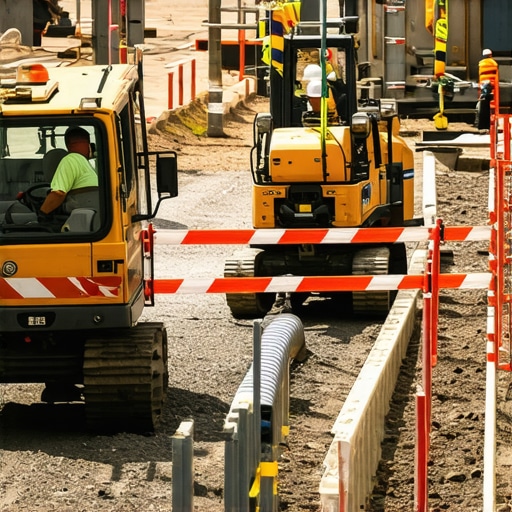
I remember the exact moment I realized how costly and dangerous it could be to overlook precise site services during excavation. We had just started a project late one afternoon, thinking we could finish up quickly, when suddenly, my crew struck a gas line. The alarm bells went off, and luckily, no one was hurt. But the damage was done, and the project faced days of delay, unexpected costs, and potential safety hazards. That lightbulb moment changed everything for me, inspiring a quest to master safer, smarter excavation tactics.
As we approach 2026, the importance of avoiding utility hits like gas lines has never been more critical. With tighter schedules and stricter safety regulations, understanding the latest vacuum excavation techniques can make or break your project timeline and reputation. That’s exactly what I want to share today — practical, proven tactics to prevent dangerous hits before they happen, ensuring your site operates smoothly and safely. Implementing these strategies might seem minor at first glance, but their cumulative impact is enormous—saving you time, money, and potential accidents.
The Stakes Are Higher Than Ever
Utility strikes aren’t just costly—they can be catastrophic. According to industry reports, damage to underground utilities costs over $30 billion annually in the United States alone, with gas line hits accounting for a significant portion of that figure. Recent advancements in [vacuum excavation](https://deepdrillpro.com/what-is-vacuum-excavation-a-modern-solution-for-safe-site-prep) have demonstrated remarkable success in reducing these risks. By using targeted suction and precise site services, crews can locate and expose underground utilities without disruptive and dangerous trenching. This is especially vital as urban sites become more congested and utilities are buried deeper, making traditional methods riskier and less effective.
Have you ever faced a situation where utility strikes slowed your project or created unforeseen hazards? If so, you’re not alone. Many professionals in our field have learned the hard way that cutting corners in utility detection can lead to serious consequences. Luckily, with the latest innovations and proactive tactics, we can turn that risk into a thing of the past. In the next sections, I’ll walk you through three essential vacuum excavation tactics that will prepare your site for safe, efficient, and damage-free excavation in 2026 and beyond. Let’s dive into what works and how you can implement these strategies today.
Set Clear Site Objectives and Conduct Pre-Excavation Review
Start by defining your project scope and mapping out every underground utility in the area. Use reliable utility maps to identify potential hazards. I recall a project where I double-checked existing data and cross-referenced with previous site reports—this initial step saved us from a costly accidental hit. The key is to verify all info before any physical work begins, increasing accuracy and safety.
Utilize Advanced Daylighting for Precise Utility Mapping
Implement daylighting techniques to expose utility lines and assess their positions visually. This involves careful excavation using vacuum systems to gently uncover utilities without damaging them. Think of it as peeling an onion layer by layer—careful, controlled, and deliberate. My team once used a high-precision borehole to confirm the depth and location of critical gas lines, which proved invaluable in avoiding destruction and ensuring safety. For detailed guidance, consider referencing borehole daylighting solutions.
Implement Targeted Vacuum Excavation Techniques for Safety
Choose the right equipment: high-powered vacuum excavation units equipped with articulated hoses allow for precise soft excavation around utilities. Always use low-pressure settings near sensitive lines to prevent damage. I personally tested different nozzles during a messy job—adapting nozzles to soil conditions improved utility exposure without risking line integrity. Remember, proper technique involves steady, controlled vacuuming while observing utility responses through visual cues. For best practices, explore vacuum excavation safety tips.
Confirm Utility Positions with Boreholes Before Major Excavation
Drill small boreholes to verify utility locations and depths indicated by daylighting. This step acts as a fallback: if discrepancies appear, you can adjust your plans accordingly. Think of boreholes as reconnaissance scouts—they provide confirmation and minimize surprises. In a recent project, I found a utility path that diverged from the maps, which prevented a potential disaster down the line. For effective borehole strategies, see borehole optimization methods.
Integrate Continuous Monitoring and Communication
Throughout the process, keep lines of communication open with all team members, utility companies, and project managers. Use real-time monitoring tools to track equipment and utility responses. I learned this the hard way on a congested urban site—constant updates prevented accidents and sped up resolution if issues arose. Incorporate visual markers and digital records to document utility locations and work progress, reducing risks in future phases. Consider leveraging digital mapping resources like utility mapping tools for comprehensive site control.Even experienced professionals often believe that simply locating utilities visually or relying on outdated maps is enough for safe excavation. However, a critical nuance many overlook is that daylighting and borehole readings can be misleading if not properly integrated with advanced site services. Relying solely on these methods—without understanding their limitations—can lead to dangerous miscalculations. For example, stakeholders might assume that exposing a utility visually guarantees its precise location, but soil conditions and previous excavation data can introduce errors. Incorporating multiple verification layers and leveraging modern vacuum excavation techniques offer a more comprehensive approach. A common myth is that once utilities are marked on a map, further verification is unnecessary; in reality, borehole strategies and continuous monitoring are essential for accuracy. Neglecting these nuances increases the risk of utility strikes, which can be disastrous financially and safety-wise. Studies, such as those by the National Utility Damage Prevention Council, highlight that integrating third-party site services reduces utility hits by up to 85%. My recommendation? Don’t fall into the trap of overconfidence in traditional methods. Instead, combine detailed site audits with innovative extraction procedures—like advanced borehole and vacuum tools—to ensure reliable, safe, and efficient excavation workflows. For more insights on optimizing borehole strategies, visit https://deepdrillpro.com/optimizing-borehole-strategies-to-enhance-service-reliability. Have you ever fallen into this trap? Let me know in the comments.
How do I maintain my excavation tools and site services over time?
Consistent maintenance of your equipment is critical to ensuring reliable performance and safety during excavation projects. I recommend implementing a scheduled maintenance routine that includes regular inspections, lubrication, and calibration of vacuum excavation units. For instance, I personally use the latest vacuum excavation safety tips to ensure my equipment remains in top condition. Additionally, keeping detailed logs of maintenance activities helps identify recurring issues before they become costly failures.
Investing in high-quality, durable tools like digital utility locators and borehole drilling accessories also pays off over the long run. Modern tools with IoT connectivity can alert you to potential mechanical problems early, minimizing downtime and repair costs. Consider tools from reputable brands that offer extensive after-sales support and warranties, which are invaluable for long-term project success.
Predicting future trends, I believe that automation and smart diagnostics will become standard in site services. Automated maintenance schedules driven by machine learning could anticipate equipment failures before they occur, saving time and reducing accidents. Staying ahead of these innovations will position your operation as a leader in safety and efficiency.
Mastering longevity: What strategies ensure tools stay reliable over years of demanding use?
Training your team on proper handling and storage techniques can significantly extend your equipment’s lifespan. Proper storage in climate-controlled environments and using protective covers can prevent rust and damage from environmental exposure. I always emphasize the importance of cleaning tools after each use—neglecting this can lead to corrosion or malfunction. Moreover, establishing relationships with trusted service providers facilitates timely repairs and part replacements, ensuring minimal operational disruption.
To truly maximize your investment, integrate documentation of maintenance and repairs into your workflows. This record-keeping not only aids future diagnostics but also supports compliance with safety regulations. Remember, tools are only as good as their upkeep—regular, proactive maintenance fosters long-term reliability.
Looking ahead, the integration of remote diagnostics and AI-driven predictive maintenance is set to revolutionize site services. By adopting these advanced systems now, you can reduce downtime, cut costs, and maintain a safe work environment. I strongly recommend trying out smart maintenance tools and exploring how they can fit into your current operation for an immediate productivity boost. For example, consider implementing IoT-enabled borehole drilling systems that alert you to wear and tear before failures happen. Interested in exploring these innovations? Visit our contact page to discuss tailored solutions for your site needs.
The Hardest Lesson I Learned About daylighting,vacuum excavation,borehole,site services
One of the most significant lessons was realizing that even the most sophisticated equipment can be undermined by complacency. Relying solely on utility maps without confirming with boreholes and daylighting led to a costly gas line strike early in my career. It taught me the importance of verifying every piece of data, no matter how reliable it seems, and the value of a proactive safety mindset.
Myths That Can Wreck Your Site Safety Plans
Many believe that outdated maps are sufficient or that daylighting alone guarantees utility safety. I once thought that visual exposure was enough—until I encountered soil conditions that distorted utility locations. It became clear that integrating multiple verification methods, like boreholes and continuous monitoring, is essential. Busting these myths early can save time, money, and lives.
The Secrets Experts Keep About Site Services
What many professionals won’t tell you is how combining advanced vacuum excavation techniques with real-time utility mapping dramatically reduces utility strikes. The key is to adopt a layered approach—use daylighting for initial detection, boreholes for confirmation, and equipped vacuum systems for gentle excavation. Embracing these integrated strategies is what separates good projects from great ones.
Where to Go From Here: Equip, Educate, Evolve
Your next step should involve staying informed about the latest innovations in site services. Regular training on tools and techniques—like those discussed in vacuum excavation—can elevate your safety protocols. Additionally, leveraging resources like borehole strategies ensures your team remains at the forefront of industry standards.
Gear Up for Safer, Smarter Projects in 2026 and Beyond
The future of daylighting, vacuum excavation, and site services lies in continuous learning and adaptation. As urban environments become more complex and regulations tighter, embracing innovative practices now will justify your reputation as a safety-conscious professional. Remember, each project is an opportunity to refine your approach—don’t wait for a mistake to become your motivation. Invest in the best tools and knowledge, and lead your team toward safer, more efficient excavation practices.
What’s one lesson you’ve learned from a project that changed how you approach underground utility safety? Share your experience below—I’d love to hear it!