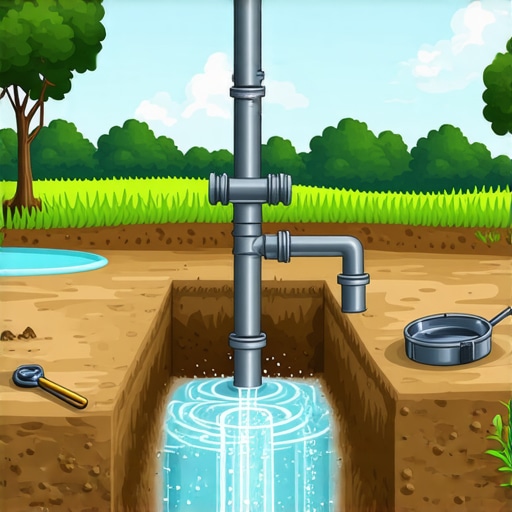
The Sputtering Death of a Well: Why Your Borehole is Failing
There is a specific, gut-wrenching sound a faucet makes when the water table drops or the pump starts sucking air. It’s a rhythmic, wheezing cough, followed by a violent spit of brown, sediment-heavy sludge that stains the porcelain of a brand-new sink. As a forensic plumber with three decades in the trenches, I’ve heard that death rattle more times than I care to count. When you turn that handle, you expect the invisible miracle of pressurized flow, but physics doesn’t care about your expectations. My old journeyman used to say, ‘Water is lazy, but it’s patient.’ It will find the tiniest pinhole and turn it into a geyser given enough time, and conversely, it will find the smallest grain of silt to clog a screen until your thousand-dollar pump burns out in a cloud of ozone and melted copper windings.
The Chemistry of Collapse: Why 2026 Demands Better Solutions
We are entering an era where groundwater isn’t just getting deeper; it’s getting more complex. The chemistry of the soil is shifting, and with it, the way we manage site services. In the South, where the heat bakes the earth into a brick, we deal with aggressive calcification. This isn’t just ‘hard water.’ This is a slow-motion geological event happening inside your pipes. The calcium carbonate doesn’t just sit there; it precipitates out of solution as the pressure drops near the pump intake, forming a brittle, white armor that chokes off the flow. By the time you notice the pressure drop at the showerhead, your borehole is already gasping for air. This is why optimizing borehole strategies is no longer optional; it is a survival tactic for your infrastructure.
“Water service pipe and the water distribution pipe shall be resistant to corrosion and shall be of a material approved for the purpose.” – IPC Section 604.1
Fix 1: The VFD Pump Revolution and Cavitation Control
The biggest killer of borehole yield isn’t a lack of water; it’s the ‘all-or-nothing’ mentality of old-school pumps. Traditional pumps kick on with a massive surge of torque, creating a localized drop in pressure so severe that the water literally boils at room temperature. This is cavitation. Those tiny vapor bubbles implode against the stainless-steel impeller with the force of a sledgehammer, pitting the metal until it looks like Swiss cheese. In 2026, the fix is the Variable Frequency Drive (VFD). A VFD ramps the motor up slowly, maintaining constant pressure without the violent hydraulic shock that pulls silt and fines into the borehole screen. It treats the aquifer with respect rather than trying to mug it for every drop.
Fix 2: Vacuum Excavation and Daylighting for Line Integrity
You can have the best pump in the world, but if the lateral line from the wellhead to the house is weeping into the soil, you’re just paying to water the worms. In the past, finding a leak meant bringing in a backhoe and praying you didn’t rip the electrical conduit or the gas line to shreds. Today, we use vacuum excavation. By using high-pressure air or water to liquefy the soil and a massive vacuum to suck it away, we can perform daylighting—exposing the buried pipes with surgical precision. This allows for a visual ‘autopsy’ of the line without the risk of mechanical damage. Understanding what is vacuum excavation is the difference between a clean repair and a multi-day disaster. When we expose a stub-out or a rough-in using this method, we see the ‘witness marks’ of failure—the damp soil, the discoloration of the bedding material—long before we start cutting pipe.
Fix 3: Multi-Stage Centrifugal Filtration
If your borehole yield is low, check your filters. And no, I don’t mean the little string-wound cartridge under your sink. I’m talking about the primary sediment defense at the wellhead. When borehole installation is done poorly, sand infiltration becomes a constant war. Modern 2026 systems utilize hydro-cyclonic separators that spin the incoming water, using centrifugal force to fling sand and heavy minerals to the outer wall where they drop into a cleanout chamber. This happens before the water even touches a filter media. It prevents the ‘death clog’ where sediment packs so tightly into a filter that it creates a pressure differential strong enough to collapse the inner core of the element. If you aren’t using borehole installation tips that account for localized geology, you’re just throwing money down a dark hole.
Fix 4: Chemical Regeneration and pH Balancing
Sometimes the water is there, but the earth has slammed the door shut. Iron bacteria and manganese scaling can create a biological and mineral ‘slime’ that coats the screen of your borehole. This is where the forensic side of plumbing gets messy. We use pH-neutralizing agents and targeted acids to dissolve the scale, but you have to know the metallurgy of your pump first. If you drop a harsh descaler down a well with a cheap brass-fitted pump, you’ll end up with a pile of useless metal at the bottom of the hole. You need to ensure the system is top-out ready with proper sampling ports to test the water chemistry before and after treatment. This is part of the broader site services package that keeps a property viable.
“Potable water supply systems shall be protected against backflow and back-siphonage.” – UPC Section 602.1
The Forensic Verdict: Buy It Once, Cry Once
In this business, there is no such thing as a cheap fix that lasts. I’ve seen people try to use ‘Dope’ to seal a cracked casing or a Fernco coupling where a solvent-cement joint should be. It always fails. When the yield drops, the amateur looks at the faucet; the professional looks at the physics of the entire site services ecosystem. Whether it’s the vacuum excavation needed to reveal a crushed line or the installation of a high-efficiency VFD pump, the goal is the same: laminar flow and mechanical reliability. Water will always win the war of attrition, but with the right tech and a bit of respect for the trade, we can hold it at bay for another thirty years. Don’t wait for the gurgle to become a silence. Fix the yield now, or get used to taking sponge baths with bottled water.