The Anatomy of the Ground: Why Soil Tells the Truth
I remember my old journeyman, a man whose hands were permanently stained with pipe dope and who could hear a pinhole leak from a block away, always saying, ‘Water is lazy, but it’s patient.’ He wasn’t just talking about the drip-drip-drip that rots a subfloor; he was talking about the way water migrates through the earth. When you are looking for high-flow 2026 boreholes, you aren’t just looking for a spot to drill; you are conducting a forensic investigation of the lithology. I once spent three days on a site where the drillers kept hitting ‘dry’ holes. I walked the site, felt the grit of the surface soil between my fingers, and told them they were ten feet off. We moved the rig, and it hit a vein so strong the slurry nearly overwhelmed the pump. That is the power of understanding soil texture.
Plumbing isn’t just about what happens inside the walls of a house; it’s about the site services that feed the stack. When we talk about choosing the right site services for complex excavation projects, we are talking about the difference between a high-yield borehole and a hole in the ground that costs you fifty grand and delivers nothing but dust. To find the water, you have to read the dirt like a blueprint.
“Storm water drainage systems shall be provided with a method for the disposal of the water that is collected by the system.” – IPC Section 1101.2
Clue 1: The Gritty Reality of Angular Sand
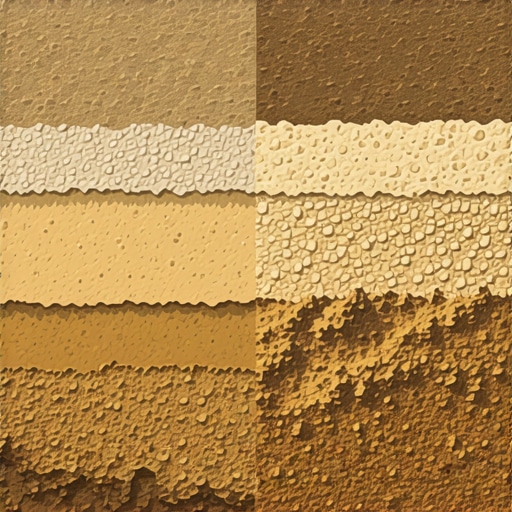
In the world of subsurface assessment, the feel of the soil is your best diagnostic tool. When you pull a sample and feel a sharp, gritty texture that doesn’t smear, you’ve found angular sand. This is the gold standard for high-flow boreholes. In a pipe, we want smooth walls to prevent friction loss, but in an aquifer, we want those jagged edges. They create larger void spaces—porosity—that allow water to move freely. If the soil feels like a handful of crushed glass, you’re looking at a high-flow zone. If it feels like flour, the particles are too small, the ‘pores’ are clogged with fines, and the water is trapped by capillary action. We call this hydraulic conductivity, and it’s the difference between a geyser and a trickle.
Clue 2: The Color of Oxygen (Red vs. Gray)
As a forensic plumber, I look at the chemistry of the environment. Soil color isn’t just about aesthetics; it’s about oxidation. If you see bright reds and oranges in your soil samples, it means the ground is ‘breathing’—oxygen is present, which often means water moves through it intermittently but doesn’t sit. However, if you see ‘gleyed’ soil—streaks of blue or slate gray—you’ve hit a zone where water is perpetually trapped, creating an anaerobic environment. While this means water is present, it often indicates poor flow because the soil is too dense to let it move. Using vacuum excavation to daylight these layers allows us to see the transition zones where the water actually moves, rather than where it just sits and rots.
Clue 3: The Torque Feedback and the ‘Crunch’
When the rig is running, a master driller feels the borehole. It’s like ‘sweating’ a joint; you know by the way the solder sucks into the fitting if it’s going to hold. If the drill chatter is high and you hear a distinct crunching sound, you are likely hitting gravel or cobble. This is the ‘main stack’ of the earth’s plumbing system. High-flow boreholes require these large aggregate layers. If the torque on the rig stays steady and the drill bit feels like it’s cutting through cold butter, you’ve hit clay. Clay is the enemy of flow. It’s the grease clog of the geological world, sealing off water and preventing the recharge of your borehole.
Clue 4: Moisture Gradients and Weeping Strata
One of the most effective ways to identify a high-flow zone is through exploring daylighting benefits for sustainable urban infrastructure. When we daylight a trench or a borehole entry point, we watch the walls. If you see water ‘weeping’ out of a specific layer of sand or gravel within minutes of exposure, you’ve found a pressurized vein. This isn’t just dampness; it’s hydrostatic pressure pushing water out. In a residential setting, this is what causes a slab leak to flood a living room. In a borehole setting, this is the ‘rough-in’ of a high-yield well. We look for these weeping strata to determine the optimal depth for the screen.
“Subsoil drains shall be piping not less than 4 inches in diameter and shall be surrounded by not less than 4 inches of gravel or crushed stone.” – IPC Section 1101.4
Clue 5: The Consistency of the Slurry
When we utilize vacuum excavation, the slurry that comes out tells a story. If the vacuum tube is pulling a thick, heavy muck that looks like chocolate pudding, you are in a low-flow clay zone. However, if the slurry is watery and contains suspended grains of coarse sand, it means the borehole is already beginning to produce. This is why optimizing borehole strategies to enhance service reliability starts with the initial site prep. You can’t just drill blind; you have to monitor the output. A watery slurry indicates that the formation is surrendering its water easily.
The Final Rough-In: Why Site Services Matter
You wouldn’t hire a handyman to install a complex medical gas system, and you shouldn’t hire a budget driller for your borehole drilling techniques. The infrastructure of 2026 demands precision. We are seeing more urban density, which means we have to be surgically precise with how site services drive efficiency in urban construction. Using vacuum excavation to avoid existing ‘stacks’ of underground utilities is critical. If you hit a main sewer line because you didn’t daylight properly, you aren’t just looking at a repair bill; you’re looking at a biohazard nightmare that will shut down a job site for weeks. I’ve seen it happen—the smell of raw sewage mixing with the diesel fumes of a backhoe is something you never forget. It’s why we emphasize maximizing safety with advanced site services in excavation. Know your soil, respect the physics of the water, and never, ever trust a ‘flushable’ wipe or a ‘dry’ soil report that hasn’t been verified by a forensic expert on the ground.