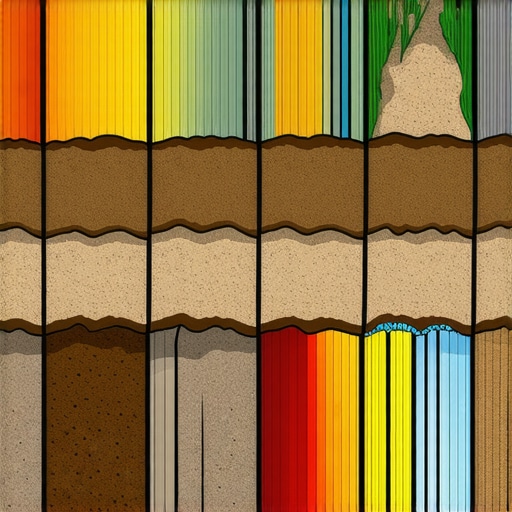
The Anatomy of Subsurface Flow: A Forensic Perspective
My old journeyman used to say, ‘Water is lazy, but it’s patient.’ It will find the tiniest pinhole and turn it into a geyser given enough time. After thirty years in the trade, I’ve learned that the same physics applies whether you’re looking for a slab leak in a ranch-style home or trying to site a high-flow borehole for municipal services. You aren’t just looking at dirt; you’re looking at the historical record of fluid dynamics. When we talk about 2026 borehole standards, we are talking about precision. You can’t just ‘rough-in’ a well and hope for the best. You have to read the soil like a crime scene. Water behaves differently depending on the matrix it inhabits, and if you don’t understand the chemistry of the strata, you’re going to end up with a dry hole or, worse, a collapsed stack that costs five figures to remediate.
“Water service pipe and the water distribution pipe shall be resistant to corrosive action and degrading action from the potable water at the site.” – IPC Section 604.1
1. The Gritty Reality of Coarse Sand and Sphericity
The first clue to a high-flow site is the presence of coarse, well-rounded sand. If you pull a sample and it feels like 40-grit sandpaper against your callouses, you’re in business. In the plumbing world, we hate sand—it chews up pump impellers and eats through brass seats. But in borehole siting, sand is the ‘highway’ of the subsurface. High-flow sites require high permeability. When sand grains are spherical rather than angular, the pore spaces between them are maximized. It’s like a box full of marbles versus a box full of crushed glass. The marbles allow for rapid hydraulic conductivity. When we perform vacuum excavation to daylight these areas, we look for that golden-brown grit. If the sand is stained black with manganese or bright orange with iron, it tells us the water is moving, carrying minerals that oxidize as they travel. This is the difference between a trickle and a torrent.
2. The Deceptive Barrier of Blue Clay
If you hit blue or grey clay, stop. In the trade, we call this ‘heavy’ soil, and it’s the enemy of flow. Clay is made of microscopic, plate-like structures that stack like wet playing cards. There is no ‘pore space’ here. Water doesn’t flow through clay; it gets trapped, held by molecular attraction. If you see clay that smells like a rotten egg—that classic sulfurous sewer gas scent—it means the environment is anaerobic. The water is stagnant. I’ve seen guys try to install a borehole in clay-heavy strata, and the results are always the same: low yield and high drawdown. The clay acts as a hydraulic handcuff. To get a real assessment of what’s happening underneath, we often use vacuum excavation for accurate subsurface assessments. It allows us to see the transition zones where the clay meets the productive gravel without the ‘smearing’ effect of a traditional auger which can hide the true soil profile.
3. The ‘Clacker’ Test: Gravel and Cobble Consistency
When you’re digging out a cleanout or a main stack, you dread hitting cobbles. But for a high-flow borehole, those ‘clackers’—smooth, water-worn stones—are your best friend. A soil texture dominated by 1/2-inch to 2-inch gravel indicates a high-energy depositional environment. This is where the water used to move fast, and where it will move fast again. The spaces between these stones are huge compared to silt. This is what we call ‘clean’ gravel. If you find gravel that is ‘choked’ with fines (silt and clay), the flow will be restricted. It’s like trying to breathe through a wet towel. We use daylighting to expose these gravel lenses. If the gravel is loose and falls away from the vacuum tube, you’ve found your high-flow zone. If the gravel is cemented together with calcium carbonate, you’re looking at a site that will require acidification or heavy surging to produce anything meaningful.
4. Iron Mottling and the Ghost of High Water
You have to look for the ‘ghosts’ of water. Soil tells you where the water *has been*, even if it isn’t there right now. We look for ‘mottles’—spots of bright red or orange in a sea of dull grey soil. This indicates a fluctuating water table. In 2026, as we deal with more volatile climate cycles, understanding these high-water marks is critical for optimizing borehole strategies. If the soil is a uniform, dull grey (gleyed), it’s permanently saturated and likely has poor turnover. But if you see those bright streaks, it means the ground is breathing. It means oxygenated water is moving through periodically. For a forensic plumber, this is like seeing water stains on a ceiling—it tells you the story of the leak long after the floor has dried. We use this data to determine the ‘Rough-in’ depth for the well screen, ensuring it stays in the most productive zone year-round.
“Excavation and backfill shall be in accordance with the requirements of the building code.” – UPC Section 314.1
5. The Stratified Silt Trap
Silt is the middle child of soil—finer than sand but coarser than clay. By itself, it’s a nightmare. It’s unstable, prone to ‘piping’ (where the soil itself washes away), and it will clog a well screen faster than a flushable wipe clogs a 3-inch drain. However, stratified silt—thin layers of silt between sand—is a major clue for finding ‘perched’ water tables. If you’re utilizing borehole installation tips, you know that finding these stratified layers can lead you to high-yield pockets that others miss. The silt acts as a temporary floor, holding the water in the sand above it. Using vacuum excavation to identify these thin ‘lenses’ is the only way to be sure. A traditional drill rig will chew right through a 2-inch silt layer and you’ll never know it was there. But when we ‘daylight’ the utility or the strata, we see the anatomy of the ground clearly.
The Forensic Conclusion: Why Texture Trumps Technology
At the end of the day, you can have the most expensive sonar and seismic equipment in the world, but the dirt doesn’t lie. I’ve seen high-tech sensors miss a massive underground flow because they couldn’t distinguish between wet clay and saturated sand. You have to get your hands dirty. You have to feel the texture. Finding a high-flow borehole site is about understanding the plumbing of the earth. It’s about recognizing that the ground is just a giant series of pipes, some made of sand, some made of rock. If you ignore the material science of the soil, your borehole will fail, and it will fail just like a bad solder joint on a cold morning. Water is patient, and it will only go where the path is easiest. Our job is to find that path. For those looking to ensure their site services are handled with this level of forensic detail, it’s worth the investment in specialized site services. Buy it once, cry once. Do it right, or don’t do it at all.