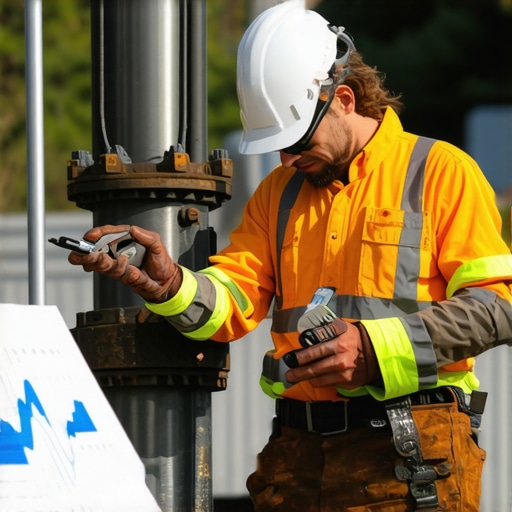
The Sound of a Dying Aquifer
You turn on the tap and instead of the steady, pressurized flow you expect, you hear it: a ragged, coughing sputter of air followed by a stream that looks more like weak tea than potable water. That sound is the death rattle of a neglected borehole. After thirty years in the dirt, I can tell you that a dropping yield is rarely a mystery; it is usually a forensic trail of chemistry, biology, and poor physics. When that pump starts cavitating—a violent, metallic rattling that sounds like a handful of gravel spinning in a blender—it is telling you that it is starved for fluid. You are not just losing water; you are burning out a motor that costs thousands to replace. We are heading into 2026, and if your infrastructure was slapped together during a rush, the chickens are coming home to roost in the form of calcified screens and sediment-choked pumps.
The Journeyman’s Wisdom
My old journeyman used to say, ‘Water is lazy, but it’s patient.’ It will find the tiniest pinhole and turn it into a geyser given enough time, and conversely, it will take the path of least resistance until that path is blocked by the very minerals it carries. In the world of boreholes, water is constantly trying to drag fine particulates into your well screen. It is a slow-motion siege. Most folks think once a hole is drilled, it is a permanent straw into the earth. It is not. It is a mechanical system that requires the same forensic attention as a high-pressure steam boiler. If you are seeing a drop in GPM (gallons per minute), you are witnessing the patience of water finally winning over the integrity of your installation.
“Individual water wells shall be located and constructed in a manner that prevents contamination and provides an adequate supply of water.” – IPC Section 602.3
The Forensic Diagnosis: Why the Yield Fails
Before you start throwing money at a new pump, you need to understand the physics of the cone of depression. When your pump kicks on, it creates a localized drop in the water table around the casing. If your well was not developed properly during the borehole drilling techniques phase, this cone drops too fast, pulling in air or fine silt. This silt acts like sandpaper on the impellers. I have pulled pumps where the brass vanes were ground down to paper-thin slivers because of abrasive sediment. This is where optimizing borehole strategies to enhance service reliability becomes the difference between a twenty-year well and a five-year headache.
Test 1: The Static vs. Dynamic Drawdown Test
The first test is a hydraulic reality check. You need to measure the static water level (where the water sits when the pump is off) and the dynamic level (where it stabilizes while pumping). If the gap between these two is widening over time, your well screen is likely fouling. This is often caused by encrustation. In hard water regions, calcium carbonate and magnesium precipitate out of the water as the pressure drops near the well screen. This creates a hard, cement-like crust that chokes the intake. You can apply all the pipe dope in the world to your surface fittings, but if those screen slots are sealed with lime, you are sucking against a brick wall. This is a job for forensic site services that can chemically treat the scale without destroying the aquifer.
Test 2: The Down-Hole Camera Inspection
You cannot fix what you cannot see. A borehole camera is the only way to identify if you are dealing with encrustation, iron bacteria, or a collapsed casing. I have seen ‘flushable’ debris—don’t get me started on what people drop down well heads—and I have seen Crenothrix, a type of iron bacteria that creates a thick, snot-like biofilm. This ‘shmoo’ coats everything. It smells like rotting vegetation and it is a nightmare to clear. If your yield is dropping and your water has a faint ‘oily’ sheen or a swampy odor, biology is your enemy. This is where exploring daylighting benefits for your wellhead infrastructure becomes vital; you need clear, safe access to the stack to perform these inspections without contaminating the system.
“Well screens shall be corrosion-resistant and shall have openings that are sized based on the grain size of the gravel pack.” – ASTM D5092 Standards
Test 3: The Hydro-Geographic Water Quality Profile
In the South, where the slab sits on expansive clay, your borehole lines can shear as the earth shifts. In the North, the frost depth can heave your pitless adapter right off the casing if it was not ‘rough-in’ correctly. But the silent killer is the chemistry. If your water pH is slightly acidic, it is performing a slow-motion ‘sweating’ of the metal components, leaching minerals and causing pitting. This pitting creates turbulent flow, which in turn causes more mineral dropout. You need a full lab analysis. If you see high levels of iron or manganese, you are looking at a future of clogged pipes and failed valves. Modern vacuum excavation allows us to daylight these lines and inspect for leaks or stress fractures without the cave-in risks of traditional digging.
Restoring the Flow: The Forensic Solution
Fixing a dropping yield starts with daylighting the critical components. We use vacuum excavation to safely expose the buried lines leading from the borehole to the facility. This avoids the ‘hack-job’ approach of blindly digging with a backhoe and ripping out a 2-inch poly line. Once the lines are clear, we look at well development. This might involve surging or high-pressure jetting—similar to hydro-jetting a sewer line—to break up the calcification on the screens. It is about restoring the hydraulic conductivity of the zone around the well. You have to be aggressive. You cannot be afraid of the ‘cleanout’ process; you have to flush the rot out until the water runs clear and the pump stops screaming.
Buy It Once, Cry Once
Whether you are managing urban construction site services or a private rural well, the logic remains the same. If you skimp on the initial borehole installation—using thin-wall PVC instead of heavy-duty casing, or failing to install a proper gravel pack—you are just financing a future disaster. When the yield drops in 2026, don’t just ‘top-out’ the pressure tank and hope for the best. Perform the tests. Look at the chemistry. Use advanced site services to dig safely. Water is patient, but with the right forensic approach, you can be more persistent. Respect the biology of your well, or it will leave you high and dry when you need it most.