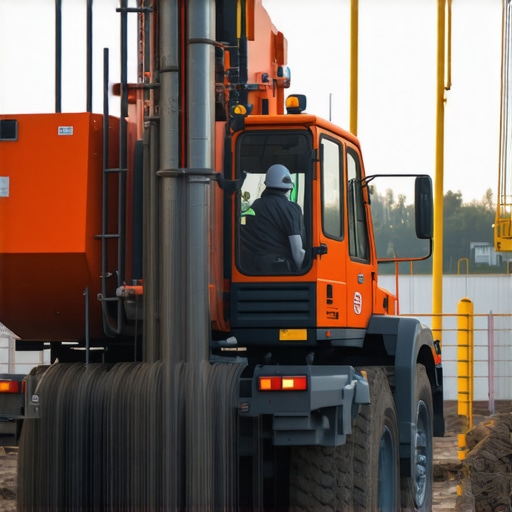
The Sound of a Disaster: Why Shovels are the Enemy
I’ve been in this trade for over three decades, and I can tell you exactly what a $50,000 mistake sounds like. It’s not a bang. It’s a dull thud followed by a sharp hiss or the sudden, sickening gurgle of a severed sewer stack. When a backhoe bucket or a hand-held pickaxe meets a pressurized gas line or a schedule 40 PVC service pipe, physics takes over. The metal shears, the plastic shatters, and suddenly your ‘quick dig’ has turned into a hazardous materials incident or a massive flood that turns the surrounding soil into a liquid soup. My old journeyman used to say, ‘Water is lazy, but it’s patient.’ It will find the tiniest pinhole and turn it into a geyser given enough time. This is why we are seeing a massive shift in how we approach the earth. By 2026, if you aren’t using vacuum excavation for utility exposure, you’re not just behind the times—you’re a liability.
1. The Precision of ‘Daylighting’ vs. The Blind Strike
In the plumbing world, we talk a lot about ‘rough-in’ and ‘stub-out’ phases. You need to know exactly where those pipes are before you start pouring concrete or setting your cleanouts. Traditional digging is blind. You’re swinging steel into the dark. Vacuum excavation, specifically daylighting, uses pressurized water or air to emulsify the soil, which is then sucked away into a debris tank. It’s surgical. You can expose a delicate copper line or a fiber optic bundle without so much as a scratch on the insulation. We are moving toward a reality where vacuum excavation is the key to accurate subsurface assessments, ensuring that when we install a new borehole or utility line, we aren’t guessing where the ‘dead’ lines are located.
“Where the location of underground utility lines is not known with certainty, the use of vacuum excavation or hand digging is required to prevent damage to the utility.” – International Plumbing Code (IPC) Section 307
2. Managing the ‘Unholy Trinity’ of Underground Risks
I’ve seen jobsites shut down for weeks because someone nicked a high-voltage line while trying to find a sewer lateral. The ‘unholy trinity’ of underground work is gas, electric, and high-pressure water. When you use advanced site services in excavation, you’re utilizing a non-destructive method that respects the integrity of the buried infrastructure. Unlike a shovel that can catch the edge of a ‘Fernco’ coupling and rip it clean off, a vacuum hose simply removes the medium (the dirt) from around the obstacle. This is critical in urban environments where the ground is a literal ‘tapestry’ of old galvanized pipes, modern PEX, and crumbling clay tiles. Hydraulic zooming into the soil allows us to see the ‘pink spongy mess’ of a failing fitting before we actually disturb it.
3. The Physics of Soil Displacement and Borehole Integrity
Soil isn’t just ‘dirt’; it’s a complex matrix of minerals, moisture, and air. In the North, we fight frost depth and ice expansion that can break pipes away from the freeze point. In the South, we deal with expansive clay that shears copper pipes like a pair of scissors. When you are optimizing borehole strategies, you need a clean, stable hole. Mechanical augers can ‘wall-off’ or glaze the sides of a hole, making it difficult for grout or pipe ‘dope’ to seal correctly. Vacuum trucks maintain the structural integrity of the surrounding earth, providing a clean ‘top-out’ environment for the plumbers and electricians who follow. This is especially vital when integrating borehole installation for daylighting, where every inch of clearance matters.
4. Speed and the Elimination of Site Disruption
Time is money, and ‘hand digging’ is the slowest way to lose both. I’ve watched crews spend three days trying to find a main stack that was buried under four feet of compacted fill and old concrete slurry. A vacuum truck can do that work in three hours. Because the debris is contained within the truck’s tank, there’s no massive pile of ‘spoils’ blocking the sidewalk or the driveway. This role of vacuum excavation in reducing site disruption cannot be overstated, especially in 2026’s crowded urban centers where space is a luxury. We aren’t just digging a hole; we are managing a project’s flow. When you use modern solutions for safe site prep, you eliminate the need for secondary hauling and site cleanup.
“Excavation shall be made by such methods as to not weaken or damage the utility or the structure.” – Uniform Plumbing Code (UPC) Section 314.1
5. The Future of Site Services: Efficiency and Compliance
As we look toward the 2026 construction season, the regulatory environment is tightening. OSHA and local municipalities are no longer tolerating the ‘dig and pray’ method. They want to see efficiency in urban construction through non-destructive means. Whether you are performing innovations in daylighting projects or simply trying to repair a collapsed sewer line, the vacuum truck is your primary defense against project creep and budget overruns. Choosing the right site services means understanding that the cheapest option is rarely the most cost-effective when you factor in the risk of a utility strike. Buy it once, cry once—invest in the right technology from the start.
Closing the Stack: Why the Old Ways are Dying
I’ve spent my life ‘sweating’ copper and applying ‘dope’ to threaded joints, and I’ve learned that the ground always wins if you fight it with brute force. Water is lazy, and it will find the path of least resistance—usually right through the hole you just accidentally poked in a pipe. Respect the biology of your sewer and the physics of your site. Vacuum trucks are the future because they stop the ‘autopsy’ before it starts. For more information on how to handle your next project with precision, you can always contact us or review our privacy policy for more details on our service standards.