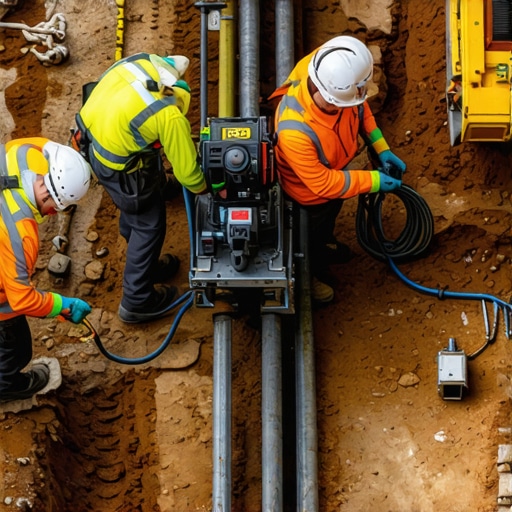
The Silence of the Snap: A Forensic Look at Utility Trauma
There is a specific sound that haunts the dreams of any man who has spent three decades in the mud. It isn’t the roar of the diesel engine or the clank of the bucket. It is a sharp, crystalline crack—the sound of a backhoe tooth meeting a 144-strand fiber optic trunk buried in the clay. In an instant, ten thousand digital lives go dark. My old journeyman used to say, ‘Water is lazy, but it’s patient.’ Well, high-speed data is even more fragile, and the earth is a heartless judge of those who dig without respect for physics. When you hit a fiber lead, you aren’t just breaking a cable; you are shattering glass threads thinner than a human hair, encased in a polymer jacket that offers zero resistance to 30,000 pounds of breakout force. This is why we don’t just ‘dig’ anymore; we perform subsurface surgery.
“Excavation shall be performed in a manner that does not cause damage to the utility or the protective coating of the utility.” – OSHA 1926.651(b)(2)
In the trade, we call it ‘The Forensic Approach.’ Whether you are performing a rough-in for a new commercial stack or running a main line, the subsurface is a minefield of conflicting materials. In the North, especially during the freeze-thaw cycles of a Chicago winter, the ground turns into a monolithic block of frost. Ice expands by 9%, and that expansion creates a hydraulic grip on everything from copper pipes to fiber conduits. When a traditional excavator tries to bite into that frozen soil, the mechanical force doesn’t just lift the dirt; it shears everything trapped within that frozen matrix. This is where vacuum excavation becomes the only sane choice for site services. It isn’t just about moving dirt; it’s about the thermal and physical manipulation of the spoil to reveal the infrastructure without a single mechanical strike.
1. The Precision of Hydro-Static Daylighting
The first fix for the 2026 fiber lead crisis is daylighting. We use high-pressure water—not a ‘pressure washer’ you’d buy at a big-box store, but a calibrated hydro-excavation wand—to liquefy the soil. This allows us to see the utility with our own eyes before any heavy iron comes within ten feet of the ‘Call Before You Dig’ markings. By utilizing daylighting benefits for sustainable urban infrastructure, we eliminate the guesswork. The water cuts the clay, the vacuum sucks the slurry into a debris tank, and the fiber lead is left exposed and pristine, like a bone in an archaeological dig. This is the only way to ensure the stub-out of a new service doesn’t become a multi-million dollar insurance claim.
2. Soil Matrix Analysis and the ‘Spoil’ Problem
One of the biggest ‘hack jobs’ I see in the field is improper backfilling. When you dig a traditional trench, you destroy the soil’s natural compaction. If you’re in a South/Slab environment like Texas or Florida, that expansive clay soil is going to shift. If you haven’t used vacuum excavation to create a clean, narrow borehole, you’re looking at future shear points. Using vacuum excavation for accurate subsurface assessments allows us to identify the exact soil composition. We look for ‘black mush’—that anaerobic rot that happens when a pipe has been leaking for years, unseen. A vacuum rig doesn’t just dig; it provides a forensic window into the health of the entire utility corridor.
3. Thermal Dynamics in Frozen Strata
Up north, we deal with frost depth. When the ground freezes, it doesn’t just get hard; it gets brittle. A mechanical bucket creates a shockwave that travels through the frozen ground. That shockwave can shatter a PVC conduit or snap a fiber lead twenty feet away from where the bucket actually hit. Vacuum excavation uses heated water to melt the frost, turning the ‘concrete’ soil back into manageable mud. This ‘Hydro-Geographic’ logic is what separates the pros from the guys who just own a shovel. By optimizing borehole strategies, we ensure that the thermal expansion doesn’t compromise the integrity of the surrounding utilities.
“Trenching and backfilling for plastic pipe shall be in accordance with ASTM D2321.” – IPC Section 306.3
4. Reducing the Footprint of Urban Site Services
In an urban environment, you don’t have room for a 20-ton excavator. You have sidewalks, fiber vaults, and gas meters every three feet. You need a surgical tool. Vacuum rigs allow us to park the truck 50 feet away and run a hose to the dig site. This is how site services drive efficiency in urban construction. We aren’t tearing up the whole street to find one cleanout or fiber splice. We are performing a targeted strike. It’s the difference between open-heart surgery and a laparoscopic procedure. You want the latter every single time.
5. The Borehole and Trace Wire Integrity
Finally, we have to talk about the borehole. When we are prepping for 2026 fiber expansions, we are often working around existing ‘ghost’ utilities—lines that aren’t on the maps. A vacuum rig can find a buried Fernco coupling or a forgotten wax ring from a demolished building without destroying it. We often find that the trace wire—the only thing that allows us to locate plastic lines—has been snapped by previous ‘hack’ excavations. Vacuum excavation allows us to find the pipe, repair the trace wire, and ensure the 2026 leads are actually locatable for the next generation of plumbers and utility techs. Following borehole installation tips for daylighting integration ensures that we aren’t just fixing today’s problem, but preventing tomorrow’s disaster.
Forensic Conclusion: Buy It Once, Cry Once
You can hire a guy with a backhoe for half the price, and you’ll spend ten times that amount when he hits a fiber trunk. I’ve seen it happen in a heartbeat—the hiss of a ruptured line, the panic in the operator’s eyes, and the inevitable lawsuit. Vacuum excavation is the insurance policy you can’t afford to skip. It’s about respecting the physics of the earth and the chemistry of the materials we bury in it. Whether you are dealing with sweating copper or pulling fiber, the rules of the subsurface remain the same: water always wins, and physics never takes a day off. Don’t be the guy who leaves a ‘pink spongy mess’ of a utility strike behind a wall or under a slab. Use the right tool, do the rough-in correctly, and treat every fiber lead like the fragile glass heart of the city that it is.