The Anatomy of a Blackout: Why Mechanical Teeth Fail
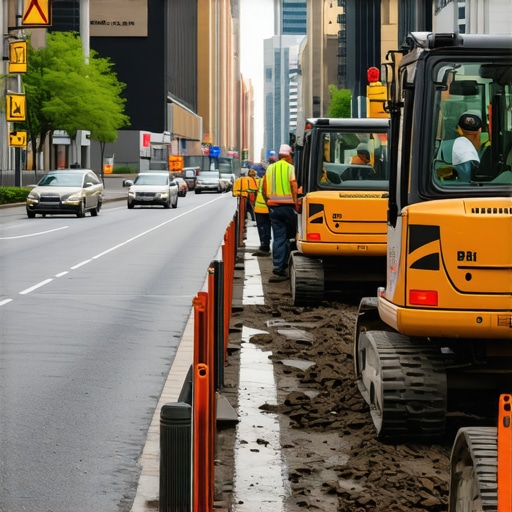
The lights don’t just flicker; they die with a final, sickening pop that vibrates through the soles of your boots. It’s a sound I’ve heard too many times standing in wet trenches. My old journeyman used to say, ‘Water is lazy, but it’s patient. It will find the tiniest pinhole and turn it into a geyser given enough time.’ The same logic applies to excavation. If you’re aggressive with a backhoe, you aren’t just digging; you’re gambling against physics. In the frozen soils of the North, where frost depth can reach four feet, the earth grips utility lines like a vice. When a bucket tooth hits a high-voltage line buried in that icy aggregate, the result isn’t just a repair bill—it’s a catastrophic failure of the local grid. We are moving into a 2026 construction cycle where the density of fiber optics and power mains is higher than ever, and the old way of ‘rip and flip’ is a death sentence for site reliability.
“Excavation and fill shall be performed in a manner that does not cause damage to the existing utility line or the protective coating thereof.” – IPC Section 306.1
When we talk about stopping outages, we have to look at the material science of the soil itself. In cold climates, ice expands by 9%, creating a heave that can shear a schedule 40 PVC conduit or even a heavy-walled iron stack if the bedding isn’t right. Traditional excavation is a blunt instrument. It’s like trying to perform surgery with a sledgehammer. Vacuum excavation, however, uses the physics of pressure differentials to peel back the earth. It’s the difference between a rough-in done by a hack and a master-level top-out. We are using air or water to liquefy the ‘pack’ around the pipe, leaving the utility undisturbed while we clear the way for new site services.
1. Precision Daylighting: The Surgical Cleanout
Daylighting is the only way to prove what’s actually under the dirt. I’ve seen ‘as-built’ drawings that were nothing more than works of fiction, showing a main line six feet to the left of where it actually sat. By using daylighting for sustainable urban infrastructure, we expose the utility without the risk of mechanical shear. It’s like clearing a grease clog; you don’t just keep pushing the snake until something breaks. You use a camera to see the obstruction. Vacuum excavation provides that visual confirmation. When the nozzle hits the soil, it creates a slurry that is sucked away, revealing the ‘stub-out’ or the main trunk with zero impact on the cable’s jacket. This is critical for fiber optics, where even a slight nick in the cladding can lead to signal degradation long before the line actually snaps.
2. Borehole Integrity and High-Voltage Clearance
Setting a borehole in a crowded utility corridor is a nightmare for most crews. If you’re off by two inches, you’re looking at a localized EMP. We treat these boreholes with the same respect I give a gas-fired water heater’s vent—get the clearances wrong, and people get hurt. Using vacuum technology to pre-clear these paths ensures that we aren’t flying blind. It’s about accurate subsurface assessments. When the air wand hits a buried transformer lead, it bounces off the insulation instead of slicing through it. We aren’t just digging a hole; we are creating a safe ‘Fernco’ of space around the existing infrastructure, allowing for new installations without threatening the 2026 power requirements of the neighborhood.
3. Mitigation of Frost-Heave and Soil Shear
In the North, the freeze-thaw cycle is the enemy of every underground connection. If you have a buried joint that wasn’t properly ‘doped’ or a coupling that’s brittle from age, the shifting soil will find that weakness. Vacuum excavation allows us to inspect these joints without adding mechanical stress to the already strained materials. When we provide advanced site services, we are looking for the tell-tale signs of dezincification in brass or the white powder of calcified PVC. By safely exposing the lines, we can apply proper insulation or heat tape before backfilling, preventing the ‘ice-jack’ effect that leads to mid-winter outages.
“Where pipes are buried at a depth that is less than the frost line, such pipes shall be protected from freezing by insulation or heat or both.” – IPC Section 305.4.1
This code isn’t just a suggestion; it’s a survival guide for infrastructure. When we use vacuum suction, we can remove the old, frost-susceptible soil and replace it with engineered fill that drains better, effectively creating a ‘stack’ that protects the utility from the environment. It’s the same way we protect a wax ring from a shifting subfloor—you fix the foundation, or you’ll be back to fix the leak within a year.
4. Managing the ‘Unholy Trinity’ of Subsurface Obstructions
In the world of piping, we deal with grease, roots, and wipes. In the world of excavation, it’s clay, cobble, and forgotten concrete. These materials are ‘lazy’—they settle and compact over decades, turning the earth into a solid block. A backhoe trying to pull a boulder out of heavy clay will often take the nearby gas line with it because the soil won’t let go. Vacuum excavation breaks that bond. By ‘sweating’ the soil with high-pressure water (hydro-vac), we can isolate the boulder and lift it out without the soil pulling on the surrounding utilities. This is essential for safe site prep, ensuring that the ‘rough-in’ of the new project doesn’t destroy the existing services.
5. Emergency Remediation Without the Gurgle
When a line does fail—perhaps due to age or an old ‘hack job’ repair from the 90s—you need to get to it fast without making the problem worse. I’ve seen crews try to dig out a broken water main with a shovel, only to have the bank collapse and snap the adjacent power conduit. Vacuum excavation is the only way to manage a wet-hole repair safely. It sucks the slurry out as fast as the water can leak, allowing the plumber or technician to see the ‘cleanout’ point. We aren’t just guessing where the break is; we are looking at it in real-time. This speed is what will keep the grid stable in 2026, as urban density makes every square inch of the ‘subsurface stack’ a high-stakes environment. Water always wins eventually, but with vacuum excavation, we at least get to choose where the battle takes place.