The Hiss of a Five-Figure Mistake
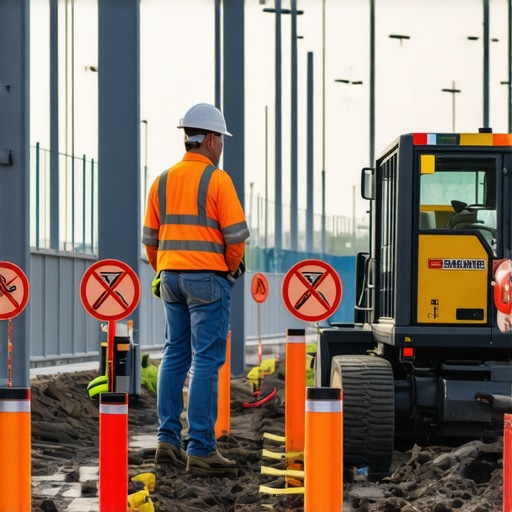
I’ve spent thirty years in the trenches, and if there is one sound that haunts a master plumber’s dreams, it’s the sharp, metallic thwack of a backhoe bucket meeting a pressurized main. It’s followed by a split second of silence, then the violent hiss of water or gas screaming into the atmosphere. My old journeyman used to say, ‘Water is lazy, but it’s patient.’ It will find the tiniest pinhole and turn it into a geyser given enough time. But when a mechanical excavator rips into a stack or a utility line, you aren’t waiting for time; you’re inviting a catastrophe that smells like sulfur and costs more than a suburban mortgage.
As we march toward 2026, the complexity of our underground infrastructure is reaching a breaking point. In the North, where frost depth can drive a pipe four feet deep only for the ground to heave it back up, the ‘guess and dig’ method is a death sentence for your budget. We are dealing with rough-in designs from forty years ago buried under modern fiber-optic lines. To survive the next few years of utility upgrades without losing your shirt, you need to understand the forensic reality of vacuum excavation and why the old ways of digging are as obsolete as a wax ring on a broken flange.
“Excavation and backfill shall be in accordance with the International Building Code.” – IPC Section 306.1
Rule 1: The ‘Locate’ is a Suggestion, Not a Map
In the trade, we talk about ‘the ghost in the ground.’ You call for a locate, they spray some orange paint on the grass, and you think you’re safe. You’re not. Soil in freeze-thaw cycles shifts. A cleanout that was vertically aligned in 1990 might be leaning at a thirty-degree angle now due to ice expansion. Ice expands by 9%, and that hydraulic force doesn’t just break pipes; it moves them. Traditional mechanical digging doesn’t account for this drift. When you use vacuum excavation, you are performing a surgical strike. You are peeling back the earth layer by layer with high-pressure air or water, allowing you to see the utility before you touch it. This is why vacuum excavation is the key to accurate subsurface assessments. If you trust the paint, you’re trusting a guess. If you trust the vacuum, you’re trusting your eyes.
Rule 2: Master the Art of Daylighting
Daylighting isn’t just a buzzword; it’s the only way to ensure borehole integrity. When we ‘daylight’ a pipe, we are exposing it to the sun to confirm its depth, material, and condition. I’ve seen stub-out pipes made of thin-walled PVC that would shatter if a shovel even bumped them. By utilizing specialized site services, you can expose these delicate lines without the risk of impact. This is especially critical when you’re integrating new systems into old city grids. Understanding the daylighting benefits for sustainable urban infrastructure is the difference between a smooth job and a week-long emergency repair involving a Fernco and a lot of prayer.
Rule 3: Respect the Physics of the Borehole
In the frozen North, the physics of the soil are your enemy. When you drill a borehole, you’re creating a path of least resistance. If that hole isn’t managed correctly, it becomes a conduit for groundwater, which freezes, expands, and shears your fittings. Using vacuum technology to clear the way for borehole installation ensures that you aren’t leaving behind the jagged, loose soil that leads to future collapses. You need to be optimizing borehole strategies to enhance service reliability to avoid the 2026 repair spikes. A clean hole means a stable pipe. A stable pipe means I don’t have to come out at 3:00 AM to fix a line that’s been crushed by settling backfill.
Rule 4: Stop ‘Sweating’ the Wrong Material
We plumbers spend a lot of time sweating copper, but in the world of heavy excavation, the material science changes. When you’re digging around old galvanized lines, the vibration of a heavy excavator can cause ‘graphitization’—where the iron leaches out, leaving a brittle carbon shell. It looks like a pipe, but it has the structural integrity of a pencil lead. Vacuum excavation uses kinetic energy in the air or water stream to break apart the soil clods without vibrating the brittle infrastructure to pieces. This is a core part of what vacuum excavation offers as a modern solution for safe site prep. You aren’t just moving dirt; you’re protecting the molecular integrity of the existing top-out services.
“Joints and connections shall be made gas tight and water tight.” – UPC Section 705.0
Rule 5: Integrated Site Services are Mandatory
The days of hiring one guy with a backhoe and another guy with a shovel are over. Modern utility work requires a suite of site services that communicate with each other. If the team doing the daylighting isn’t talking to the team doing the borehole drilling, you’re going to end up with a cross-bore—that’s when a new line is punched right through an existing sewer stack. It’s a mess that smells of methane and failure. You must be choosing the right site services for complex excavation projects to ensure every hand knows what the other is doing. When we talk about site services, we’re talking about a forensic approach to the ground. We use the vacuum to verify, the drill to install, and the dope to seal, all in one coordinated dance.
The Forensic Conclusion: Water Always Wins
At the end of the day, you can’t fight physics. Water will expand when it freezes, it will corrode your brass fittings through electrolysis, and it will find the path of least resistance through your poorly compacted trenches. Vacuum excavation is the only method that respects the biology of the soil and the chemistry of the pipes. If you’re planning utility work for 2026, don’t be the guy who ‘thought’ the pipe was deeper. Be the guy who saw it with his own eyes. The cost of a vacuum truck today is a fraction of the cost of a forensic plumber tomorrow. If you need to map out your next move, contact us before the first shovel hits the dirt. Buy it once, cry once—and don’t let a mechanical bucket turn your profit into a puddle.