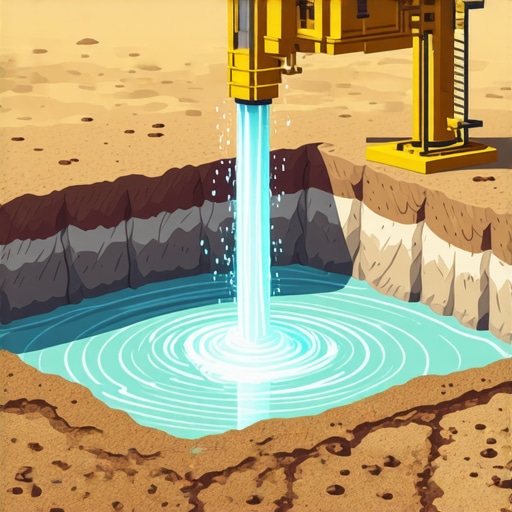
The Forensic Plumber’s Guide to Hitting the Mother Lode
I’ve spent thirty years listening to the heartbeat of pipes and the groan of the earth. My old journeyman used to say, ‘Water is lazy, but it’s patient.’ It will find the tiniest pinhole and turn it into a geyser given enough time. When you’re staring at a patch of dry dirt, trying to figure out where to punch a borehole, that patience is your biggest enemy. You aren’t just looking for liquid; you’re hunting for a pressurized aquifer that won’t give up the ghost after six months of heavy draw. Most guys just set up a rig and pray. I perform an autopsy on the ground before the first bit ever bites into the topsoil. If you want high-yield water in 2026, you stop guessing and start using the physics of the strata to your advantage. It’s about more than just digging; it’s about site services that respect the geology beneath your boots.
“Individual water supplies shall be located and constructed so as to be safeguarded against contamination.” – IPC Section 602.1
Secret 1: Surgical Daylighting with Vacuum Excavation
Before you ever bring a massive drill rig onto the site, you have to know what’s lurking in the ‘rough-in’ of the earth’s crust. I’ve seen crews hit old gas lines or fiber optic cables because they relied on a 20-year-old map that was drawn by someone who’d had too much coffee. This is where vacuum excavation becomes your eyes underground. We call it daylighting. We use high-pressure air or water to liquefy the soil and suck it away, exposing the buried utilities without snapping a pipe like a dry twig. If you don’t use vacuum excavation for accurate assessments, you’re just gambling with a million-dollar drill bit. By daylighting the proposed borehole site, you ensure that the path to the water table isn’t obstructed by the ghost of infrastructure past. It allows for a clean entry, ensuring your borehole doesn’t become a liability before it ever hits the water.
Secret 2: The Chemistry of the Strata and Hydro-Logic
Water isn’t just H2O; it’s a chemical soup. When you hit an aquifer, you’re looking for flow, but you’re also looking for longevity. I’ve pulled up submersible pumps that looked like they’d been dipped in acid. This is usually due to low pH water eating the copper windings or calcified mineral deposits—that hard, white, crusty scale—choking the intake screen until the motor burns out in a cloud of ozone and regret. High-yield water requires understanding the porosity of the rock. You want fractured limestone or clean, coarse gravel. If you’re pulling from fine silty sand, your borehole will ‘sand up,’ filling the bottom of the casing with a gritty sludge that acts like sandpaper on your valves. This is why modern borehole drilling techniques focus on the ‘pack’—using graded silica to create a natural filter that keeps the yield high and the grit out. You have to think about the ‘top-out’ phase of the well construction before you even break the surface.
“The casing shall be grout sealed to prevent the entrance of surface water or contaminants.” – ASTM D5092/D5092M
Secret 3: Preventing Hydraulic Short-Circuits
One of the biggest ‘hack jobs’ in drilling is a poorly sealed borehole. Imagine a stack in a high-rise. If the vent isn’t right, the whole system gurgles and fails. In a borehole, if you don’t use a proper bentonite grout seal, surface water—laden with fertilizers, pesticides, and the oily runoff from the driveway—will track down the outside of your casing. This is a hydraulic short-circuit. It ruins your yield by contaminating the clean aquifer with ‘black water’ from the surface. In 2026, we use specialized site services in excavation to ensure the annular space is sealed tighter than a drum. I’ve waded through flooded basements where the hydrostatic pressure pushed water through the floor cracks because the exterior drainage was a mess. The same physics apply 200 feet down. If the casing isn’t ‘dope’d’ and sealed correctly, the pressure from the upper soil layers will collapse the intake zone, leading to a dry hole and a wasted investment.
Secret 4: Integrated Site Services and Reliability
Finding water is half the battle; getting it to the house or the commercial facility is the other. This is where the plumbing mindset takes over. You need to plan your ‘stub-out’ points with precision. Using site services to drive efficiency means coordinating the borehole location with the final plumbing rough-in. You don’t want your main water line running 500 feet across a frost-prone field if you can help it. If you’re in a northern climate, that pipe needs to stay below the frost line—at least 48 inches in most jurisdictions—or you’ll be dealing with the 9% expansion of ice that turns a schedule 80 pipe into plastic confetti. We use optimized borehole strategies to ensure the pump house or pitless adapter is accessible for maintenance. If a check valve fails or a ‘Fernco’ coupling slips, you don’t want to be digging with a backhoe in the middle of a blizzard to find the cleanout. Planning for the lifecycle of the well—from the first vacuum-sucked grain of dirt to the final twist of the pressure tank—is what separates the pros from the guys who just leave you with a hole in the ground and a bill.
The Final Forensic Verdict
Water always wins. It’s the universal solvent, and it’s always trying to return to the sea. Your job is to catch it on the way. By using vacuum excavation to clear the way and high-precision drilling to secure the source, you’re not just digging a well; you’re engineering a life-support system. Don’t let a handyman with a rig sell you a ‘cheap’ borehole. They’ll leave you with a calcified mess and a dry pump. If you need a site evaluated or a borehole that actually delivers, contact us today. We don’t just find water; we master the hydraulics of the earth. Buy it once, cry once—that’s the plumber’s way. Respect the physics, seal your casing, and always daylight your utilities before you dance with the drill rig.