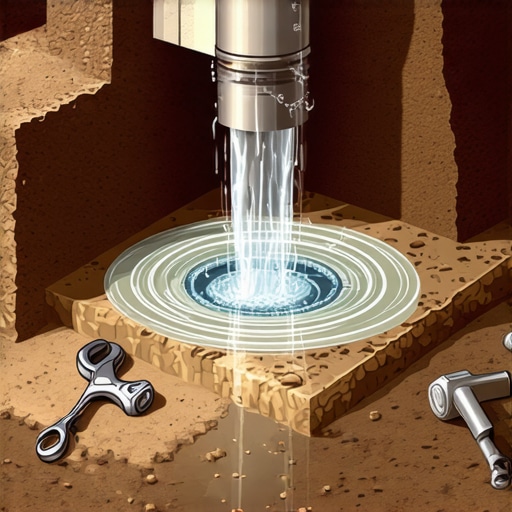
The Gurgle of a Dying Borehole: A Forensic Autopsy of Silt
You hear it before you see it—the dry, rhythmic chugging of a pump struggling against a column of slurry rather than clear water. When a borehole begins to fail, it doesn’t just stop; it gasps. As a forensic plumber with thirty years in the mud, I’ve seen the damage that ‘fines’ (that’s trade talk for silt and sand) can do to a system. It’s an abrasive paste that grinds down stainless steel impellers until they look like they’ve been chewed by a shark. My old journeyman used to say, ‘Water is lazy, but it’s patient.’ It will find the tiniest gap in your filter pack and turn it into a highway for sediment, eventually choking your supply until you’re left with nothing but a muddy gurgle in the tap. This isn’t just a clog; it’s a structural failure of the underground interface.
“The filter pack shall be designed to retain the formation material and shall be of a grain size that is compatible with the screen slot size.” – ASTM D5092 Standard Practice
1. The Precision Power of Vacuum Excavation
When the silt load becomes too heavy, the area around the wellhead often becomes a swampy mess of compacted clay and grit. You can’t just go in with a backhoe; you’ll snap the casing or tear the header pipes. This is where vacuum excavation becomes the only surgical option. By using high-pressure water to liquify the soil and a high-cfm vacuum to suck it away, we can perform what we call ‘daylighting’—exposing the buried infrastructure without the risk of mechanical strikes. This allows us to inspect the ‘stub-out’ points and ensure no surface water is infiltrating the borehole through a cracked cap. If you want to understand the mechanics of this, the role of vacuum excavation in reducing site disruption is a masterclass in site preservation. We use this to clear the path for a proper forensic look at why the silt is migrating in the first place.
2. Mechanical Surging: The Plunger on Steroids
The second fix involves moving the water back and forth through the screen with a surge block. Think of it like a giant, heavy-duty plunger that fits the stack of the borehole perfectly. We drop the block down and work it vigorously. This creates a pressure-vacuum cycle that pulls the silt out of the gravel pack and into the casing where we can pump it out. It’s brutal work. You’ll see a black, foul-smelling custard emerge—this is the ‘biofilm’ and silt that’s been anaerobic for years. If the surging doesn’t clear it, your screen might be compromised. We often use vacuum excavation as a modern solution to manage the discharge of this sludge, keeping the site from becoming a toxic mud pit.
3. Chemical Dispersants and Polyphosphates
Sometimes the silt is chemically bonded to the screen. In hard water areas, calcium carbonate acts like a ‘dope’ or cement, locking the silt particles into a solid wall. We use food-grade polyphosphates to break that electrostatic bond. It’s like using a degreaser on a grease clog in a kitchen line, but for geology. We pour the solution down, let it sit to ‘soften’ the calcified silt, and then come back with high-velocity jetting. This is a critical part of optimizing borehole strategies to enhance service reliability. Without breaking that chemical bond, mechanical cleaning is just scratching the surface.
“Openings in the well casing shall be designed to allow the entry of water while preventing the entry of sediment.” – Uniform Plumbing Code (UPC) Section 601.2
4. Daylighting and Header Pipe Inspection
If the silt is only appearing after heavy rain, the problem isn’t the aquifer; it’s the rough-in. Surface water is likely ‘short-circuiting’ down the side of the casing because the grout seal has failed. We use daylighting to expose the first ten feet of the borehole casing. By carefully removing the earth, we can see if there are voids in the bentonite seal. This is a standard part of high-end site services. If we find a void, we re-grout it with a tremie pipe. It’s the only way to ensure that your ‘top-out’ is actually water-tight. For more on the logistics of this, check out how advanced site services in excavation prevent these exact types of failures.
5. Screen Re-lining and Internal Sleeving
The ‘nuclear option’ for a sanded-in borehole is installing a liner. If the original screen has ‘dezincified’ or corroded—leaving holes large enough for gravel to enter—we must slide a smaller diameter PEX or PVC screen inside the old one. We use specialized centralizers to keep it centered and then drop a new, finer filter pack between the two. It’s a tight fit, and you lose some flow volume, but it stops the silt. This is forensic plumbing at its peak—diagnosing a failure hundreds of feet down and fixing it without digging a new hole. It’s about longevity. As I always say, buy the right site services once, or cry every time you turn on the faucet. Proper selection of site services determines whether your borehole lasts 5 years or 50.
“, “image”: { “imagePrompt”: “A high-detail close-up of a weathered master plumber in his 50s, wearing dirty reflective gear and a hard hat, looking down a vacuum excavation tube. The background shows a muddy construction site with a large vacuum truck. The lighting is harsh, natural daylight, emphasizing the texture of the mud and the industrial equipment.”, “imageTitle”: “Forensic Plumber Inspecting Borehole Silt Issues”, “imageAlt”: “A professional plumber using vacuum excavation to clear a silt-clogged borehole site.” }, “categoryId”: 7, “postTime”: “2025-05-15T10:30:00Z” }