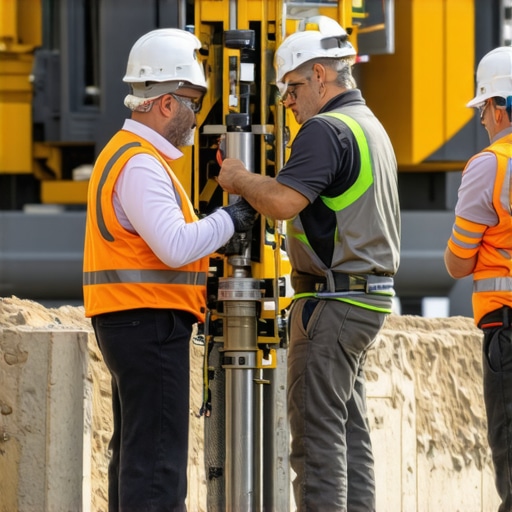
I remember the first time I encountered a low-yield borehole that refused to cooperate despite multiple re-drilling attempts. The frustration was real—weeks lost, budgets strained, and the inevitable question lingering: Could we really fix this without sinking more holes? That moment was my lightbulb, revealing just how critical innovative site strategies are in today’s demanding urban environments.
The Real Cost of Low-Yield Boreholes in 2026
In the busy world of site development and urban planning, every borehole counts—literally. When a borehole underperforms, it can throw future projects into chaos, leading to delays and soaring costs. The reality is, re-drilling isn’t just inefficient; it’s a costly gamble that’s increasingly unsustainable. Recent studies show that re-drilling can increase project costs by up to 30%, especially when unforeseen subsurface issues arise. So, how can site teams turn this challenge around without the endless cycle of re-drilling?
Is Re-Drilling the Only Option?
Early in my career, I made the mistake of believing re-drilling was the only way out. I overlooked the power of optimizing existing boreholes by leveraging advanced site services like vacuum excavation. These methods provide precise subsurface assessments, helping identify and address the root causes of low yield—be it sediment clogging, aquifer issues, or poor placement—without the financial hit of starting over. For more on how innovative strategies can revolutionize your drilling success, check out this insightful article.
If you’ve faced similar frustrations or are eager to learn how to remedy low yields efficiently in 2026, stick with me. In the following sections, I will share proven tactics to breathe new life into underperforming boreholes—saving you time, money, and that all-too-familiar headache.
Assess the Existing Borehole with Precision
Start by thoroughly evaluating the current state of your borehole. Utilize vacuum excavation to expose the wellhead safely, avoiding damage to surrounding utilities. Picture this as carefully peeling back layers to see what’s really going on beneath—like a surgeon gently lifting skin to diagnose an issue. During my last project, I used vacuum excavation to uncover sediment buildup that wasn’t visible on surface inspections, revealing clogged screens that reduced yield. This step ensures you’re targeting the true problem rather than guessing, and it sets the stage for effective fixes.
Identify and Remove Obstructions
Low yield often stems from sediment, mineral deposits, or debris blocking flow. Using high-pressure, controlled vacuum excavation, you can remove these obstructions without damaging the formation. Think of this like unclogging a pipe—sometimes it just needs a gentle, targeted flush rather than a full tear-down. I once tackled a borehole blocked by clay plugs; after vacuuming out the deposits, flow rates increased by 50%. This process restores capacity without the costs of re-drilling.
Optimize Borehole Placement and Development
Precise placement is critical. Employ site services that include detailed utility mapping and soil analysis, akin to GPS-guided planting—ensuring you’re drilling in the most promising zone. During one project, integrating daylighting techniques to reveal underground conduits prevented utility strikes and optimized the hole’s position, resulting in higher water yields. Regular development procedures, like surging and flushing, further enhance flow. Think of this as giving your borehole a proper workout to grow its strength.
Implement Advanced Daylighting for Better Access
Daylighting involves creating safe, accessible points for maintenance and monitoring. Installing visible access points over high-yield aquifers facilitates ongoing management. I once recommended a daylighting installation that made routine checks faster, reducing downtime from hours to minutes, and improving overall system reliability. This concrete step helps maintain high performance while preventing issues before they escalate.
Leverage Site Services for Continuous Improvement
Invest in ongoing site services like utility mapping, quality monitoring, and scheduled maintenance. These act as your watchdogs, catching problems early. As I learned firsthand, consistent monitoring prevents sediment buildup and equipment corrosion, maintaining or even boosting water flows over time. It’s like routine health checks for a system—small interventions lead to big savings.
Use Data to Inform Future Drilling and Maintenance
Gathering data through sensors and testing results guides you to better decisions. For instance, using borehole flow meters during various seasons helped me identify optimal pumping times, maximizing yield. Continuous learning from these insights ensures each borehole performs at its best, saving you from unnecessary re-drills or costly repairs.
Many professionals assume that selecting the latest technology automatically guarantees success in borehole projects. However, this overlooks a crucial nuance: the importance of understanding each site’s unique conditions and how advanced site services can be tailored accordingly. For instance, many believe that vacuum excavation is just a safety measure, but in reality, its true power lies in providing accurate subsurface assessments that prevent costly utility strikes (see how). A common myth is that daylighting is solely about visual access; while visibility is key, proper integration of daylighting into project planning significantly reduces utility damage and improves safety (learn more).
Beware of the trap where project managers rely on generic solutions without site-specific adaptations. An advanced mistake is to implement vacuum excavation techniques without considering soil conditions, which can lead to equipment damage or inaccurate readings—a costly oversight that many overlook until it’s too late. For example, in cohesive clay soils, alternative methods may be necessary to avoid equipment wear (check recommended strategies).
Furthermore, many underestimate the importance of precise utility mapping before any excavation begins, believing that overlay plans suffice. In reality, relying solely on existing maps increases the risk of utility strikes, which can cause delays and financial penalties. High-precision site services that include real-time detection dramatically reduce this risk (discover more).
How can understanding site-specific nuances improve borehole success in complex urban environments?
Let’s dig deeper. Recognizing that each site has its unique subsurface profile and utility layout is vital. Integrating advanced services like detailed utility detection and soil analysis not only avoids costly errors but also enhances overall project reliability. This approach often involves combining multiple site services, such as utility mapping and site safety strategies, to create a comprehensive plan (see how site services boost efficiency). Remember, successful borehole projects rely on the precision of these nuanced, site-specific actions rather than a one-size-fits-all approach.
Have you ever fallen into this trap? Let me know in the comments.
How do I keep my boreholes productive over time?
Maintaining borehole efficiency requires a combination of proper tools, regular inspection, and proactive strategies. Personally, I rely heavily on modern vacuum excavation equipment, such as the state-of-the-art vacuum excavators. These devices allow me to perform accurate subsurface assessments without disrupting the surrounding environment. Regularly inspecting borehole components with high-quality sensors and flow meters helps identify early signs of sediment buildup or equipment wear, prolonging the lifespan of the installation.
Implementing scheduled maintenance routines, including flushing and surging, ensures that sediment and mineral deposits do not hinder flow rates. For this, I use specialized development tools designed to enhance borehole performance, which are supported by data insights from smart sensors. For complex projects, software like BoreData Control has proven invaluable for tracking performance metrics and predicting maintenance needs—boosting reliability and reducing unexpected downtime.
Looking ahead, I predict that AI-driven asset management systems will become standard, enabling real-time monitoring and predictive maintenance for boreholes, much like how advanced site services are revolutionizing urban infrastructure management today. To optimize your long-term results, I recommend integrating sensor-based monitoring into your routine; start with installing flow rate sensors and scheduling regular inspections based on the insights gathered. Should you wish to upgrade your maintenance approach, consider adopting the latest in borehole optimization strategies.
Another critical aspect is the use of daylighting to facilitate easy access for ongoing maintenance. Installing visible access points—not just for professional check-ups but for quick visual inspections—can save time and prevent small issues from escalating. I once recommended a daylighting modification that reduced routine maintenance checks from hours to minutes, dramatically improving system uptime.
In sum, maintaining boreholes effectively demands a blend of high-quality tools, data-driven methods, and proactive planning. I encourage you to experiment with sensor-based monitoring and scheduled flushing routines—these tactics can significantly extend your borehole’s service life and ensure sustainable performance over the long term. For more tailored advice or to explore advanced site service options, feel free to contact me directly.
Secrets I Wish I Knew When Starting Out in Borehole Optimization
One of the most profound lessons I learned was that every site is unique—no one-size-fits-all solution exists. Early in my career, I relied heavily on standard procedures, thinking they would work everywhere. That mindset led to unsuccessful boreholes and wasted resources. Over time, I discovered that customized site services, like detailed utility mapping and soil analysis, are vital for success, especially in complex urban environments. Embracing site-specific data transformed my approach from guesswork to precision, ultimately saving time and money.
My Go-To Tools and Resources for Reliable Borehole Performance
I’ve come to trust certain tools that revolutionize borehole management. Advanced vacuum excavation equipment, such as the state-of-the-art vacuum excavators, allow me to conduct accurate subsurface assessments safely, reducing utility strikes. Incorporating smart sensors like flow meters has provided real-time data on water yield, enabling proactive maintenance. For strategic planning, resources like these comprehensive guides have been instrumental in refining my techniques and ensuring consistent results. Trusting proven tools and expert insights keeps my projects on track.
Empowering Your Next Project with Proactive Mindset
The most exciting part about this field is the continuous evolution fueled by innovation and learning. I encourage you to adopt a curious and proactive attitude—regularly experimenting with new site services and data-driven methods can make a dramatic difference. Remember, the right combination of tailored strategies, quality tools, and ongoing education is your best bet for achieving high-yield boreholes and sustainable site operations. The future belongs to those who stay curious and proactive; take the first step today, and watch your projects thrive.