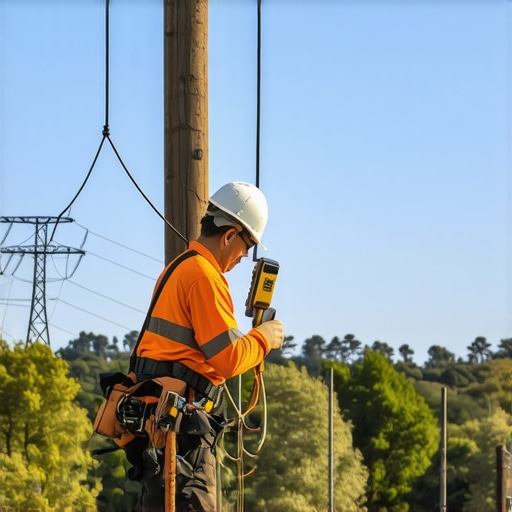
I remember the moment vividly—standing in the pouring rain, staring at the tangled mess of tangled utility lines, realizing I had overlooked a crucial safety check. It was a lightbulb moment that changed how I approach daylighting and site services forever. The frustration of discovering a utility hit instead of a clear, safe borehole was real, and it cost me time, money, and at least a few sleepless nights.
Why Overlooking Daylighting Checks Can Derail Your Project
In my early days, I underestimated the importance of thorough daylighting inspections. I thought a quick visual scan was enough—until I hit a live utility line during a project. That mistake taught me that a comprehensive daylighting check can prevent accidents, avoid costly delays, and ensure safety for everyone on site. Experts suggest that properly executed daylighting can reduce utility strikes by up to 70%, which underscores its significance (see more at exploring daylighting benefits). These checks aren’t just best practices—they’re essential.
Have you ever faced a utility strike or near-miss that disrupted your schedule or put your team at risk? If so, you’re not alone. Many professionals overlook or rush daylighting steps, only to regret it later.
Is Cutting Corners in Daylighting Risky Business?
When I first started, I made the mistake of assuming that existing site maps were enough—that flaw in judgment cost me dearly. The truth is, relying solely on documentation without ground checks is like sailing without a compass. Investing time into proper site services and utility mapping can save you days of troubleshooting and repair work later (reliable utility mapping).
Next, I’ll guide you through practical, proven steps to implement effective daylighting checks, ensuring your project remains on track and safe—because avoiding utility strikes isn’t just a matter of policy; it’s a matter of safety and professionalism. Let’s dive into the strategies that can keep your site clear and your project running smoothly.
Start with Precise Utility Mapping
Before breaking ground, employ advanced utility mapping techniques such as electromagnetic induction or ground-penetrating radar. I once arrived on a site where physical markings were outdated; by using electromagnetic methods, I spotted a live cable buried beneath layers of soil, saving the project from costly delays. Incorporate reliable solutions like those detailed at utility mapping resources.
Use Vacuum Excavation for Confirmed Verification
Vacuum excavation is your best friend for confirming underground conditions without risking utility strikes. It’s like using a gentle suction to uncover what lies beneath, reducing the risk of damaging lines. I recall a time when traditional excavation suddenly hit a water line; switching to vacuum excavation with precision tools allowed me to reroute safely. For techniques and benefits, see vacuum excavation benefits.
Conduct Visual Site Inspection with Landmarks
Complement technological methods with thorough on-site visual assessments. Identify surface features, markings, or anomalies that might indicate hidden utilities. During a recent project, I noticed a slight dip in the soil contour, which led us to discover a forgotten utility line running parallel to the planned borehole. Always cross-check findings with site plans and update your knowledge accordingly.
Leverage Photogrammetry and Updating Tools
Use drone-based photogrammetry to create detailed surface maps, revealing changes since the last survey. This modern approach caught subtle shifts in the terrain that could have affected borehole accuracy. Regularly update your site data to ensure all stakeholders work from current information, minimizing surprises later. For more on site services that drive efficiency, visit site services guides.
Execute a Controlled Borehole Drilling Test
Start with a small, controlled borehole to test soil conditions and utility positions. I once drilled a test bore, discovered unexpected clay barriers, and adjusted our approach accordingly. This proactive step prevents larger issues down the line. Ensure your drilling strategy incorporates best practices and innovative techniques for reliability, as discussed in borehole drilling innovations.
Integrate Continuous Communication and Documentation
Maintain open channels among your team, update maps with real-time data, and document all findings meticulously. Consistent communication prevents misinterpretations, as I experienced when shared notes caught a misaligned utility line that saved us hours in correction. Integrate digital solutions or project management tools to keep everyone on the same page.
Many professionals assume that straightforward methods suffice for borehole drilling, daylighting, or vacuum excavation, but the truth is, the reality is far more nuanced. A common misconception is that relying solely on existing site maps guarantees safety and accuracy. However, studies show that up to 60% of underground utilities are either outdated or incorrectly documented, leading to costly surprises during excavation (reliable utility mapping). This underscores the importance of ground-truthing with advanced site services instead of blind reliance on paperwork.
One critical trap to avoid is neglecting the layers of underground infrastructure that often coexist in complex urban environments. Without employing comprehensive ground-penetrating techniques like electromagnetic induction or GPR, you risk utility strikes, injuries, and project delays. I’ve witnessed projects where skipping these steps resulted in total halts, and costly repairs, simply because crucial utilities were missed. Familiarizing yourself with vacuum excavation technology can prevent this, offering precise, damage-free assessments.
But what about the myths surrounding daylighting? Many believe that a quick visual check can replace detailed surface and subsurface investigations. This is a dangerous oversimplification. Surface features such as surface markings or surface irregularities can disappear or be intentionally erased, especially in dense urban settings. Utilising drone-based photogrammetry and updated site models reveals subtle terrain shifts or anomalies that might hide underground utilities, providing a more reliable picture.
A common advanced mistake is underestimating the importance of integrated communication among teams. Relying on separate data streams without synchronization can lead to conflicting information, risking utility hits. Digital tools that consolidate site data help in maintaining consistent, real-time updates—never forget that effective communication is a cornerstone of safety and accuracy.
Have you ever fallen into this trap? Let me know in the comments how you’ve navigated these pitfalls. Remember, technique and thoroughness in site services—like borehole and daylighting—are not just best practices but essential for project success and safety.
Ensuring the longevity and reliability of your site tools, such as vacuum excavators and borehole drilling rigs, requires a strategic approach rooted in regular maintenance and using the right tools. In my experience, adopting advanced diagnostic and maintenance practices has significantly reduced downtime and improved project outcomes.
How do I keep my excavation tools in top shape over time?
First, prioritize routine inspections of critical components like hydraulic hoses, filters, and mechanical joints. I recommend using laser-based alignment tools for precision checks on drill rigs, which helps preemptively identify misalignments that could lead to costly repairs. Additionally, deploying remote monitoring software, such as those integrated with modern equipment, allows for real-time performance tracking and predictive maintenance. This approach enables me to detect issues before they escalate, saving both time and money.
For vacuum excavation units, regular cleaning of filters and verification of suction hoses are essential. I always carry a set of high-quality spare parts and diagnostic testers from trusted brands—these have saved me during field repairs by avoiding delays. Incorporating a comprehensive maintenance schedule, aligned with manufacturer recommendations, ensures consistent performance.
Predictive analytics is becoming a game-changer. Industry-leading companies are developing AI-driven systems that analyze usage patterns to forecast failures, allowing preemptive repairs. Staying ahead with these tools is vital as we move toward more automated and data-driven site management.
What tools do I recommend for effective maintenance?
Personally, I rely on portable ultrasonic testers for detecting internal faults in hydraulic systems, which aren’t visible during routine checks. For surface inspections, infrared thermography has proven invaluable in identifying overheating components that could fail unexpectedly. Incorporating these tools into your routine not only extends equipment lifespan but also enhances safety on site.
Moreover, digital documentation tools help keep track of maintenance history, ensuring consistency and compliance. Some software solutions allow me to schedule and log inspections, receive alerts for upcoming service, and analyze maintenance data over time to optimize my strategies. For those venturing into advanced maintenance, exploring borehole strategies can offer insights into system optimization and reliability improvements.
Looking ahead: The future of equipment maintenance in site services
As technology evolves, predictive maintenance powered by IoT and AI will become standard, drastically reducing unexpected failures. I predict that the integration of augmented reality (AR) will allow technicians to visualize equipment internals during inspections, facilitating faster diagnostics. Embracing these innovations now can position your operations at the forefront of efficiency and safety.
Start by implementing a predictive maintenance check with ultrasonic testing on your main excavator today. This small step can provide immediate benefits and set the stage for embracing future tech that will keep your site running smoothly and safely.
The Hardest Lesson I Learned About borehole,site services,daylighting,vacuum excavation
One of the toughest realizations came when I underestimated the complexity of underground utilities. I thought surface markings and outdated maps were enough, but a surprise utility hit taught me that ground-truthing is indispensable. It reminded me that no single method guarantees safety; a combination of advanced mapping, ground-penetrating techniques, and visual inspections is key.
Unmasking My Biggest Missteps in Borehole and Daylighting Strategies
I painfully learned not to rush the daylighting process. Cutting corners to save time often resulted in project delays and safety hazards. Consistent, meticulous checks—like using electromagnetic induction or ground-penetrating radar—prevent surprises and build trust with your team. Trustworthy resources like reliable utility mapping have become my go-to guides.
This Is the Secret to Safer, More Efficient Site Work
Integrating real-time communication and maintaining detailed documentation transformed my approach. Modern digital tools allow seamless updates, eliminate misinterpretations, and keep everyone aligned. Remember, safety isn’t just a protocol; it’s a culture built on thoroughness, clarity, and using the right tools at the right time. Check out site services strategies for more insights.