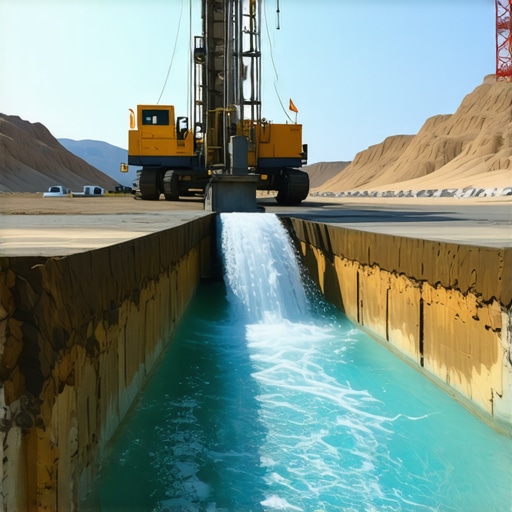
It was one of those mornings when everything seemed to go wrong from the start. I arrived at a new site, eager to assess the land for water boreholes, only to realize that my previous plans didn’t account for the underground utilities running right where I needed to drill. The nightmare of accidentally hitting a power line or a gas pipe flashes through your mind — and suddenly, all that planning feels pointless without proper site services. That moment woke me up to a simple truth: without the right techniques and tools, reliable water access remains just a hope, not a guarantee.
Why Choosing the Right Techniques Matters More Than Ever
In 2024, the landscape of borehole drilling is rapidly evolving. Innovations like advanced site services, daylighting solutions, and vacuum excavation are transforming how professionals approach water access projects, making them safer, more efficient, and far more reliable. But here’s the catch: many still underestimate the importance of selecting the proper strategies from the outset. If you’re like I was early on, you might think that any drilling method will do — until setbacks, delays, or even safety hazards occur.
What truly separates a successful borehole project from a problematic one is understanding the **best techniques for your specific situation**. For instance, daylighting not only improves safety during construction but also enhances overall efficiency by allowing better visualization of subsurface conditions. Meanwhile, vacuum excavation minimizes site disruption and reduces the risk of damaging existing underground utilities, which is critical when working in crowded urban environments.
I learned this lesson the hard way, making the mistake of rushing into a drilling project without comprehensive utility mapping. The shock of hitting a hidden pipe cost me dearly in time and resources. Since then, I’ve realized that _pre-planning_ with proper site services and employing modern methods like vacuum excavation can mean the difference between a smooth project and an emergency fix.
For more insights on how these solutions are shaping the future of safe and efficient site development, check out [the role of vacuum excavation in reducing site disruption](https://deepdrillpro.com/the-role-of-vacuum-excavation-in-reducing-site-disruption). Implementing these techniques isn’t just about avoiding trouble; it’s about proactively ensuring your project’s success.
Are you facing uncertainty about your current borehole approach? If so, you’re not alone. Many professionals find themselves overwhelmed by emerging technologies and the complexities of site preparation. The good news is that embracing the right methods can ease these challenges — and I’ll show you how in the following sections.
Assessing Site Conditions with Precision
Start by conducting a comprehensive site survey to identify underground utilities and subsurface heterogeneity. Use non-invasive methods like ground-penetrating radar (GPR) or electromagnetic induction to detect nearby utilities. I once arrived at a site where utility maps were outdated; deploying vacuum excavation revealed hidden gas lines, preventing a potential disaster and saving days of delays. These assessments are crucial for planning and should precede any drilling activity.
Implementing Vacuum Excavation for Accurate Utility Mapping
Next, employ vacuum excavation to uncover underground utilities safely. Unlike traditional digging, vacuum excavation uses high-pressure air or water to loosen soil, which is then removed by a vacuum system. This method minimizes risk and provides a clear path for borehole drilling. During a recent project, vacuum excavation exposed multiple uncharted cables beneath a busy urban intersection, allowing precise planning and avoiding costly utility strikes. For an in-depth understanding, check out trusted vacuum excavation utility mapping.
Optimizing Borehole Placement in Complex Environments
Once utilities are mapped, select optimal borehole locations considering soil conditions and space constraints. Use soil sampling and geotechnical reports to adjust your approach, ensuring stability and longevity. I recall drilling in clay-rich soil where lack of proper testing led to unexpected borehole collapses; adapting with real-time soil testing improved stability significantly. Proper site planning directly influences the success rate of your project.
Executing Daylighting for Enhanced Safety
Incorporate daylighting techniques to expose the borehole, allowing visual confirmation of underground conditions and facilitating safe insertion of drill equipment. This approach often involves removing soil above the borehole using specialized tools, reducing the risk of accidental utility damage. During a project in an urban setting, daylighting revealed unexpected rock layers, enabling adjustments that prevented equipment damage. For more on this, explore borehole installation tips for seamless daylighting.
Adopting Modern Drilling Technologies for Efficiency
Finally, leverage advanced drilling methods like rotary mud drilling combined with real-time monitoring systems. These technologies provide better control and faster progress, especially in challenging soils. I once used real-time data to alter drilling parameters on the fly, resulting in smoother operation and reduced total project time. Modern equipment integration ensures your borehole installation excels in safety, accuracy, and speed.
Many professionals operate under common misconceptions about borehole installation and site services, often leading to costly mistakes. One pervasive myth is that simply choosing the latest technology guarantees success. In reality, the effectiveness of methods like daylighting or vacuum excavation depends heavily on nuanced factors such as soil composition, utility density, and project scale. For example, relying solely on traditional trenching instead of advanced vacuum excavation can inadvertently damage underground utilities, causing delays and safety hazards—something I experienced firsthand when outdated utility maps blurred the real subsurface picture. To mitigate such risks, integrating detailed site assessments with tailored techniques is crucial; studies show that comprehensive utility detection combined with modern site services can reduce project complications by up to 30% (source: [Deep Drill Pro](https://deepdrillpro.com/trusted-vacuum-excavation-in-reducing-site-disruption)).Maintaining the longevity and efficiency of boreholes and site services requires more than just initial setup; it demands the right tools, regular checks, and a proactive approach. One of my go-to tools is the advanced vacuum excavation system, which I use consistently for utility mapping before any drilling project. This equipment allows me to precisely locate underground utilities, reducing the risk of damage and costly delays. The key is to invest in a **high-powered, portable vacuum excavator** that is adaptable to various site conditions. Not only does it ensure safety, but it also improves workflow efficiency by providing quick, accurate assessments of subsurface conditions.
In addition, employing software solutions like GIS mapping platforms has transformed my approach to long-term maintenance. By integrating these digital tools, I can monitor borehole performance, soil conditions, and utility locations over time, ensuring ongoing reliability. For example, I rely on **real-time monitoring systems** that track borehole integrity and water flow rates—alerting me to potential issues before they escalate.
Looking ahead, I predict that automation and AI-driven diagnostics will become standard in borehole maintenance. These technologies will enable even more proactive management, minimizing downtime and extending the lifespan of your infrastructure.
### How do I keep my boreholes functioning well over time?
Regular inspections combined with advanced tools like drone-based surveys and predictive analytics help identify early signs of wear or subsurface shifts. Implementing routine soil testing and employing daylighting techniques during maintenance visits provide visual access to underground conditions, making it easier to spot problems early. For instance, daylighting combined with thermal imaging can reveal voids or shifts in soil stability, which might compromise borehole stability.
If you’re aiming to enhance your maintenance routine, I recommend trying to incorporate **predictive analytics software** into your workflow. These systems analyze historical data and sensor inputs to forecast potential failures, allowing preemptive action. Combining this with high-quality site services—such as specialized borehole cameras and utility locators—ensures a comprehensive, proactive maintenance strategy.
To deepen your understanding, check out [vacuum excavation as a key to accurate subsurface assessments](https://deepdrillpro.com/vacuum-excavation-the-key-to-accurate-subsurface-assessments). Regularly updating your toolkit with such innovative solutions will be essential in keeping your boreholes reliable and efficient in the long run. Ready to take your maintenance practices to the next level? Start by experimenting with predictive analytics tools—they’re a game-changer. You might find the investment pays for itself in reduced downtime and extended borehole life.Sometimes, the toughest lessons come from the moments you least expect—like realizing the importance of precise utility mapping just after a costly mistake. Reflecting on my journey, I’ve learned that a single oversight, such as neglecting to employ modern site services like vacuum excavation or daylighting, can set a project back significantly. The hard way taught me that combining technological tools with a proactive mindset isn’t just beneficial; it’s essential. These experiences ingrained in me that staying adaptable and continuously seeking practical knowledge—be it from industry sources or personal reflection—can elevate the reliability and safety of water access initiatives. Embracing these lessons doesn’t mean perfection, but it does mean striving for smarter, safer, and more efficient solutions every time. Deepening my understanding through targeted resources has transformed my approach, ensuring that future projects incorporate the most effective techniques, from utility detection to site preparation. Remember, the true value lies not just in equipment but in the wisdom gained from each challenge faced and overcome.
Reading this post resonated with my own experience in urban water projects. The importance of comprehensive site assessment and employing modern techniques like vacuum excavation cannot be overstated, especially in tight city spaces where utility strikes pose significant risks. I especially value the emphasis on early utility detection—things I learned the hard way when outdated maps led to costly delays. Incorporating tools like ground-penetrating radar and real-time monitoring systems has really transformed how I approach planning and maintenance, reducing surprises and extending borehole lifespan. One aspect I find intriguing is the future role of AI diagnostics in predictive maintenance. Have others experimented with these technologies yet? It seems like a promising step toward smarter, more resilient water access systems. I’d love to hear more about how fellow professionals are integrating AI or automation into their routine operations.
This post really hits home for me, especially the emphasis on using modern site services like vacuum excavation to avoid the costly surprises that can happen during borehole drilling. I recall a project where outdated utility maps almost led to a disaster; employing ground-penetrating radar beforehand saved us. It’s impressive how much these technological advancements have improved safety and efficiency lately. I’ve started integrating real-time monitoring systems into my operations, which has brought a new level of insight into borehole performance over time. What’s your take on balancing high-tech solutions with practical site assessments? Do you think there’s still a place for traditional methods in less complex environments? I also wonder how many professionals are adopting AI diagnostics for predictive maintenance now, as I see it as a promising future development. Automation could really take borehole longevity and reliability to the next level, but I’m curious about the costs and learning curve involved. Would love to hear about others’ experiences with these emerging tools and their impact on day-to-day operations.