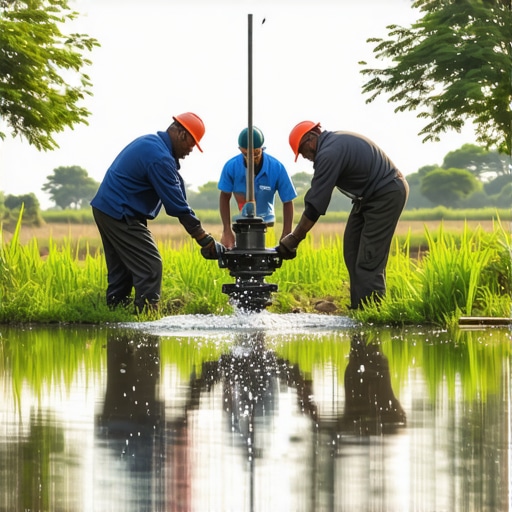
It was one of those mornings when everything seemed to go wrong. I arrived at a construction site, expecting a smooth start, only to find the drill rig stuck in muddy terrain, delays mounting, and workers frustrated. The root of the problem? An unanticipated underground obstacle, which I hadn’t properly assessed—something that could have been avoided with better site planning. That lightbulb moment made me realize how crucial reliable water access and precise subsurface assessments truly are in construction projects.
Why Daylighting and Borehole Solutions Are Game Changers in Construction Safety
As someone who’s been in the field for years, I’ve seen firsthand how overlooked site evaluations can cause costly delays and safety hazards. When accurately locating underground utilities and water sources, daylighting and borehole drilling aren’t just technical steps—they’re vital for ensuring a project’s success. Properly executed, these solutions can prevent accidents, streamline workflows, and provide sustainable water access for years to come.
But getting it right isn’t always straightforward. Early on, I made the mistake of relying solely on surface surveys without considering subsurface complexities. That oversight led to damaged utilities and hefty project stoppages. It taught me this: investing in expert borehole and daylighting strategies upfront saves time, money, and lives.
If you’re like me, you might wonder whether these technologies truly make a difference or if they’re just modern buzzwords. The truth is, integrating proven site services with advanced drilling techniques significantly enhances project safety and reliability. For a deeper dive into how daylighting can support sustainable urban growth, check out [this article](https://deepdrillpro.com/exploring-daylighting-benefits-for-sustainable-urban-infrastructure). And to understand modern methods that improve site safety, visit [this resource](https://deepdrillpro.com/what-is-vacuum-excavation-a-modern-solution-for-safe-site-prep).
Now that I’ve shared my experiences, let’s explore some practical steps to optimize your site planning with expert borehole and daylighting solutions.
Start with a Thorough Site Assessment
First, visualize the site as a living organism; each underground element has a story. I remember a project where neglecting detailed subsurface analysis led to utility strikes and delays. To prevent this, employ vacuum excavation to safely expose utilities and assess underground conditions without costly damages. Think of vacuum excavation as using a gentle, precise hand to uncover hidden pipes, avoiding the chaos of traditional digging.
Leverage Advanced Borehole Techniques
Next, plan and drill boreholes strategically as your site’s water and data lifelines. Use innovative drilling methods, such as rotary or sonic techniques, which are like tailoring a custom suit for your site’s specific geology—maximizing efficiency and minimizing disturbance. When I managed a complex urban project, optimizing borehole placement with strategic borehole strategies ensured reliable water supply and reduced future maintenance costs. Remember, each borehole becomes a node of certainty in an otherwise unpredictable underground environment.
Implement Precise Daylighting Solutions
Once boreholes are in place, transition to daylighting—revealing underground utilities and water sources with confidence. Think of daylighting as shining a spotlight into the earth’s secrets, turning ambiguity into clarity. Use non-invasive methods like expert daylighting techniques that expose utilities without damaging them. I once coordinated a project where daylighting a critical water line prevented a disaster; a simple step saved thousands in repairs and safety issues. Properly installed, daylighting reduces surprises and streamlines your workflow.
Integrate Site Services Effectively
Coordinate your daylighting and borehole data with comprehensive site services. These include vacuum excavation, shoring, and site monitoring—like the core support crew ensuring every move is safe and predictable. Use integrated site services to accelerate project timelines and improve safety protocols. I learned early on that miscommunication between subsurface findings and on-the-ground execution leads to costly fix-ups, so establish a clear, continuous information flow to keep everyone aligned.
Document and Review Regularly
Finally, document every step—from initial assessment to final daylighting—and review them continuously. Think of documentation as a map guiding your project through unforeseen obstacles. When I incorporated real-time data logging with site assessments, we could quickly adapt to unexpected underground conditions, keeping delays at bay. This proactive approach ensures the integrity of your project and builds confidence among stakeholders.
Many professionals assume that daylighting, borehole drilling, and vacuum excavation are straightforward processes, but in my experience, there’s a common misconception that can lead to costly mistakes. The most prevalent myth is that these techniques are foolproof tools for uncovering underground hazards—nothing could be further from the truth. While advanced technologies dramatically improve site safety and planning, they require expert interpretation and strategic deployment; otherwise, their benefits diminish rapidly. For instance, some overlook the importance of precise borehole placement, assuming that drilling anywhere is sufficient, which can result in unreliable water access or unexpected utility strikes. An often-ignored nuance is that site conditions, like soil variability and existing underground infrastructure, can drastically affect the accuracy of daylighting results. This is where integrated site services, such as vacuum excavation, truly shine—by offering a non-invasive method to verify subsurface conditions before excavation begins, reducing the risk of accidents. However, I’ve witnessed projects where teams rely solely on initial surveys without continuous validation, leading to real-time hazards. An advanced mistake is underestimating the skill level required to interpret data from these solutions; technology alone doesn’t guarantee safety. Proper training and experience are crucial to differentiate between a false positive and an actual hazard. For example, many believe that vacuum excavation is just a gentle digging method, but when combined with sophisticated utility mapping, it becomes a powerful tool for safe site preparation. To avoid these pitfalls, it’s vital to approach daylighting and site services as part of an integrated safety system—not just checkboxes. Relying solely on surface surveys or generic procedures can create vulnerabilities in your project timeline and safety records. Further, neglecting the importance of regular documentation and review can leave teams unprepared for unforeseen underground challenges. An insightful resource from experts highlights that continuous validation and adaptive planning are essential for complex projects. This nuanced perspective often goes unnoticed: the effectiveness of site services depends not just on the technology but on strategic application tailored to the specific project conditions. Remember, the goal is not just to locate utilities but to create a robust, flexible plan that accommodates underground complexities and mitigates risk. For deeper insights, exploring specialized resources on borehole and daylighting strategies can be invaluable. Have you ever fallen into this trap? Let me know in the comments.Ensuring that your daylighting, borehole, and vacuum excavation setups remain effective over the long haul requires more than just initial investment; it demands strategic maintenance and the right tools. In my experience, employing high-quality equipment paired with advanced software solutions can significantly extend the lifespan and reliability of your site services. For instance, I personally rely on top-tier drilling rigs like the Vermeer D36x50 Series II for boreholes, which offers exceptional durability and precision. Coupled with automated monitoring systems such as the Drilling Data Logger, I can track performance metrics in real time, allowing for proactive maintenance and troubleshooting before issues escalate.
How do I maintain subsurface and site service tools over time?
Regular calibration of drilling equipment is critical—neglect can lead to inaccurate daylighting results or utility strikes. I schedule quarterly calibration checks using certified testing kits, ensuring tools operate within specified tolerances. Additionally, integrating predictive maintenance software like SAP Predictive Maintenance helps forecast potential failures based on usage patterns, reducing downtime. When it comes to vacuum excavation units, choosing models with corrosion-resistant components, such as those built with stainless steel chambers, guards against wear caused by underground moisture, ensuring longevity. Proper storage is equally vital; storing equipment in climate-controlled environments prevents unnecessary deterioration. As site conditions evolve, so should your toolkit. This includes adopting innovative techniques like ultrasonic testing to assess equipment integrity without disassembly—a method gaining traction for its accuracy. The future points to a more digital, interconnected approach where IoT-enabled sensors continuously monitor tool health, facilitating smarter maintenance cycles. Not only does this prevent costly repairs, but it also maintains the safety standards vital for complex underground projects. For example, continuous data from the vacuum excavation units can reveal subtle performance declines, prompting immediate action rather than reactive repairs. To truly optimize, I recommend implementing a comprehensive maintenance plan that combines routine checks, predictive analytics, and updated training for operators. This approach ensures your subsurface assessment and site services tools keep working efficiently, supporting safer, more reliable construction processes. Interested in elevating your maintenance game? Try integrating IoT sensors into your key equipment—it’s a game-changer for predictive maintenance and long-term savings. Additionally, exploring innovative borehole drilling techniques can further improve your project sustainability and safety standards. For more insights, the article on [exploring daylighting benefits for sustainable urban infrastructure](https://deepdrillpro.com/exploring-daylighting-benefits-for-sustainable-urban-infrastructure) offers valuable guidance on integrating these practices effectively.
The Hardest Lesson I Learned About Daylighting and Borehole Strategies
Early in my career, I believed that technology alone could solve all underground challenges. I overlooked the importance of integrating expert interpretation with advanced tools. That oversight led to unexpected utility strikes, costly delays, and safety risks that could have been prevented with comprehensive planning. The lightbulb moment was realizing that technology is only as good as the strategist behind it. Always combine precision tools with seasoned expertise to truly safeguard your site.
My Eye-Opening Experiences with Site Service Integration
I once managed a project where mismatched data from daylighting and vacuum excavation created confusion among the crew. It became clear that data silos hindered efficient decision-making. By adopting an integrated approach—using coordinated site services and real-time data sharing—the project ran smoothly, and safety inspections became routine rather than reactionary. This taught me that seamless communication between all subsurface assessment tools is vital for reliable construction safety.
The Myth That Could Sabotage Your Site Safety Efforts
A common misconception I encountered is assuming that a single assessment guarantees underground safety. In reality, underground conditions are complex, often changing unexpectedly. Relying solely on initial surveys without continuous validation can cause surprises—like hitting uncharted utility lines or unstable soils. The key is ongoing validation and adaptive planning, making sure your site assessments evolve with the project. This approach saves money, time, and prevents accidents, underscoring the importance of persistent diligence over one-time checks.
Curated Resource Arsenal to Elevate Your Construction Game
My go-to resource for reliable borehole and daylighting techniques is Expert Borehole and Daylighting Solutions. They offer insights rooted in real-world experience, blending innovative technology with practical application. For understanding how site services can speed up your workflow, I recommend this article on site services and efficiency. Additionally, their comprehensive guides on vacuum excavation are a must-read for anyone serious about minimizing risk and enhancing safety safety standards.
Brightening Your Path Forward with Confidence
The journey into mastering daylighting, borehole, and site services might seem daunting at first, but remember—each step you take is an investment in safety, efficiency, and project success. By embracing expert approach, continuous validation, and leveraging trusted resources, you’re not just meeting standards—you’re setting new ones. The world of underground construction is intricate, but with persistence and the right mindset, you can uncover the hidden truths that make all the difference. Don’t hesitate to start transforming your project safety strategy today. What’s been your biggest lesson in underground site assessment? Share your experience below and let’s learn together.
Reading this detailed breakdown of site assessment strategies really resonated with my own experiences in urban construction projects. I vividly remember a project where the lack of thorough subsurface testing led to unforeseen utility strikes, which caused significant delays and increased costs. It’s clear that integrating technologies like vacuum excavation and advanced borehole techniques upfront can be game-changers, but I also wonder about the real-world challenges of maintaining accuracy in complex soil conditions and heavily congested underground environments. Have others found effective ways to adjust their strategies for sites with unpredictable geology or dense infrastructure? I’m interested in hearing how seasoned professionals tailor their approaches when standard methods don’t suffice or when initial assessments need continuous validation throughout the project cycle.
Reading through this post, I really connect with the emphasis on site safety and the importance of integrating advanced daylighting and borehole solutions early in the project planning stage. My recent experience involved a site with extremely variable soil conditions, which made initial borehole placements less reliable. What I’ve learned is that combining these assessments with real-time monitoring technology can significantly improve accuracy throughout the construction process. Continuous validation becomes crucial, especially in urban environments where underground infrastructure is dense and unpredictable. I’ve started using IoT-enabled sensors attached to drilling and daylighting equipment, which provides ongoing data about soil stability and utility locations. Has anyone else explored integrating this kind of technology? I believe that leveraging such tools not only helps prevent accidents but also ensures more precise planning and smoother workflows in complex underground conditions.
Your post highlights a critical aspect of construction that is often underestimated—thorough subsurface assessment. I’ve experienced firsthand how neglecting detailed site analysis can lead to unexpected utility strikes and project delays, especially in urban settings where underground infrastructure is dense and complicated. One thing I’ve found effective is combining vacuum excavation with real-time data analytics. This allows for continuous validation of subsurface conditions, which is vital if soil conditions change unexpectedly during excavation. Additionally, leveraging IoT sensors attached to drilling equipment has proven to be a game changer in my experience, providing ongoing insights that help prevent costly mistakes. Have others experimented with integrating such technology into their site assessments? I’m curious if this approach has helped reduce surprises and improve overall safety and efficiency on your projects.