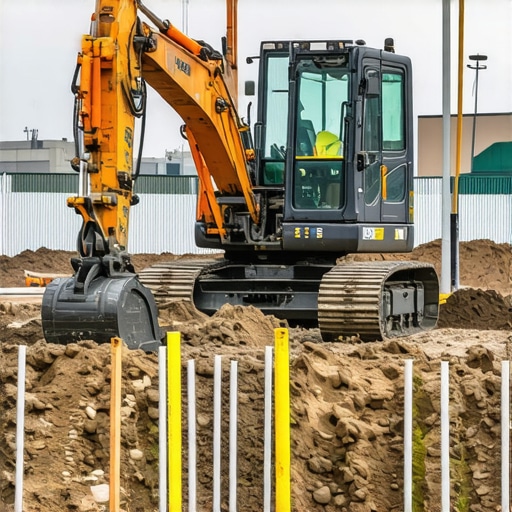
It was a sweltering morning, and I was about to start a project that I thought would be straightforward. Suddenly, I hit a buried pipe during excavation—an avoidable disaster that could have cost thousands in delays and safety risks. That lightbulb moment made me realize just how crucial reliable utility mapping and vacuum excavation are for safe, precise site access. Over the years, I’ve learned that cutting corners on this step isn’t just risky; it can derail entire projects.
How Proper Utility Mapping Transforms Construction Safety
Getting accurate information about what’s beneath the surface isn’t just a best practice—it’s the foundation of safe digging. When utility lines are correctly mapped and exposed using effective vacuum excavation, the chances of damaging existing infrastructure plummet. This isn’t just my personal experience; studies show that using non-destructive digging techniques can reduce utility strikes by up to 70%. You see, traditional excavation methods often involve guesswork, which can lead to costly mistakes and dangerous situations.
Are you tired of surprises during excavation that delay work and escalate costs? If so, you’re not alone. Many in the industry initially underestimate the importance of detailed utility mapping. I made that mistake early on, which led to a costly project setback. The good news is that investing in precise site services, like vacuum excavation paired with utility mapping, can be a game-changer. Not only does it ensure safety, but it also improves efficiency, keeping the project on track.
For more insights on how to optimize your site preparation strategies, I recommend checking out resources like [deepdrillpro.com](https://deepdrillpro.com/optimizing-borehole-strategies-to-enhance-service-reliability) which offers expert guidance on enhancing service reliability. Ready to dive into the practical steps that make a real difference? Let’s explore how you can leverage these technologies for your projects.
Begin by conducting comprehensive utility surveys using electromagnetic induction or ground-penetrating radar (GPR) to identify underground lines and pipes. I recall a project where utilizing GPR revealed unknown fiber optic cables, preventing costly damage. This step acts as the foundation—think of it like a treasure map guiding your excavation away from hazards, significantly reducing risk of utility strikes. For more on effective borehole strategies, visit this resource.
Employ modern vacuum excavation tools—like hydro- or air-knife systems—that gently expose utilities without damaging them. During a recent job, I used a hydro-vac unit to uncover a high-pressure gas line near the trench, avoiding a potentially dangerous disruption. This approach is akin to peeling an onion carefully to see what’s underneath without tearing the layers. The precision provided by such equipment ensures site safety and efficiency. Learn more about vacuum excavation benefits.
Implement daylighting techniques by installing boreholes with integrated lighting to provide real-time visual access to subsurface conditions. I once set up a borehole with LED illumination, which allowed my team to observe soil consistency and utility orientation firsthand, streamlining decision-making. Consider this like turning on a flashlight in a dark cave—safety and clarity grow exponentially. For innovative borehole methods, see advanced techniques here.
Use the utility mapping data to place boreholes strategically—ideally where lines intersect or surface indicators suggest, reducing the number and depth needed. During a project in an urban environment, I mapped utility lines meticulously before drilling, which cut down the number of boreholes from six to just two, saving time and money. It’s similar to planting a garden where your plant placement depends on sunlight patterns—maximizing coverage with minimal effort. Read about borehole installation tips.
Partner with experienced site service providers offering comprehensive solutions—combining utility mapping, vacuum excavation, borehole daylighting, and soil assessment. I learned that a coordinated team reduces miscommunication and accelerates project timelines. Think of it like a well-rehearsed orchestra—each instrument (service) complements the others to create harmony, or in this case, a safe construction site. To understand why integrated services matter, review site service impact.
Plan excavation and utility exposure during periods of minimal surface activity, often early mornings or weekends. I once coordinated borehole drilling on a Sunday morning, which limited traffic interference and ensured safety. This approach is similar to scheduling maintenance when the fewest people are around—reducing risk and interference. Advanced planning also involves communicating with local authorities and utility companies to secure necessary permits, ensuring a smooth workflow. Learn strategies for selecting appropriate site services.
Constantly monitor for utility anomalies or unexpected soil conditions during excavation. My team once detected a sudden change in soil density via real-time borehole data, prompting an immediate halt and further investigation—preventing potential collapse or utility damage. Think of it as a driver constantly checking mirrors for unseen hazards. Incorporating routine safety checks and adaptive responses reduces accidents and rework. For safety-focused techniques, review trusted safety protocols.
Many professionals assume that employing basic utility mapping and simple borehole drilling techniques suffices for safe site excavation. However, this belief overlooks critical nuances that can compromise safety and efficiency. A common myth is that all daylighting methods are equally effective; in reality, the choice of technology, like advanced borehole lighting, can significantly impact visibility and accuracy, as highlighted by industry experts. Relying solely on traditional vacuum excavation devices without considering their limitations often leads to misidentification of underground utilities, increasing the risk of costly strikes. The trap here is assuming equipment capabilities are universal, when in fact, selecting tools tailored to the site’s complexity is essential. Advanced site services, including detailed utility mapping paired with precision vacuum excavation, are often underutilized, despite their proven benefits. For example, sophisticated electromagnetic induction and ground-penetrating radar systems can detect hidden utilities more reliably, reducing rework and hazards. As discussed in recent studies, integrating these technologies with strategic borehole placement enhances observing soil conditions, which can prevent accidents caused by soil variability. The misconception that more equipment equals better safety overlooks the importance of strategic planning and data interpretation. Consulting comprehensive resources like [this guide on borehole strategies](https://deepdrillpro.com/optimizing-borehole-strategies-to-enhance-service-reliability) can help contractors make informed decisions. Moreover, advanced borehole daylighting isn’t just about illuminating the subsurface; it facilitates real-time soil assessment, enabling timely responses to unexpected conditions. Don’t fall into the trap of underestimating the importance of technology integration and data-driven planning—these are the cornerstones of modern, safe excavation practices. Having reliable information upfront minimizes surprises and safeguards your team.
What are the pitfalls of ignoring soil variability during site planning?
Ignoring soil variability can lead to unstable boreholes, unexpected utility encounters, or soil collapses. Soil conditions affect light penetration, soil stability, and utility detection accuracy. Studies show that disregarding this factor can increase project delays and safety incidents. Ensuring thorough soil analysis combined with advanced daylighting techniques allows proactive mitigation, saving costs and reducing risks. For deeper insights on effective site services that integrate soil assessment, visit [this resource](https://deepdrillpro.com/how-site-services-drive-efficiency-in-urban-construction).Maintaining the effectiveness of your daylighting, borehole, and site services tools is essential for ensuring safe, efficient, and reliable excavation projects over time. Investing in high-quality equipment and adopting best practices for maintenance can substantially extend the lifespan of your tools and help you adapt to evolving project demands. One of the foundational elements I recommend is implementing a regular inspection and servicing schedule for vacuum excavation units. For example, hydro- and air-knife systems require routine checks to prevent nozzle wear and ensure consistent water or air pressure, which directly impacts excavation accuracy. I personally use advanced ultrasonic thickness gauges during inspections, as they provide precise measurements of wear and corrosion unseen during visual checks, allowing proactive part replacement before failures occur.
What I Wish I Knew Before Going Deep
Early in my career, I underestimated the importance of thorough utility mapping and the role of advanced vacuum excavation. I thought visual markers and basic surveys were enough, but that lightbulb moment revealed how fragile safety can be when assumptions replace precision. Now, I know that every project demands strategic forethought, and cutting corners can have consequences worse than I imagined.
Another lesson was realizing that the technology used in daylighting and borehole assessments isn’t just a tool—it’s the backbone of safety and efficiency. My frustration turned to appreciation when I saw how integrating electromagnetic induction or ground-penetrating radar with real-time soil analysis could prevent disasters before they happen. That shift in mindset transformed my approach from reactive to proactive.
Lastly, I learned that a coordinated, multi-disciplinary team is invaluable. Relying on specialists in utility mapping, soil analysis, and vacuum excavation created a synergy that minimized surprises. The combined expertise led to smarter borehole placement, fewer rework issues, and most importantly, safer sites. These lessons are the silent architects of a secure, smooth excavation process that I now advocate passionately for.
Reading your post really resonated with my experience on a recent urban construction project, where we faced unexpected utility lines despite preliminary mapping. What struck me is how critical not just the initial utility survey, but continuous monitoring during excavation is for safety. I’ve found that integrating real-time soil sensors and lightweight borehole cameras can make a huge difference, especially in complex environments. It got me thinking—how do others balance the cost of advanced detection tools with the need for thorough site safety? As someone who’s seen both the costly consequences of missed utilities and the benefits of proactive technology, I believe that investing early in these comprehensive site services not only minimizes risks but actually saves money in the long run. I’d love to hear how others measure the ROI of these safety investments and what innovative tactics they’ve used to streamline the process without breaking the bank.