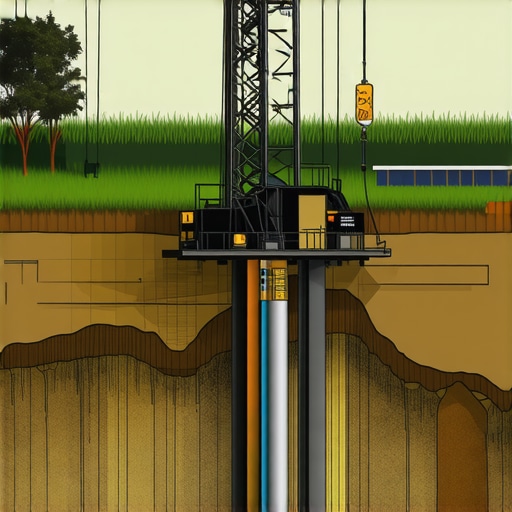
It was a hot summer day when I stood on a construction site, staring down at a seemingly simple task: drilling a borehole for water access. But within minutes, I realized I’d underestimated the complexity. The drill stalled, debris clogged the equipment, and I was left scrambling, frustrated and exposed in the scorching sun. That lightbulb moment taught me a vital lesson—borehole drilling isn’t just about digging; it’s about understanding the challenges and choosing the right techniques to succeed.
Today, I want to share my journey and how I discovered effective borehole solutions that make the process smoother, safer, and more reliable. If you’re planning a project that depends on water access or site safety, knowing these potential pitfalls and their solutions can save you time and money.
The Real Reason Why Borehole Drilling Challenges Catch You Off Guard
Many folks jump straight into borehole drilling without realizing how site conditions can dramatically influence success. From unpredictable soil layers to existing underground utilities, every site presents unique hurdles. My early mistake was relying on generic drilling methods without assessing the site-specific factors that can derail progress. That oversight cost me valuable time and increased costs.
The key to turning this around is understanding the importance of proper site assessment and employing advanced techniques like vacuum excavation and daylighting. These methods help you identify subsurface conditions accurately, minimize unexpected disruptions, and ensure your project stays on track. For instance, vacuum excavation not only reduces site disruption but also enhances safety by exposing underground utilities with precision, as highlighted in expert discussions on site safety strategies.
If you’ve ever faced unexplained delays or damaged utilities during drilling, you’re not alone. Many projects suffer because initial site assessments are rushed or superficial. Luckily, with the right approach—supported by reliable site services—you can anticipate problems before they happen, making your drilling operation far more predictable.
Are you currently grappling with unpredictable site conditions that threaten your project timeline? If so, you’re in good company. The next step is equipping yourself with the knowledge of proven techniques to navigate these challenges effectively. Let’s delve into how choosing the right methods can transform your borehole project from a risk-laden endeavor into a streamlined success.
Assessing Site Conditions with Precision
Start your process by conducting a detailed site survey. Use ground-penetrating radar or electromagnetic surveys to detect underground utilities and soil heterogeneity. I recall a project where quick visual checks missed a buried high-voltage cable, leading to costly delays. Implementing electromagnetic surveys helped us map utilities accurately, saving time and preventing accidents. This step ensures safe drilling paths and avoids utility strikes, which are among the biggest risks in borehole projects.
Utilizing Vacuum Excavation for Subsurface Clarity
Once you’ve evaluated the site, employ vacuum excavation to expose the subsurface precisely. Unlike traditional digging, vacuum excavation uses high-powered suction to remove soil with minimal disturbance, revealing underground utilities and soil layers clearly. I remember a case where we used vacuum excavation to verify soil stability before drilling, which uncovered loose soils that traditional methods might have missed, preventing potential bore collapse and misaligned boreholes. To learn more about this technology, visit this resource.
Combining Daylighting for Optimal Views into Soil Layers
Daylighting involves creating openings in the ground to observe subsurface conditions directly. When I faced unpredictable soil conditions, daylighting allowed us to see soil stratification firsthand, guiding our drilling angles and depths. For example, during a mission-critical water well, daylighting revealed clay layers impeding water flow, prompting adjustments that enhanced yield. This method provides invaluable real-time data, reducing guesswork and increasing drill success rates. Consider integrating daylighting into your site assessment for better accuracy — see this article for techniques and insights.
Select the Right Site Services to Support Your Drilling Goals
Choosing expert site services ensures your project benefits from technology and experience. Professionals can handle complex assessments like utility mapping and soil analysis efficiently, reducing your workload and errors. I recommend reaching out to specialists for comprehensive assessments; you can do so through this contact page. Their expertise in integrating vacuum excavation and daylighting strategies helps streamline operations, minimizes risks, and guarantees successful borehole installation.
Many professionals assume that employing standard site services like vacuum excavation and daylighting guarantees smooth projects, but this belief can be misleading. In my experience, the real nuance lies in understanding how misjudging the limitations of these methods can lead to costly mistakes. A common myth is that vacuum excavation alone suffices for all subsurface assessments; however, experts emphasize that combining it with detailed utility mapping and geotechnical analysis yields much more reliable results. Overreliance on a single technique can result in overlooked underground utilities or unstable soil conditions, which might cause operational delays or accidents. A critical mistake occurs when teams neglect site-specific variables—such as soil heterogeneity or existing infrastructure—that demand tailored solutions. For instance, relying solely on daylighting in areas with deep clay layers can provide false assurance if not complemented by geophysical surveys, as noted in a recent industry study published by the Ground Engineering Journal.
Why do many site assessments still miss critical subsurface hazards despite advanced tools?
It’s often because professionals underestimate the importance of integrating multiple assessment methods and misjudge the complexity of the site. Using only vacuum excavation might streamline operations temporarily but can overlook deeper issues like buried utilities or unstable strata. Adding technologies such as electromagnetic surveys or ground-penetrating radar significantly enhances accuracy, reducing risks during drilling or construction. As I always recommend, selecting the right combination of site services—consulting with specialists who understand these nuances—is crucial for a successful project. You can contact experienced providers for personalized guidance and to ensure your project benefits from comprehensive site evaluations. For further insights on integrating these strategies, explore this comprehensive guide on choosing the right site services.In my experience, maintaining and optimizing your site services, especially for borehole drilling, requires the right equipment and strategies. One indispensable tool I personally rely on is **ground-penetrating radar (GPR)**. Unlike traditional surveys, GPR provides high-resolution images of subsurface conditions, helping you identify soil layers and hidden utilities before drilling begins. This proactive approach reduces surprises, saves time, and enhances safety. Additionally, I always invest in **digital utility mapping software**, which integrates data from various surveys, enabling precise planning and reducing the risk of utility strikes. These tools have become essential for ensuring our boreholes are positioned correctly and safely. Looking ahead, I predict that advancements in real-time data analytics and AI integration will revolutionize site assessments, making operations even more efficient and predictive. To keep your site operations seamless, I highly recommend incorporating **vacuum excavation** into your workflow. Not only does it minimize site disturbance, but it also provides clean, accurate exposure of underground utilities, crucial for safe and effective borehole placement. If you’re interested in exploring how these tools can elevate your projects, consider reaching out to expert site services—click [here](https://deepdrillpro.com/contact-us) to connect with specialists who can tailor solutions to your needs. Remember, the key to long-term success is not just investing in quality equipment but also understanding how to leverage these tools effectively over time. Regular training and updates on emerging technologies will keep your team ahead in safe, reliable site services. For more insights into how technology can optimize your site planning, I recommend reviewing [this resource](https://deepdrillpro.com/optimizing-borehole-strategies-to-enhance-service-reliability). A practical tip: start integrating AI-powered ground surveys today to give your team a clear edge in site safety and efficiency.
What I Wish I Knew Before Digging Deep
One of the most valuable lessons I learned is that no two sites are alike. Rushing into borehole drilling without thorough site assessments often leads to unforeseen complications, such as utility strikes or unstable soil conditions. Embracing advanced tools like electromagnetic surveys and ground-penetrating radar early in the process dramatically reduces surprises. I also realized that combining multiple assessment methods yields a clearer picture, saving time and resources in the long run. Don’t underestimate the power of proper preparation—it’s the secret to a successful and safe borehole project.
My Top Recommendations for Smarter Site Work
Invest in reliable, comprehensive site services—these are my go-to tools for predictable results. Ground-penetrating radar (GPR) and sophisticated utility mapping software are indispensable for identifying underground obstacles. When I want precision and safety, I turn to vacuum excavation; it’s a game-changer for exposing utilities with minimal disturbance. For soil observation, daylighting provides immediate insights into subsurface layers. Trusting specialists who integrate these technologies has transformed my projects. Explore their services at this page and take your planning to the next level.
Stepping Into the Future of Site Strategies
Effective borehole operations require more than just equipment; they demand a mindset open to innovation and continuous learning. I’m excited about emerging technologies like AI-driven site analysis and real-time data integration, which promise even greater accuracy and safety. Remember, the key to thriving in this field is a commitment to ongoing education and embracing new tools. Starting today, consider integrating advanced assessments into your workflow—your projects will thank you. And always ask yourself: Are you leveraging every possible resource to make your site safer and more efficient? If you’re curious how to get started, I recommend reaching out to experienced site service providers for personalized advice.