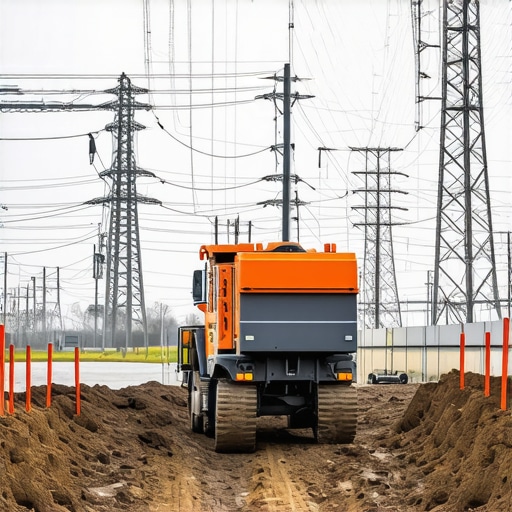
The Anatomy of a Grid Failure: A Forensic Autopsy
The sound of a backhoe bucket grazing a high-voltage conduit isn’t a thud; it’s a high-pitched, metallic shriek that vibrates right through the operator’s seat. It’s followed by the sharp, ozone tang of an electrical arc and the smell of roasting PVC. I’ve spent thirty years digging out these disasters, and let me tell you, when you’re looking at a shattered conduit in a frozen trench, the ‘hack job’ becomes painfully obvious. My old journeyman used to say, ‘Water is lazy, but it’s patient.’ It will find the tiniest pinhole and turn it into a geyser given enough time. The same holds true for the 2026 smart grid. If you leave a nick in the cable jacket during a rough-in, the moisture in the soil will find it, the sweating inside the pipe will accelerate, and the dielectric breakdown will eventually turn that cable into a pile of carbonized slag.
In the North, we don’t just fight the earth; we fight the frost. When the frost depth hits four feet in a Chicago winter, the soil doesn’t just sit there. It expands by 9% as the water crystals lock together. This creates a massive hydraulic force. If you’ve used mechanical excavation to stub-out your conduits, you’ve likely disturbed the surrounding soil enough to create ‘frost pockets.’ These pockets allow the ground to heave unevenly, shearing the pipe right at the coupling. We call this a ‘cold-snap fracture,’ and it’s the primary reason smart grid sensors go dark in January. Using vacuum excavation is the only way to maintain the structural integrity of the soil ‘stack’ around the cable.
“Excavation shall be made by methods that do not damage the utility or its protective coating, such as vacuum excavation or hand tools.” – ASTM F2106 Standard for Underground Utility Protection
1. Non-Destructive Daylighting of Sensitive Junctions
The first fix for any smart grid project is exploring daylighting benefits to expose existing lines. When we use a high-pressure air lance to emulsify the soil, we aren’t just digging; we’re performing surgery. Unlike a steel tooth on a bucket, the air or water stream moves around the conduit. It strips away the clay and aggregate without scoring the polyethylene jacket. If you score that jacket, you’re inviting the soil’s acidity to eat the copper or aluminum core. It’s no different than using the wrong dope on a gas line; eventually, the chemistry of the environment will win.
2. Precision Borehole Clearance for Grid Sensors
The 2026 grid relies on subterranean sensors that monitor thermal load. These require precise borehole strategies to ensure the sensor is in direct contact with the native soil, not an air pocket. Vacuum excavation allows us to clear a borehole to the exact depth—not an inch more, not an inch less. In my years of forensic piping, I’ve seen ‘handyman’ boreholes that were over-dug and backfilled with loose dirt. That loose dirt holds water, which freezes and crushes the sensor. A vacuum-extracted hole maintains the ‘skin friction’ of the soil, keeping the sensor stable and dry.
3. Managing Thermal Expansion and Soil Heave
When current flows through these high-density cables, they get hot. In northern climates, this creates a ‘thaw bulb’ around the conduit. If the soil was disturbed by a backhoe, that thaw bulb becomes a muddy mess that lacks the density to support the pipe. We use vacuum excavation to reduce site disruption, ensuring the native compaction remains intact. This prevents the conduit from ‘snaking’ in the trench, which would otherwise lead to a stress fracture at the first 90-degree bend.
4. Site Services Coordination in Urban Density
Urban smart grids are a nightmare of overlapping site services. You have water mains, old cast-iron sewer stacks, and fiber optics all competing for the same three feet of dirt. I once saw a crew try to rough-in a new grid line and they ended up punching a hole right through a 4-inch cleanout for a nearby apartment building. The resulting ‘sewage geyser’ was a biohazard that shut down the block for three days. Site services efficiency depends on seeing what you’re doing. Vacuum excavation ‘vacuums’ the problem away, letting you see the Fernco couplings and old lead-and-oakum joints before you break them.
5. Accurate Subsurface Assessment for 2026 Standards
The 2026 standards require a level of precision that traditional digging can’t match. You need to know exactly where the ‘soft spots’ in the geography are. This is why vacuum excavation is the key to accurate assessments. By pulling the soil out in layers, we can see the history of the site. We can see if there’s a rotted wax ring from an old buried septic tank or a abandoned lateral that will cause the grid to sink. It’s about forensics—finding the ‘black mush’ of rotted organic matter before it causes a cable fault.
6. Safely Preparing the Site for High-Voltage Rough-In
Before any cable is laid, the site must be prepared. This isn’t just about clearing dirt; it’s about maximizing safety with advanced site services. If a worker hits a line with a shovel, the handles might be fiberglass, but the damp earth they’re standing in is a perfect ground. Vacuum excavation removes the worker from the ‘line of fire.’ We top-out the trench using air-knives, ensuring that no human hands are near the energized zone. It’s the only way to handle 2026-level voltages without risking a trip to the morgue.
7. Modern Solutions for Safe Site Prep
Finally, we have to look at the long-term viability of the installation. Safe site prep means ensuring the conduit isn’t resting on a sharp rock that will be pushed through the pipe wall by the next frost heave. When you vacuum the hole, you can see every pebble. You can ensure the bedding is smooth. In my 30 years, I’ve seen more ‘pinhole leaks’ in electrical conduits caused by rock-rub than by any other factor. You sweat the details now, or you sweat the repair bill later.
“Backfill material shall be free from discarded construction material and debris. It shall be placed in thin layers and tamped to prevent settlement.” – IPC Section 306.3
In the end, water always wins, and physics never takes a day off. If you treat your smart grid cables like a ‘hack job’ plumbing repair, they will fail. Use vacuum excavation to respect the earth you’re digging in, protect the materials you’re installing, and ensure that the only thing flowing through your 2026 grid is pure, uninterrupted power.