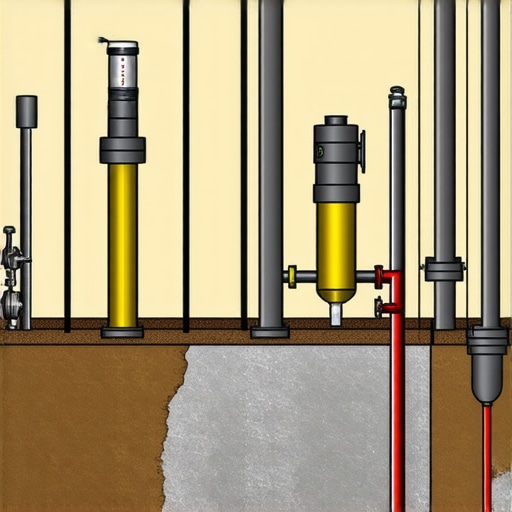
The Gasp of a Dying Well: Why Flow Fails
There is a specific, gut-wrenching sound a pump makes when it starts sucking air instead of water. It is a dry, metallic rattle that tells a story of starving infrastructure. My old journeyman used to say, ‘Water is lazy, but it is patient.’ It will find the tiniest pinhole to escape, but when it comes to entering your borehole, it won’t fight through a wall of mineral scale and biological slime. If your flow has dropped to a trickle, do not jump to the conclusion that you need to drill a new hole. Most of the time, the aquifer is still there; the door is just locked shut. We are looking at a battle against chemistry and physics. Over time, the very minerals that make ground water ‘hard’ begin to precipitate out of solution, turning your expensive well screen into something that looks like calcified coral. This is not just ‘dirt’; it is a chemical transformation that creates a crust harder than concrete.
1. Mechanical Surge Block and Swabbing
The first line of defense is mechanical. We use a surge block, which is essentially a heavy-duty plunger that fits the diameter of the casing with tight tolerances. As we pull that block up and down, we are creating massive pressure differentials. We are forcing water out through the screen and then sucking it back in. This isn’t just a gentle rinse; it is hydraulic warfare. You want to see that black, sulfurous sludge coming up—that is the ‘biological mortar’ composed of iron bacteria and silt that has been choking your flow. This mechanical agitation breaks the bridge of particles outside the screen. As noted in professional standards:
“The development of a well shall continue until the water is free of sand and the natural formation is restored to its maximum potential.” – ASTM D5092/D5092M-16
. If you skip this, no chemical treatment will ever reach the blockage.
2. Vacuum Excavation for Wellhead Access
Before you can fix the flow, you have to get to the ‘stub-out’ without destroying the surrounding infrastructure. This is where vacuum excavation becomes a surgical tool. Instead of a backhoe ripping through your yard and potentially snagging a lateral line, we use high-pressure air or water to liquefy the soil and suck it away. This allows us to perform ‘daylighting’—exposing the wellhead and the pitless adapter with zero risk of mechanical damage. I have seen too many ‘hack jobs’ where an operator tried to dig out a casing and ended up shearing the pipe, turning a flow restoration job into a full-scale excavation disaster. Using vacuum excavation in reducing site disruption ensures we can get our tools into the stack without compromising the integrity of the seal.
3. Chemical Acidification and PH Neutralization
When the mechanical surging doesn’t clear the ‘crunch’ of calcium carbonate, it’s time for chemistry. We use inhibited acids—often sulfamic or muriatic—designed to dissolve the scale without eating the metal casing. This is where ‘hydraulic zooming’ matters. The acid doesn’t just sit there; it reacts with the alkaline scale, releasing carbon dioxide gas that further agitates the blockage. You can hear it fizzing deep in the earth like a giant soda can. However, you cannot just pour acid down a hole and walk away. You have to monitor the pH and ensure that after the reaction is complete, you neutralize the solution before pumping it out. If you don’t, you’re just dumping corrosive poison into the surrounding soil, which is a violation of every code in the book. Proper optimizing borehole strategies involves balancing the chemical strength with the material science of the screen.
4. Hydro-Jetting the Screen Slots
If the blockage is localized on the screen itself, we use a high-pressure jetting tool. Think of this like a pressure washer for the underworld. We lower a nozzle that shoots 360-degree streams of water at 3,000+ PSI. This pressure is enough to cut through the ‘iron snot’—that thick, gelatinous biofilm produced by iron-oxidizing bacteria. These bacteria take dissolved iron and turn it into a physical mass that traps sand and grit, creating a waterproof barrier. The jetting action shears this slime away, while a vacuum system simultaneously pulls the debris out of the hole. This prevents the ‘cleanout’ material from just settling back to the bottom and re-clogging the system within a month. Accurate subsurface assessments are critical here to ensure the jetting pressure doesn’t collapse an aged or corroded screen.
5. Carbon Dioxide (CO2) Injection
One of the more modern ‘tricks’ in the forensic plumber’s bag is liquid CO2 injection. When liquid CO2 is injected into the borehole, it transitions into a gas, expanding 700 times in volume. This creates a series of controlled ‘mini-explosions’ deep in the water column. The sudden pressure wave travels through the screen and deep into the gravel pack—the filter zone outside the pipe. It shatters mineral deposits that are too far away for a surge block to reach. It is a clean process; unlike acids, CO2 leaves no toxic residue. This is the difference between a surface fix and a deep-system restoration. You are literally blowing the pores of the earth open again.
6. Air Surging and Development
Finally, we use the ‘Air-Lift’ method. We drop a pipe down and blast high-volume compressed air at the bottom. This turns the entire borehole into a massive soda fountain. The air bubbles reduce the density of the water, and the pressure from the surrounding aquifer pushes the water (and all the broken-up scale) up and out of the ‘cleanout.’ It is violent, it is messy, and it is incredibly effective. This is how you clear the ‘fines’—the tiny sand particles that have migrated toward your screen over the last decade. As the Uniform Plumbing Code logic dictates, ensuring the flow path is clear of obstructions is paramount for system longevity.
“Water service pipe shall be sized to provide a minimum of 15 psi at the highest point of use.” – UPC Section 610.1
. You can’t hit those numbers if your ‘rough-in’ at the source is choked by five years of mineral buildup.
Why Water Always Wins
In the end, you have to respect the biology and chemistry of the ground. Using ‘dope’ on a few threads or ‘sweating’ a copper pipe on the surface is the easy part. The real work happens 200 feet down where you can’t see. If you ignore the signs of a slow drawdown—the pump running longer, the pressure tank taking forever to fill—you are inviting a total collapse of the well. Restoration is about restoring the relationship between the pipe and the planet. By using borehole installation tips and modern site services, you can extend the life of your infrastructure for decades without the massive expense of a new drill rig. Don’t wait for the ‘gasp.’ Act when the flow starts to fade.