The Sudden Hiss of Failure
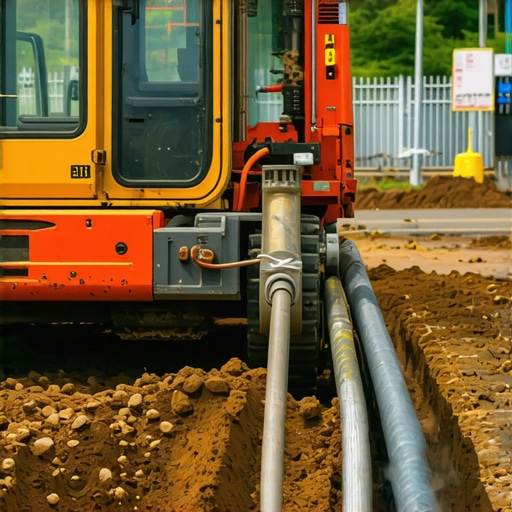
The ground doesn’t just open up; it screams. I’ve stood on job sites where the air was thick with the smell of scorched earth and the metallic tang of ozone because a backhoe bucket caught a 13.2kV line. It’s a sound that stays in your marrow. When you’ve spent three decades in the dirt, you learn that the biggest threat to a project isn’t the deadline or the weather—it’s the ignorance of what lies six feet under. With 2026 ushering in a new era of aggressive utility damage fines, the days of ‘dig and pray’ are officially dead. If you aren’t using surgical precision, you’re just writing a blank check to the regulatory boards.
The Physics of Patience
My old journeyman used to say, ‘Water is lazy, but it’s patient.’ It will find the tiniest pinhole and turn it into a geyser given enough time. I’ve seen it happen in the most high-tech facilities and the oldest municipal ‘rough-in’ layouts. This same principle of hydraulic patience applies to how we treat the earth. You can try to force your way through with a steel bucket, or you can use the physics of air and water to gently peel back the layers of history. That is where vacuum excavation becomes the only logical choice for modern utility management. By understanding how site services drive efficiency in urban construction, we can finally stop treating our underground infrastructure like a game of Minesweeper.
“All piping, fixtures and equipment shall be adequately supported in accordance with the provisions of this code.” – IPC Section 308.1
Tactic 1: The Art of Daylighting
Daylighting isn’t just a fancy industry buzzword; it’s the process of exposing the truth. In my years, I’ve seen ‘as-built’ drawings that were more fiction than a dime-store novel. You think you’re clear of the gas main, but a ‘stub-out’ was added in 1984 that nobody bothered to record. Using hydro or air vacuum excavation to expose these lines—a process we call daylighting—is the only way to verify the depth and direction of existing pipes. When you are exploring daylighting benefits for sustainable urban infrastructure, you’re really looking for the physical confirmation of where a pipe lives before you bring in the heavy iron. This eliminates the ‘oops’ factor that leads to five-figure fines.
Tactic 2: Precision Borehole Management
When you’re prepping a site, the ‘stack’ of utilities is rarely a neat vertical line. It’s a tangled mess of fiber optics, old cast iron sewer lines, and modern PEX or PVC conduits. When we talk about borehole integration, we’re talking about creating a window into this world. A borehole isn’t just a hole; it’s a diagnostic tool. By using vacuum technology to clear the way for borehole drilling, you ensure that the drilling head doesn’t turn a ‘cleanout’ into a disaster zone. I’ve seen drillers blindly punch through a 4-inch sewer main because they didn’t take the time for proper optimizing borehole strategies to enhance service reliability. The result is always the same: a backup that costs more to fix than the entire excavation budget.
Tactic 3: Managing Site Services with Surgical Care
The role of site services has evolved from basic labor to a forensic science. In the plumbing world, we use ‘dope’ to seal the threads on a fitting because we know that even the smallest gap will lead to a leak. On a macro scale, vacuum excavation is the sealant for your project’s safety. It fills the gaps in your knowledge. By choosing the right site services for complex excavation projects, you are hiring a team that understands the difference between a high-pressure water line and a communication conduit just by the color of the dirt surrounding it. This forensic approach to the soil—noticing the change from compacted clay to loose fill—is how we prevent strikes before they happen.
Tactic 4: The Kinetic Energy of Air vs. Water
The choice between air and hydro-vac is a matter of material science. Air vacuuming is the cleaner, more surgical option—ideal for when you need to put the soil right back where you found it. Hydro-vac, on the other hand, is the brute force of the vacuum world, capable of slicing through frozen ground that would break a pickaxe. However, both methods rely on the same principle: moving material without mechanical contact. This is what is vacuum excavation at its core: the use of kinetic energy to displace earth while leaving the integrity of the utility ‘stub-out’ or ‘stack’ perfectly intact. It’s the difference between using a scalpel and a chainsaw.
“Excavation shall be made to such depth that the bedding will provide a firm and uniform support along the entire length of the pipe.” – ASTM D2321 Section 7.1
Tactic 5: Subsurface Forensic Assessment
Every job site has a history. In older cities, you might find layers of coal ash, old trolley tracks, or even ‘Fernco’ couplings from a repair made forty years ago. Vacuum excavation allows for accurate subsurface assessments that ground-penetrating radar sometimes misses. Radar can be fooled by wet clay or dense rock, but a vacuum hose doesn’t lie. When the nozzle pulls away the dirt and reveals the yellow tape of a gas line or the orange of a fiber cable, the mystery is over. This forensic level of detail is the final defense against the 2026 fines. You aren’t just digging; you’re investigating the ‘rough-in’ of the entire city. By maximizing safety with advanced site services in excavation, you ensure that your team goes home safe and your company stays out of the red.
The Final Cleanout
At the end of the day, water always wins. It will erode a mountain or rust a ‘stack’ of cast iron until it crumbles. Our job as professionals is to respect that power and the complexity of the ground we walk on. The upcoming 2026 utility damage fines are a wake-up call to an industry that has been too comfortable with ‘close enough.’ In my thirty years, I’ve never regretted the time I spent double-checking a location with a vacuum rig, but I’ve certainly regretted the times I didn’t. When the soil is stripped away and the pipes are exposed, gleaming and undamaged, that’s when you know the job was done right. No leaks, no strikes, no fines. Just the honest work of the forensic plumber and the power of the vacuum. If you need to secure your site, contact us today to get the job done before the fines start flying.