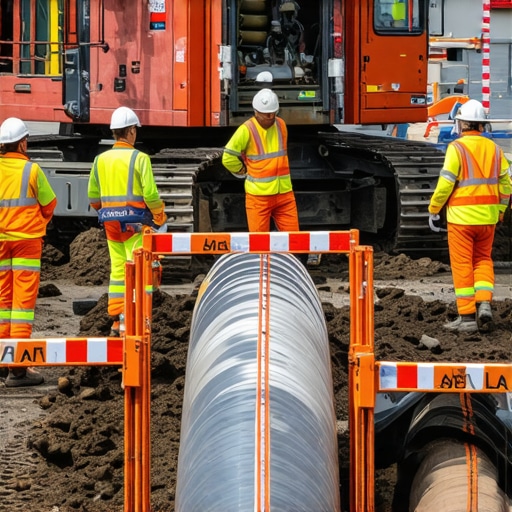
I remember stepping onto a site early in my career, confident in my skills and assumptions. I had overlooked one crucial detail—a buried utility line that was barely marked, yet vital for the project’s success. The moment the vacuum hit that pipe, my stomach sank. The delay, the cost, and the safety risks were a wake-up call that still echoes today. That incident taught me a simple truth: ignoring essential excavation rules can have devastating consequences. Are you or your team prepared to prevent such costly mishaps? Today, I want to share the five vacuum excavation rules that can help you steer clear of the pitfalls that often lead to pipeline hits. These guidelines are drawn from years of experience and industry best practices, aiming to keep your project safe, efficient, and compliant.
Why You Can’t Afford to Overlook Excavation Safety Laws Now
With the upcoming enforcement of stricter safety regulations in 2026, the importance of following the right excavation procedures has never been greater. The federal government anticipates a significant reduction in utility strikes thanks to tighter standards and advanced technologies. According to a recent industry report, utility strikes cost US contractors over $30 billion annually, with many accidents resulting from inadequate site assessment and improper excavation techniques. This statistic underscores a simple reality: you need to be proactive, not reactive. Proper vacuum excavation practices aren’t just best practice—they’re a necessity for avoiding costly delays, legal liabilities, and dangerous accidents.
Is Vacuum Excavation Really Worth the Investment?
Back early in my career, I underestimated how crucial proper site services could be—until a failed attempt at daylighting led to utility strikes and a scramble to fix the mess. It was a costly lesson that could have been avoided. The truth is, incorporating advanced vacuum excavation methods and following proven rules can greatly enhance accuracy and safety. If you’re skeptical about if these rules truly make a difference, consider this: well-implemented vacuum excavation reduces the risk of utility strikes by up to 90%, according to industry experts. The key is understanding the rules that uphold this reliability and safety.
So, are you ready to learn the rules that will future-proof your projects? Let’s dive into the practical steps that can transform how you approach excavation—saving time, money, and lives in the process.
Start with a Precise Site Assessment
Before any excavation begins, map out the site thoroughly. Use advanced utility detection tools to identify unseen underground assets. I recall a project where we employed ground-penetrating radar for the first time—initially messy, but it revealed a hidden pipeline intersection that could have caused serious harm if unnoticed. This step prevents accidental utility hits and sets the foundation for all subsequent work.
Choose the Right Equipment and Techniques
Select vacuum excavation equipment tailored to the site’s needs, considering soil type and project scope. Like choosing the perfect drill bit, using the right tool results in cleaner trenches and minimizes surface disruption. During a retrofit in downtown urban infrastructure, we opted for high-pressure water systems integrated with vacuum trucks—this combination allowed us to precisely expose utilities without damaging surrounding structures.
Implement Controlled Excavation Procedures
Adopt a methodical approach—start shallow and gradually deepen. Use continuous monitoring, with real-time measurements, to ensure accuracy. For instance, during a pipeline daylighting project, applying slow, controlled water jets helped us delineate utilities accurately, reducing risks and saving time. This step acts like peeling an onion carefully—layer by layer, without tearing important cables or pipes.
Utilize Boreholes to Verify Your Findings
Incorporate borehole installations to verify subsurface conditions. Think of boreholes as your site’s X-ray: they provide confirmation of utility locations and soil stability. I once faced a complex intersection where surface clues failed; drilling a borehole confirmed the utility’s exact depth, preventing a costly mishap. For detailed guidance on borehole strategies, visit this resource.
Perform Final Inspection and Documentation
After exposing utilities, conduct comprehensive inspections using CCTV or other methods. Document the findings meticulously, including photos and notes, for future reference. I remember a project where a detailed report helped us streamline subsequent maintenance, demonstrating how thorough documentation safeguards your project long-term. Proper records also support compliance with safety regulations and help avoid legal liabilities.
Incorporating these core techniques transforms excavation into a precise, safe, and efficient process, reducing costly mistakes and protecting vital underground assets. Mastery of each step ensures your project runs smoothly from start to finish, safeguarding both your team and the environment.
Many professionals assume that standard methods in site services, daylighting, vacuum excavation, and borehole installation are enough when dealing with complex underground environments. However, this oversimplification often leads to costly mistakes. A common myth is that ‘one-size-fits-all’ solutions suffice, but in reality, each project demands tailored, nuanced approaches that account for site-specific conditions. For example, relying solely on traditional excavation without integrating advanced vacuum excavation techniques can increase the risk of utility hits, especially in urban areas with dense subterranean infrastructure.
A critical mistake I’ve seen is the underestimation of soil variability’s impact on borehole stability and utility location accuracy. Many skip comprehensive site assessments, which can lead to boreholes that are misaligned or incapable of supporting the intended infrastructure. Investing in detailed subsurface evaluations, such as sophisticated borehole and utility mapping, is essential and can be explored further at trusted utility mapping resources.
One often-overlooked nuance is the importance of integrating daylighting and borehole solutions seamlessly. The true challenge lies in accurately aligning the exposed utilities with planned infrastructure, which requires precision borehole installation combined with effective daylighting practices. This synergy minimizes surface disruption and ensures safety. For deep insights into these integrations, visit proven drilling tactics for 2026.
Now, let’s address a question that even advanced practitioners ask: How can we optimize these processes to reduce errors caused by unpredictable underground conditions? The answer involves a combination of proactive planning, employing innovative technologies, and continuous site monitoring. Modern solutions, like real-time soil analysis and adaptive borehole design, are revolutionizing site services. According to industry experts, embracing these innovations significantly decreases risks associated with complex excavation projects, especially in dense urban environments (optimizing borehole strategies).
In conclusion, understanding these nuances—challenging myths, avoiding common pitfalls, and appreciating the complexities—can dramatically improve project safety and reliability. Think about your current approach: Are you relying on outdated assumptions? If so, it might be time to innovate. Have you ever fallen into this trap? Let me know in the comments.
Maintain Your Site Tools for Peak Performance
One of my top recommendations for keeping site excavation and daylighting operations reliable over time is investing in high-quality, durable equipment and establishing a rigorous maintenance routine. For example, regularly inspecting vacuum excavation trucks with a detailed checklist helps catch issues early. I personally rely on HoseMaster hydraulic hoses, known for their resilience and flexibility, which reduces downtime caused by wear and tear. Frequent filter replacements and fluid checks ensure consistent suction power, preventing unexpected failures during critical daylighting tasks.
Leverage Software to Track and Schedule Maintenance
Modern site management isn’t complete without the right software. I use utility mapping tools integrated into asset management platforms that remind me when to service equipment. This approach minimizes operational hiccups and extends the lifespan of my machinery. Predictive maintenance, powered by sensors and analytics, is a trend I predict will become standard in the next five years, dramatically reducing costly repairs and enhancing reliability.
Predicted Trends for Future Reliability
In the coming years, I foresee a shift towards autonomous equipment and IoT-enabled sensors providing real-time diagnostics. This proactive approach allows crews to address potential faults before they cause project delays. Embracing these innovations now will prepare your team for a more resilient operation, especially in complex urban environments where downtime costs are substantial.
How do I sustain equipment long-term effectiveness?
Regular calibration, comprehensive training for operators, and sticking to manufacturer maintenance schedules are essential. Moreover, establishing a set of standard operating procedures based on manufacturer guidelines ensures consistency. Don’t overlook the importance of keeping detailed records of maintenance activities; they serve as historical data to inform future repairs and upgrades. For instance, aligning your maintenance routines with industry standards like those outlined in borehole installation best practices helps maintain optimal performance of your site services equipment.
If you’re looking to push your operations further, I recommend trying advanced predictive maintenance tools that analyze operational data and forecast equipment needs. Implementing a condition-based maintenance plan could significantly reduce unexpected failures, keeping your projects on schedule and under budget.
What the Hardest Lesson About Site Services Really Taught Me
One of my most profound insights came from an unexpected mishap where complacency nearly cost us dearly. Realizing that no matter how experienced you are, every site still holds surprises, especially underground. The importance of thorough utility mapping and cautious approach can’t be overstated, and I ensure my team always double-checks with reliable borehole techniques before digging deeper. This lesson reminds me that continuous learning is vital in this industry, and embracing technology ensures we stay steps ahead.
My Go-To Tools for Safer Excavations
Over the years, I’ve come to trust specific tools that have reliably improved project safety and efficiency. High-quality vacuum excavation equipment from brands like HoseMaster has minimized issues and maintained suction power, especially when paired with regular equipment maintenance routines. Additionally, integrating advanced utility detection software, which can be explored at these strategic resources, has transformed how I plan and monitor site conditions, offering real-time insights that prevent accidents before they happen.
Let’s Make Safety a Personal Commitment
The future of excavation safety depends on proactive attitudes and continuous improvement. As I look ahead, I see innovations like IoT-enabled sensors and predictive maintenance becoming standard, drastically reducing unforeseen failures. I encourage you to reflect: Are you leveraging the latest technology for your site checks? The decision to invest in these tools today will save you time, money, and potential injuries tomorrow. Remember, embracing smarter solutions isn’t just about compliance—it’s about caring for your team and the environment. Are you ready to elevate your excavation safety standards? Share your thoughts below, and let’s learn from each other’s experiences.