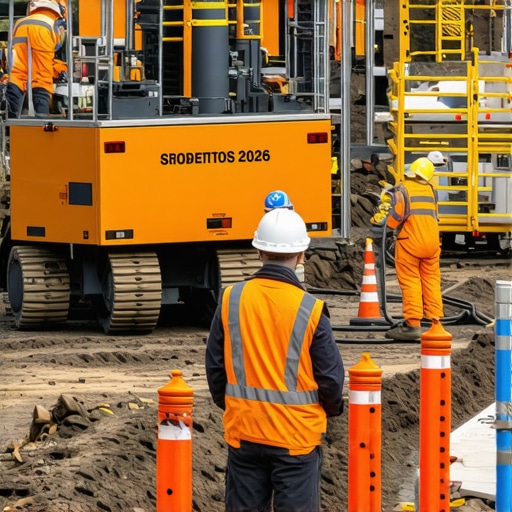
The Autopsy of a Utility Strike: Why Steel is Your Enemy
The sound of a backhoe bucket catching the lip of a pressurized main is something you never forget. It’s a metallic screech followed by the visceral thrum of high-pressure water hitting the underside of a machine. As a forensic plumber with three decades in the trenches, I’ve seen what happens when ‘speed’ overrides ‘safety’ in fiber optic rollouts. My old journeyman used to say, ‘Water is lazy, but it’s patient.’ It will find the tiniest pinhole and turn it into a geyser given enough time. When we look at the high-speed fiber mandates for 2026, we aren’t just laying glass; we are navigating a minefield of aging infrastructure, from calcified cast-iron stacks to brittle lead service lines. To survive the 2026 rollout, you need to stop thinking like a ditch-digger and start thinking like a surgeon using vacuum excavation.
Rule 1: Respect the Frost Line and Hydraulic Expansion
In the North, where frost depth can reach four feet, the soil isn’t just dirt; it’s a moving, grinding vise. When water freezes, it expands by 9%, exerting thousands of pounds of pressure against anything buried in it. If your fiber conduit is laid too close to a water line, that expansion can cause hydraulic shock, breaking the water pipe at its weakest point—usually a rusted cleanout or a brittle Fernco coupling. Vacuum excavation allows for precise daylighting without disturbing the thermal layers of the soil. By using heated water in your hydro-vac rig, you can slice through frozen clay like a hot knife through butter without the risk of shattering a frost-heaved pipe. This precision is why exploring daylighting benefits is critical for sustainable urban growth.
“Water-service pipe and the building sewer shall be separated by 5 feet of undisturbed or compacted earth.” – IPC Section 603.2
Rule 2: The ‘Dope’ on Subsurface Accuracy
When you’re doing the rough-in for a new site, you rely on blue-stakes and old maps that are, frankly, lies. I’ve opened ground where the ‘marked’ gas line was six feet to the left of the actual pipe. In the 2026 landscape, hitting a gas line doesn’t just stall the project; it triggers a forensic audit. Vacuum excavation provides the only 100% reliable borehole verification. You aren’t just digging; you are performing a subsurface assessment that reveals the reality of the stack. If you see a pipe coated in grey ‘dope’ or a stub-out that wasn’t on the plans, you stop. Mechanical buckets don’t stop; they tear.
Rule 3: Managing the Slurry and Soil Integrity
One of the biggest mistakes in high-speed fiber installs is ignoring the biology of the soil. When you use traditional excavation, you loosen the surrounding earth, leading to future sinkholes when the first heavy rain hits. Vacuum excavation sucks the spoils directly into a tank, leaving the surrounding soil structure intact. This is vital when working near site services. If you undermine a sewer stack, you’ll end up with a belly in the line that collects grease and ‘flushable’ wipes—the unholy trinity of plumbing failures. Proper site services ensure that the structural integrity of the existing cleanout remains solid, preventing future backups that could drown your new fiber lines in raw sewage.
Rule 4: Avoid the ‘Hack-Job’ Mentality with Proper Daylighting
I’ve seen handymen try to find utilities by ‘probing’ with a rebar stake—a move that usually ends with a sweating pipe or a punctured conduit. In 2026, the density of underground utilities in urban centers like Chicago or New York will be at an all-time high. Daylighting is the act of exposing these pipes to the light of day. By using vacuum suction, you can clear the debris away from a wax ring or a buried valve box without a single scratch. This is why borehole installation tips emphasize non-destructive methods. If you can see the pipe, you can’t hit the pipe. It’s the difference between a forensic success and a catastrophic insurance claim.
“Trenching and excavation work is hazardous… Soil analysis shall be performed by a competent person.” – OSHA 1926 Subpart P
Rule 5: The Physics of Service Reliability
Fiber optics are sensitive to micro-bends and crushing. If the soil settles unevenly because you used a backhoe and then ‘poured’ dirt back in, the shifting ground will eventually snap the glass. Vacuum excavation allows for the creation of perfect, clean boreholes that can be backfilled with stabilized aggregate. This optimizing of borehole strategies ensures that the fiber remains static even as the earth around it shifts due to seasonal changes. Remember, the goal isn’t just to get the fiber in the ground; it’s to ensure the top-out is clean and the service stays live for twenty years. Water is patient, and if you leave a void in the earth, water will fill it, freeze it, and break your work. Buy the right service once, or cry every time a technician has to come back to repair a crushed line. For those ready to commit to precision, contact us to secure the right equipment for your 2026 projects.