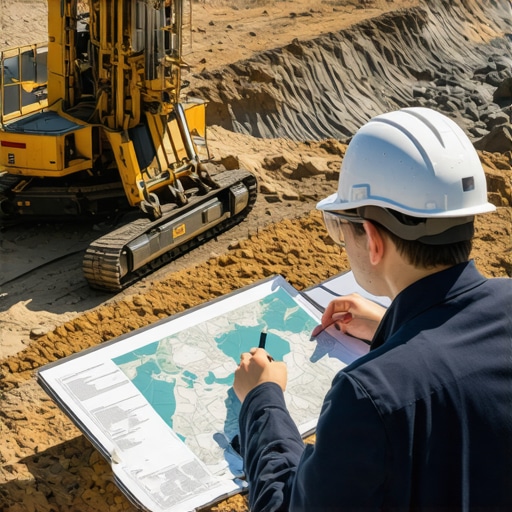
The Hiss of a Subsurface Catastrophe
You never forget the sound. It isn’t a bang; it’s a high-pitched, mocking hiss that starts low in the trench and vibrates through the soles of your work boots. I’ve spent thirty years in the mud, and that sound always means the same thing: someone’s site survey was a lie. When an auger bit bites into a pressurized main because a contractor ‘eyeballed’ the utility markers, the result is a violent marriage of high-pressure water and displaced silt. The water doesn’t just flow; it erupts, instantly liquefying the surrounding soil and turning a tidy borehole into a collapsing sinkhole that threatens the structural integrity of every foundation within fifty feet. This is why forensic plumbing isn’t just about fixing a faucet; it’s about understanding the violent physics of what happens when we disturb the earth.
The Physics of Patient Water
My old journeyman used to say, ‘Water is lazy, but it’s patient.’ It will find the tiniest pinhole and turn it into a geyser given enough time. This wisdom applies directly to site services and borehole construction. If you don’t respect the hydro-geography of your site, the water table will eventually reclaim your work. In regions with expansive clay, like the heavy soils of Texas or the Southeast, the ground breathes. It swells when wet and shrinks when dry, applying massive lateral shear forces to any vertical structure. A borehole that isn’t properly sleeved or grouted becomes a path of least resistance. Over time, hydrostatic pressure forces groundwater up the outside of the casing, eventually creating a ‘boil’ at the surface that can undermine the entire rig site.
“Solvent-cement joints shall be permitted above or below ground.” – IPC Section 705.8
While the code allows for various joining methods, the forensic reality is that below-ground joints are the primary failure points in any site utility project. When we talk about 2026 borehole yields, we are really talking about the integrity of the Rough-in phase of the site. If the initial survey fails to account for the electrolytic activity of the soil—the way stray currents from nearby buried power lines can literally eat through metallic pipes through a process called graphitization—your borehole is a ticking time bomb of corrosion and failure.
Secret 1: The Forensic Daylighting Protocol
The biggest mistake in modern excavation is the reliance on ‘witching’ or outdated paper maps. To achieve a high-yield borehole without the nightmare of a utility strike, you must employ daylighting. This isn’t just digging; it’s a precise surgical strike using vacuum excavation. By using high-pressure air or water to liquefy the soil and a vacuum to suck it away, we expose the existing infrastructure without the risk of a backhoe bucket shearing a gas line or a fiber optic trunk. I’ve seen ‘flushable’ wipes clog a fractured sewer line that was hit during a blind dig—the resulting backup turned a basement into a septic tank in under twenty minutes. Daylighting prevents the black sludge of a grease clog from becoming your project’s legacy.
Secret 2: Soil Load and Compaction Dynamics
Water is heavy—roughly 8.34 pounds per gallon—and soil is heavier. When you drill a borehole, you are changing the internal stress of the earth. In ‘Slab’ states where expansive soil is the enemy, the Stub-out of your borehole must be protected from the shifting clay. If the soil shifts by even two inches, it can snap a Schedule 40 PVC pipe like a dry twig. We use a Fernco or similar flexible coupling in specific forensic applications, but for a borehole, the secret is a properly engineered gravel envelope. This allows the water to move toward the borehole while the soil remains stable. Without this, you get ‘fines’—tiny particles of silt—migrating into your borehole, eventually calcifying and choking the flow until your high-yield well becomes a dry hole.
Secret 3: The Chemistry of the Subsurface
Plumbing is chemistry. When you introduce a new borehole, you are changing the oxygen levels in the aquifer. This can trigger the precipitation of iron and manganese. In my three decades of field work, I’ve pulled up pipes that were so choked with mineral scale they looked like the arteries of a man who lived on bacon grease. For 2026, the secret to yield is analyzing the pH and mineral content before you set your casing. Acidic water won’t just eat your pipe; it will dissolve the Dope on your threaded fittings, leading to slow, weeping leaks that you won’t detect until the ground above the pipe starts to sag. Vacuum excavation provides the perfect window to take undisturbed soil and water samples at the exact depth of your proposed screen.
“Piping shall be supported in accordance with Table 308.5.” – UPC Section 308.1
Support isn’t just for pipes in a basement; it’s for the entire borehole column. If the ground settles and the pipe isn’t supported by the proper grout density, the weight of the water inside the pipe will cause it to buckle at the bottom of the Stack.
Secret 4: Integrated Site Services for Reliability
The most successful projects are those where the site services are integrated from day one. You can’t just call in a driller and hope for the best. You need to understand how choosing the right site services impacts the long-term viability of the borehole. For example, using vacuum excavation in reducing site disruption ensures that the ‘Top-out’ phase of your plumbing or utility installation doesn’t interfere with the borehole’s cone of depression. I once saw a site where a poorly placed cleanout for a sewer line actually allowed surface runoff to contaminate a nearby borehole because the survey didn’t account for the local topography. It was a mess of fecal coliform and ruined equipment that cost the owner six figures to remediate.
The Final Word: Respect the Physics
At the end of the day, a borehole is just a specialized piece of plumbing. Whether you are Sweating a copper joint or Rough-ining a massive utility site, the rules of physics don’t change. Water will find the leak. Soil will shift. Chemistry will corrode. By using Cleanout ports properly, ensuring your Wax Ring equivalents in the well-head are sealed, and utilizing modern borehole installation tips, you can ensure that your 2026 projects are high-yield rather than high-liability. Buy the right survey once, or cry about the repair costs for a decade. Water is patient, and it is always waiting for you to make a mistake.