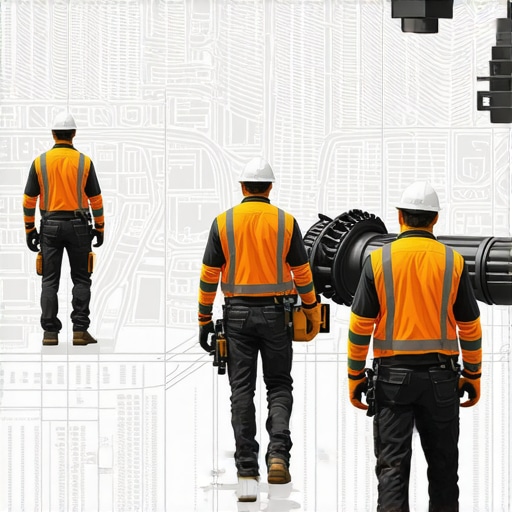
The Anatomy of a High-Voltage Ghost
There is a specific sound you hear when a backhoe tooth catches a fiber-optic bundle. It isn’t a loud crash; it’s a sickening thrum, like a guitar string snapping under too much tension, followed by the dead silence of a city block losing its pulse. As a forensic plumber with thirty years in the mud, I’ve seen the aftermath of these strikes more times than I care to count. In the world of underground infrastructure, we call it ‘the autopsy.’ When a utility line is severed, it’s not just a service interruption; it’s a failure of physics and planning. My old journeyman used to say, ‘Water is lazy, but it’s patient.’ It will find the tiniest pinhole and turn it into a geyser given enough time. The same logic applies to urban digging. If you give a mechanical excavator enough time, it will find the one cable you didn’t mark and rip it out of the ground like a weed.
As we head into 2026, the density of our urban subsurface has reached a breaking point. We are no longer just dealing with a simple sewer stack or a rough-in for a new build. We are navigating a subterranean labyrinth of high-speed data, aging cast iron, and high-pressure gas. To survive the next decade of urban construction, we have to stop treating the ground as a solid mass and start treating it as a delicate vascular system. This requires moving away from the ‘rip and flip’ mentality and embracing the surgical precision of vacuum excavation and site services. Here are the four rules for stopping cable cuts in the modern urban landscape.
Rule 1: The ‘Rough-In’ Starts with Daylighting
In plumbing, the rough-in is where you set the stage for everything that follows. In the world of excavation, that stage is set by daylighting. You cannot trust a map drawn in 1974. I’ve opened walls and found a stub-out for a gas line that wasn’t on any blueprint, and I’ve found the same thing six feet underground. Daylighting is the process of exposing these utilities using non-destructive methods before the heavy iron ever touches the dirt. By using pressurized water or air to liquefy the soil, which is then sucked away, we can see exactly where the ‘ghosts’ are hiding. This is why exploring daylighting benefits for sustainable urban infrastructure is no longer optional; it is the industry standard for risk mitigation.
“Where cables or pipes are buried, the excavation shall be performed in a manner that prevents damage to the utility.” – ASTM Standard D2487 – Standard Practice for Classification of Soils for Engineering Purposes
Rule 2: Respect the Hydro-Geographic Reality
In northern climates like Chicago or Toronto, we battle the frost line. Soil isn’t a static medium; it’s a living thing that breathes and moves. When water in the soil freezes, it expands by roughly 9%. This expansion exerts hydraulic shock on buried conduits, often pushing them closer to the surface or shifting them horizontally. I’ve seen PEX lines sweating under the pressure of a freeze-thaw cycle, and I’ve seen fiber optic cables sheared clean off by shifting clay. When you are performing a borehole or installing new site services, you have to account for this movement. A mechanical auger doesn’t feel the difference between a frozen clay clod and a 2-inch data main. A vacuum nozzle does. Using vacuum excavation allows the operator to ‘feel’ the ground with the suction, stopping the moment the resistance changes. This is the only way to ensure the integrity of the borehole and the safety of the surrounding infrastructure.
Rule 3: Use the ‘Cleanout’ Mentality for Utility Corridors
Every plumber knows the value of a cleanout—that access point that allows you to clear a clog without tearing the house apart. In urban digging, we need to treat every excavation as a potential access point for future maintenance. This means using vacuum excavation to create precise, small-footprint holes that don’t destabilize the surrounding soil. When you use a backhoe, you disturb a massive area, leading to soil subsidence and future ‘sinkholes’ that can snap a pipe or a cable months after you’ve left the site. By optimizing vacuum excavation for accurate subsurface assessments, you leave the surrounding soil matrix intact. You’re not just digging a hole; you’re performing surgery. You wouldn’t use a chainsaw to fix a wax ring on a toilet, so why use a 20-ton excavator to find a 1-inch fiber line?
“Pipes passing through concrete or cinder walls shall be protected against external corrosion by a protective sheathing.” – IPC Section 305.1 – Corrosion Protection
Rule 4: Integrating Advanced Site Services
The final rule is integration. You cannot have the drilling team, the plumbing team, and the electrical team working in silos. I’ve seen a top-out phase on a commercial job go completely sideways because the excavator didn’t know where the plumber had placed the Fernco couplings on the main sewer line. In 2026, we must utilize integrated site services to drive efficiency. This means shared data from borehole logs and vacuum-exposed utility maps. When everyone is looking at the same digital twin of the subsurface, the chance of a ‘surprise’ strike drops to near zero. If you find a mystery pipe, you don’t just ‘dope‘ it and hide it; you document it and integrate it into the site plan. This level of advanced site services for excavation safety is the only way to protect the massive investments being made in urban fiber and power grids.
The Forensic Conclusion: Water Always Wins
In the end, whether you are dealing with a burst copper pipe or a severed data cable, the physics remain the same. Pressure, friction, and human error are the enemies. We’ve spent decades treating the ground like an infinite dumping ground for pipes and wires, and now we are paying the price in complexity. The ‘hack jobs’ of the past are buried beneath our feet, waiting to be snagged by a careless operator. But by using vacuum excavation, we can navigate this mess without the sensory nightmare of a utility strike. No more smell of ozone from a nicked power line, no more black sludge from a punctured sewer. Just clean, precise, and safe progress. Because in the battle between a backhoe and a buried cable, the cable loses every time—but the contractor is the one who pays the bill. [IMAGE_PLACEHOLDER]
Reading this article really highlights how critical precision in underground work has become especially as urban environments get more congested with utilities. I’ve been on projects where misreading outdated maps led to accidental cable cuts that disrupted entire blocks and cost hefty repairs. The emphasis on daylighting and vacuum excavation as safer alternatives is spot on. Personally, I’ve found that engaging local utility companies early in the planning process helps clarify any ambiguities and minimizes surprises. I wonder, though, how widespread the adoption of integrated digital twins actually is in typical municipal projects? Are there significant barriers to implementing such comprehensive data sharing among different teams? It seems that with the right technology and collaboration, we could drastically reduce damage and improve safety, but I’d love to hear what others have experienced or found effective in their practice to promote this kind of integration. This approach could truly change the game for urban underground construction.