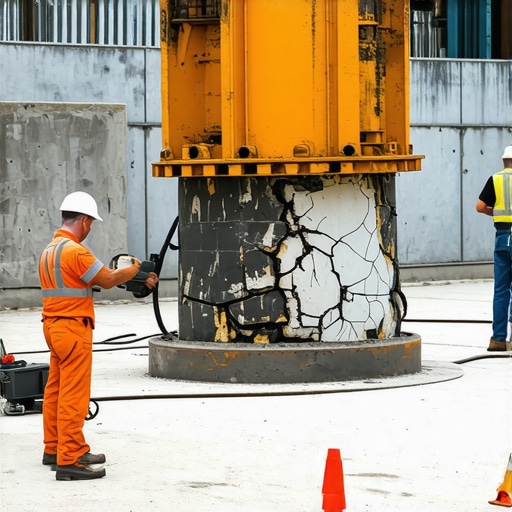
The Anatomy of a Failing Subsurface Arterial System
You don’t hear a borehole failing; you feel it. It starts with a microscopic vibration in the plumbing stack, a hum that vibrates through the floorboards when the pump kicks on. My old journeyman used to say, ‘Water is lazy, but it’s patient.’ It will find the tiniest pinhole in a casing and turn it into a geyser given enough time. That patience is exactly what eats away at your infrastructure. By the time you see the mud in the sink, the war is already half-lost. In my thirty years of forensic piping, I’ve seen boreholes that looked fine on the surface but were a jagged, calcified mess forty feet down, where the earth’s chemistry has been chewing on the pipe like a slow-motion piranha. Re-sleeving isn’t just a repair; it’s a surgical intervention for a dying well.
“Materials for well casing shall be of new, first-class quality and shall be of sufficient thickness to withstand the pressures and stresses to which they are subjected during installation and use.” – ASTM Standards for Well Construction
1. The Gritty Reality: Sediment Intrusion and Pump Cavitation
The first sign isn’t a total failure; it’s a texture. When you run a bath and feel that fine, flour-like grit between your fingers, your borehole casing is likely ‘breathing’ in the surrounding soil. This happens through pitting corrosion—small, localized holes where the steel or low-grade PVC has succumbed to the acidic bite of the local water table. This sediment doesn’t just cloud your water; it acts like liquid sandpaper. As it travels through your system, it scours the impellers of your pump, leading to cavitation—a violent process where tiny vapor bubbles implode with enough force to pit solid metal. If you’re hearing a metallic screeching or a rhythmic thumping from your lines, your pump is eating itself because the casing has failed to keep the earth out. Proper site services are required to diagnose if the breach is at a joint or through the wall of the pipe itself. Often, we find that ‘dope’ or thread sealant used decades ago has simply dissolved, leaving the ‘rough-in’ joints exposed to the elements. Using vacuum excavation is the only way we can daylight these vertical structures without the risk of a backhoe bucket crushing what’s left of the brittle pipe.
2. The ‘Gurgle of Death’ and Declining Hydraulic Yield
If your water pressure feels like an asthmatic gasp every time the dishwasher and shower run simultaneously, you’re looking at a yield failure. This isn’t always the pump; it’s often the ‘borehole screen’ or the lower portion of the sleeve becoming encrusted. In hard water regions, calcium and magnesium ions don’t just stay in the water; they precipitate out, forming a rock-hard ‘scale’ that’s as tough as concrete. This scale chokes the perforations in your sleeve, forcing the water to travel faster through smaller holes, which in turn draws in more sediment—a vicious cycle of hydraulic restriction. You can’t just pour chemical cleaners down there; those acids will eat through your ‘stack’ and destroy the remaining integrity of the sleeve. This is why optimizing borehole strategies for 2026 involves inserting a new, high-density polyethylene (HDPE) sleeve inside the old, rotting one. This ‘re-sleeving’ creates a fresh, smooth hydraulic path that resists scale and restores the flow velocity you haven’t seen in a decade.
“Water supply wells shall be protected from contamination by a casing and grout seal.” – International Plumbing Code (IPC) Section 602.3
3. Chemical Warfare: The Metallic Aftertaste of Dezincification
When the water starts tasting like a handful of old pennies, the chemistry of your borehole has turned predatory. This is often a sign of electrolytic corrosion. If your original installer mixed metals—say, a brass fitting connected to a galvanized steel casing—you’ve essentially built a giant battery underground. The water acts as the electrolyte, and the ‘base’ metal gets sacrificed. I’ve seen casings where the bottom ten feet were so spongy you could put a screwdriver through them with one hand. This leaching of metals into your supply is a red alert. By the time the water turns orange or smells of sulfur, the structural integrity of the borehole is compromised. We use vacuum excavation for safe site prep to expose the wellhead, allowing us to ‘stub-out’ a new liner without disturbing the delicate, corroded shell of the original hole. Re-sleeving allows us to bypass the contaminated, corroded layers of the old pipe, effectively ‘top-out’ the system with fresh materials that won’t react with your local geochemistry. It’s about stopping the rot before the entire ‘cleanout’ area collapses and you’re forced to drill a completely new hole, which costs triple what a re-sleeve does.
Conclusion: Respect the Biology of the Earth
In the world of forensic plumbing, we know that the earth is always trying to reclaim its territory. Your borehole is an intrusion, and the soil will use pressure, acidity, and time to crush it. Don’t wait for the 2026 mandates or for the day your pump finally burns out in a cloud of ozone and regret. If you see the grit, hear the cavitation, or taste the metal, it’s time to call in the professionals. Accurate daylighting of your subsurface assets is the first step in a re-sleeving project that will keep your water flowing for another thirty years. Remember: buy it once, cry once. Do the job right with a professional re-sleeve, or prepare to watch your investment wash away in a muddy slurry of failed pipes.